 Uyiyiphi idayinaso? Ikwizi
 Idabi leedayinaso
 Ugqatso lweedayinaso
 Imidlalo emincinci yeedayinaso
 I-albhamu yezitikha
 Iilisti ze-TOP zeedayinaso
 Ndothuse!
Yaphila nini?

Yayinkulu kangakanani?
Yayinde kangakanani?
Yayiphakame kangakanani?
uqikelelo
Yayinzima kangakanani?
 inde njengezinja ezingama-4, impumlo ukuya emsileni🍌inde njengeebhanana ezingama-25 zilandelelana🍉inzima njengamavatala angama-32🧸inzima njengabantwana basenkulisa abangama-8🎒inzima njengabantwana besikolo abangama-5🏃ibinokubaleka iimitha ezili-100 ngemizuzwana engama-7.2 (oyena mntu ukhawulezayo udinga i-9,6)
Lourinhanosaurus wayemkhulu kangakanani xa ethelekiswa NAWE?
Yimathematika nje kwibhrawuza yakho. Akukho nto igcinwayo okanye ithunyelwe naphi na.
Yayikhawuleza kangakanani?


Iinyani ezimnandi
Lourinhanosaurus was the first non-bird theropod dinosaur ever found with gastroliths, or stomach stones. Scientists found 32 smooth pebbles in its rib cage.21
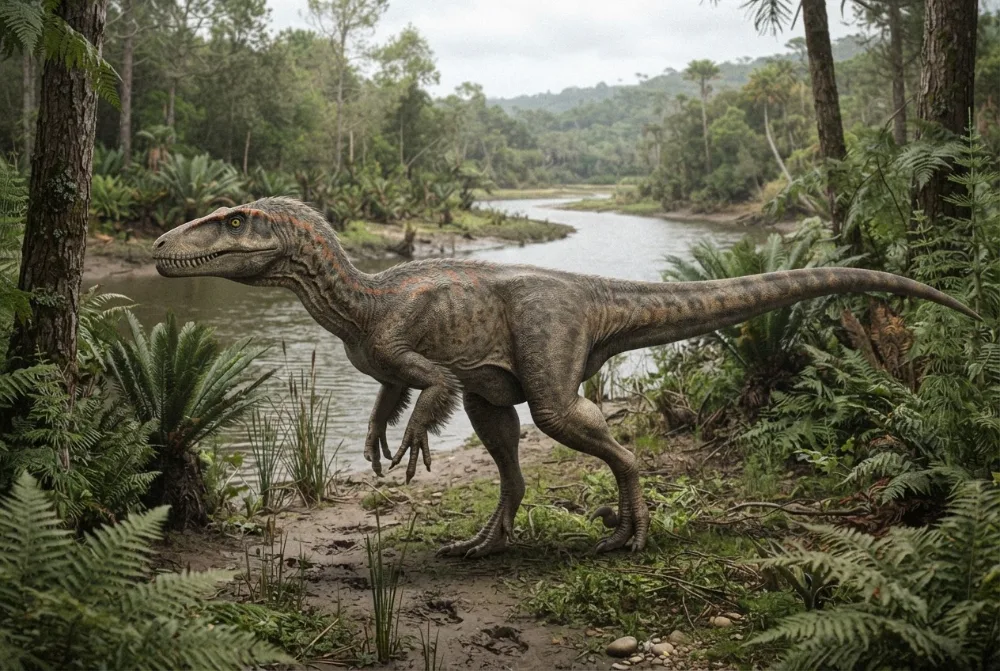
The holotype specimen was a sub-adult, about 14 to 17 years old when it died. It measured about 4.5 metres (15 feet) long and weighed around 160 kilograms (350 pounds).1
Its name means 'Lourinhã lizard', after the town of Lourinhã in Portugal where its fossils were found. The species name antunesi honors Portuguese paleontologist Miguel Telles Antunes.12
The first fossils were discovered in 1982, but the dinosaur was not named and described until 1998 by Portuguese paleontologist Octávio Mateus.1
Lourinhanosaurus lived alongside other large predators like Torvosaurus gurneyi, Allosaurus europaeus, and Ceratosaurus in the Lourinhã Formation.1
Scientists are not sure exactly which group of theropods Lourinhanosaurus belongs to. It has been placed in Allosauroidea, Carnosauria, Megalosaurinidae, Sinraptoridae, and even Coelurosauria by different experts.3
Eyona mibuzo ibuzwa kakhulu: Lourinhanosaurus
?How big was Lourinhanosaurus?
About 4.5 metres (15 feet) long and weighed around 160 kilograms (350 pounds). That is about as long as a small car.1
?What did Lourinhanosaurus eat?
It was a meat-eater that probably hunted other dinosaurs. It also swallowed stones called gastroliths to help grind up food in its stomach.12
?Did Lourinhanosaurus have feathers?
Nobody knows for sure. No feathers have been found with its fossils, and scientists are not sure which group of theropods it belongs to.1
?When did Lourinhanosaurus live?
It lived during the Late Jurassic Period, about 152 to 145 million years ago.1
?Where was Lourinhanosaurus found?
Its fossils were found near the town of Lourinhã in Portugal, at a place called Peralta.12
?Is Lourinhanosaurus a dinosaur?
Yes, it is a carnivorous theropod dinosaur.1
Kwiingcali zeedayinaso
- Igama lenzululwazi
- Lourinhanosaurus
- Inikwe igama ngu:
- Mateus 19984
- Iqela
- Iidayinaso ezitya inyama
- Usapho / iclade
- Coelurosauria4
- Ukuhlelwa
- Theropoda4
- Ubudala bamatye
- 152 ukuya ku-145 izigidi zeminyaka (Kimmeridgian / Tithonian)4
- Izakhiwo zamatye
- Lourinhã4
- Amazwe
- iPortugal4
- Iirekhodi zeefosili
- 2 kwi-Paleobiology Database4
- Ukufunyanwa
- The first remains of Lourinhanosaurus were found in 1982 at Peralta, near Lourinhã, Portugal. Portuguese paleontologist Octávio Mateus named and described the dinosaur in 1998, naming the species L. antunesi after paleontologist Miguel Telles Antunes.12
- Kusaxoxwa ngayo
- Scientists still debate which group of theropods Lourinhanosaurus belongs to. It has been classified as an allosauroid, a carnosaur, a megalosaurinid, a sinraptorid, and even a coelurosaur.3
Apho iinyani zivela khona
- Lourinhanosaurus (en.wikipedia.org)
- Lourinhanosaurus antunesi, A New Upper Jurassic Allosauroid (Dinosauria: Theropoda) from Lourinhã, Portugal (docentes.fct.unl.pt)
- PBDB Taxon (paleobiodb.org)
- Lourinhanosaurus in The Paleobiology Database (CC BY 4.0): ubudala, iindawo, izakhiwo zamatye, ukuhlelwa.
Yonke inyani ekweli phepha inenombolo ebonisa umthombo wayo. Ukuba siphosisile, uxolo, sithanda iidayinaso, asiyojenali yenzululwazi. Sixelele apha: [email protected], siya kuyilungisa.
 URex ulambile! I-Dino Wiki yiprojekthi katata ukwenzela unyana wakhe othanda iidayinaso, isimahla, ayinazintengiso, ayinazilandeli. Abantu abadala banokuphakela uRex isidlwana ukuze incede ihlale kwi-intanethi.Phakela uRex
 Allosaurus
 Carnotaurus
 Dilophosaurus
 Giganotosaurus
 Compsognathus
 Paronychodon
 Brachiosaurus
 Diplodocus
 Brontosaurus
 Camarasaurus
 Morosaurus
 Apatosaurus