 Uyiyiphi idayinaso? Ikwizi
 Idabi leedayinaso
 Ugqatso lweedayinaso
 Imidlalo emincinci yeedayinaso
 I-albhamu yezitikha
 Iilisti ze-TOP zeedayinaso
 Ndothuse!
Yaphila nini?

Yayinkulu kangakanani?
Yayinde kangakanani?
Yayiphakame kangakanani?
uqikelelo
Yayinzima kangakanani?

 inde njengezinja ezingama-8, impumlo ukuya emsileni🍌inde njengeebhanana ezingama-44 zilandelelanainzima njengezinja ezingama-80🍉inzima njengamavatala angama-320🧸inzima njengabantwana basenkulisa abangama-84🎒inzima njengabantwana besikolo abangama-50🐻❄️inzima njengeebhere ezimhlophe ezingama-4🏃ibinokubaleka iimitha ezili-100 ngemizuzwana engama-12 (oyena mntu ukhawulezayo udinga i-9,6)
Mussaurus wayemkhulu kangakanani xa ethelekiswa NAWE?
Yimathematika nje kwibhrawuza yakho. Akukho nto igcinwayo okanye ithunyelwe naphi na.
Yayikhawuleza kangakanani?


Iinyani ezimnandi
As it grew, Mussaurus changed from walking on all fours to walking on two legs.1
Scientists found over 100 eggs and 80 skeletons of Mussaurus together, showing they lived in herds.1
This dinosaur lived about 193 million years ago, during the Early Jurassic period.2
Adult Mussaurus could reach 8 metres (26 ft) long and weigh up to 1.6 metric tons (1.8 short tons).1
Mussaurus is one of the earliest dinosaurs known to have complex social behavior, like living in groups.1
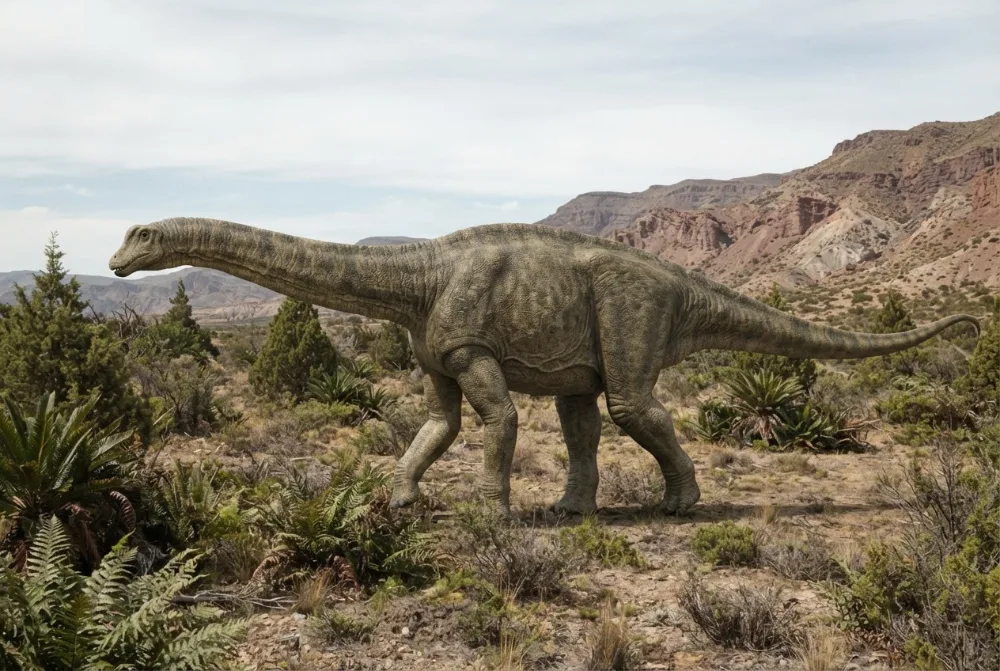
Eyona mibuzo ibuzwa kakhulu: Mussaurus
?What did Mussaurus eat?
Mussaurus was an herbivore, meaning it ate plants. It had a long neck to reach leaves and ferns.1
?How big was a baby Mussaurus?
Baby Mussaurus were tiny, about 20 centimetres long and weighing as little as a chicken egg, around 53 to 77 grams.1
?Did Mussaurus live in herds?
Yes, Mussaurus is the earliest dinosaur known to have lived in herds. Scientists found over 100 eggs and 80 skeletons together, showing they lived in age-segregated groups.145
?How fast could Mussaurus run?
Nobody knows for sure, but since adults walked on two legs and were medium-sized, they could probably move at a moderate jogging speed.1
?When did Mussaurus live?
Mussaurus lived about 193 million years ago, during the Early Jurassic period.15
?Why is it called Mussaurus?
Mussaurus means 'mouse lizard' because the first fossils found were tiny babies, about the size of a mouse.1
Inyaniso ngeentsomi
Intsomi: Mussaurus was always a tiny dinosaur.
Inyaniso: Only the babies were tiny. Adults grew to be huge, up to 8 metres long.1
Kwiingcali zeedayinaso
- Igama lenzululwazi
- Mussaurus
- Inikwe igama ngu:
- Bonaparte and Vince 19796
- Iqela
- Iintamo-nde
- Usapho / iclade
- Sauropodiformes6
- Ukuhlelwa
- Sauropodomorpha6
- Ubudala bamatye
- 200 ukuya ku-193 izigidi zeminyaka (Sinemurian)6
- Izakhiwo zamatye
- Laguna Colorada6
- Amazwe
- i-Argentina6
- Iirekhodi zeefosili
- 2 kwi-Paleobiology Database6
- Ukufunyanwa
- Mussaurus was named by Jose Bonaparte and Martin Vince in 1979. They found tiny skeletons and eggs in the Laguna Colorada Formation in Argentina.23
- Kusaxoxwa ngayo
- Scientists are still debating whether Mussaurus is a direct ancestor of the giant sauropods.1
Apho iinyani zivela khona
- Mussaurus (en.wikipedia.org)
- PBDB Taxon (paleobiodb.org)
- A M E G H I N I A N A (naturalhistory.si.edu)
- Earliest evidence of herd-living and age segregation amongst dinosaurs | Scientific Reports (nature.com)
- Fossil bonanza reveals earliest evidence of dinosaurs living in herds | National Geographic (nationalgeographic.com)
- Mussaurus in The Paleobiology Database (CC BY 4.0): ubudala, iindawo, izakhiwo zamatye, ukuhlelwa.
Yonke inyani ekweli phepha inenombolo ebonisa umthombo wayo. Ukuba siphosisile, uxolo, sithanda iidayinaso, asiyojenali yenzululwazi. Sixelele apha: [email protected], siya kuyilungisa.
 URex ulambile! I-Dino Wiki yiprojekthi katata ukwenzela unyana wakhe othanda iidayinaso, isimahla, ayinazintengiso, ayinazilandeli. Abantu abadala banokuphakela uRex isidlwana ukuze incede ihlale kwi-intanethi.Phakela uRex
 Brachiosaurus
 Diplodocus
 Brontosaurus
 Argentinosaurus
 Camarasaurus
 Morosaurus
 Dilophosaurus
 Stenopterygius
 Dorygnathus
 Scutellosaurus
 Sinosaurus
 Temnodontosaurus