 Uyiyiphi idayinaso? Ikwizi
 Idabi leedayinaso
 Ugqatso lweedayinaso
 Imidlalo emincinci yeedayinaso
 I-albhamu yezitikha
 Iilisti ze-TOP zeedayinaso
 Ndothuse!
Punatitan
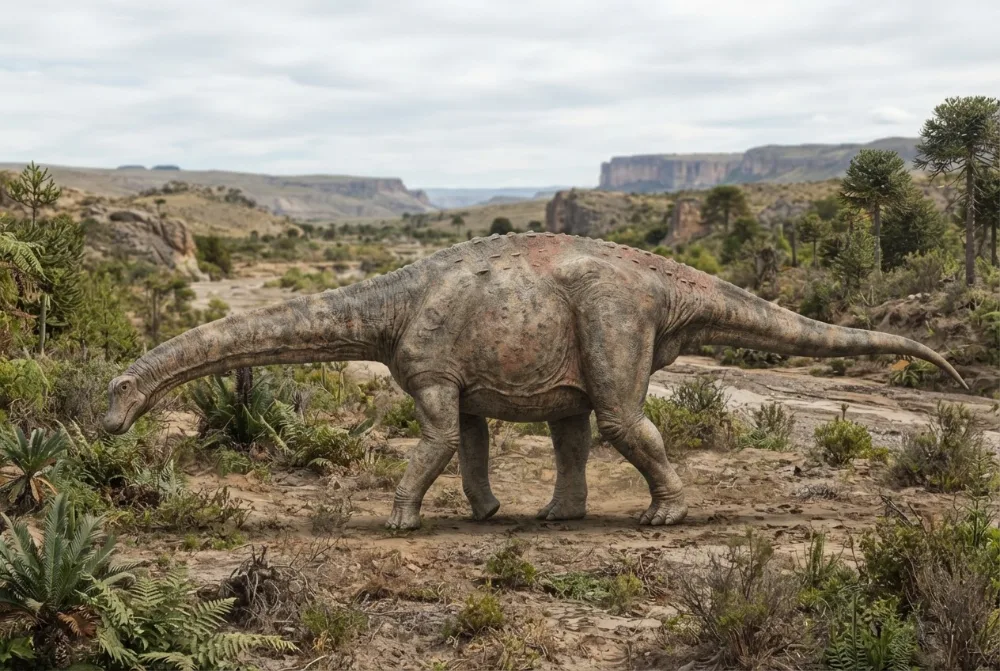
Punatitan was a huge, long-necked plant-eater that lived in what is now Argentina. It stomped through the forests of the Late Cretaceous, munching on leaves with its tiny head. This dinosaur was about as long as a bus and shared its home with lots of other titanosaurs.12
Yaphila nini?
Yayinkulu kangakanani?
Yayinde kangakanani?
Yayiphakame kangakanani?
uqikelelo
 inde njengeemoto ezingama-3 zipakwe zilandelelana🍌inde njengeebhanana ezingama-78 zilandelelana🏃ibinokubaleka iimitha ezili-100 ngemizuzwana engama-21 (oyena mntu ukhawulezayo udinga i-9,6)
Punatitan wayemkhulu kangakanani xa ethelekiswa NAWE?
Yimathematika nje kwibhrawuza yakho. Akukho nto igcinwayo okanye ithunyelwe naphi na.
Yayikhawuleza kangakanani?


Iinyani ezimnandi
Punatitan's name comes from the 'puna', the high, oxygen-poor air of the Andes where its fossils were found.1
The species name 'coughlini' honors geologist Tim Coughlin, who first reported dinosaur fossils in the area.1
Punatitan is known from a partial skeleton including neck bones, back bones, a hip bone, and 13 tail bones that were still connected.1
At the same site where Punatitan was found, scientists discovered one of the largest dinosaur nesting grounds ever, with eggs in three layers spread over 3 kilometres.2
Punatitan belonged to a group of titanosaurs called Aeolosaurini, which includes relatives from both Argentina and Brazil.1
This dinosaur lived about 83 to 66 million years ago, during the Campanian and Maastrichtian ages of the Late Cretaceous.3
Kwiingcali zeedayinaso
- Igama lenzululwazi
- Punatitan
- Inikwe igama ngu:
- Hechenleitner et al. 20203
- Iqela
- Iintamo-nde
- Usapho / iclade
- Rinconsauria3
- Ukuhlelwa
- Sauropodomorpha > Sauropoda > Titanosauria > Macronaria3
- Ubudala bamatye
- 84 ukuya ku-66 izigidi zeminyaka (Campanian / Maastrichtian)3
- Izakhiwo zamatye
- Ciénaga del Río Huaco3
- Amazwe
- i-Argentina3
- Iirekhodi zeefosili
- 1 kwi-Paleobiology Database3
- Ukufunyanwa
- Punatitan was named in 2020 by Hechenleitner and colleagues, based on a partial skeleton found in the Ciénaga del Río Huaco Formation of Argentina.13
- Kusaxoxwa ngayo
- Scientists are not sure exactly how Punatitan is related to other titanosaurs, because different studies place it in different branches of the family tree.1
Apho iinyani zivela khona
- Punatitan (en.wikipedia.org)
- Two Late Cretaceous sauropods reveal titanosaurian dispersal across South America - PMC (pmc.ncbi.nlm.nih.gov)
- Punatitan in The Paleobiology Database (CC BY 4.0): ubudala, iindawo, izakhiwo zamatye, ukuhlelwa.
Yonke inyani ekweli phepha inenombolo ebonisa umthombo wayo. Ukuba siphosisile, uxolo, sithanda iidayinaso, asiyojenali yenzululwazi. Sixelele apha: [email protected], siya kuyilungisa.
 URex ulambile! I-Dino Wiki yiprojekthi katata ukwenzela unyana wakhe othanda iidayinaso, isimahla, ayinazintengiso, ayinazilandeli. Abantu abadala banokuphakela uRex isidlwana ukuze incede ihlale kwi-intanethi.Phakela uRex
 Brachiosaurus
 Diplodocus
 Brontosaurus
 Argentinosaurus
 Camarasaurus
 Morosaurus
 Tyrannosaurus
 Triceratops
 Velociraptor
 Spinosaurus
 Ankylosaurus
 Parasaurolophus