 Uyiyiphi idayinaso? Ikwizi
 Idabi leedayinaso
 Ugqatso lweedayinaso
 Imidlalo emincinci yeedayinaso
 I-albhamu yezitikha
 Iilisti ze-TOP zeedayinaso
 Ndothuse!
Yaphila nini?

Yayinkulu kangakanani?
Yayinde kangakanani?
Yayiphakame kangakanani?
Yayinzima kangakanani?
 inde njengezinja ezingama-3, impumlo ukuya emsileni🍌inde njengeebhanana ezingama-18 zilandelelana🍉inzima njengamavatala angama-13🧸inzima njengabantwana basenkulisa abangama-3🎒inzima njengabantwana besikolo abangama-2🏃ibinokubaleka iimitha ezili-100 ngemizuzwana engama-7.2 (oyena mntu ukhawulezayo udinga i-9,6)
Richardoestesia wayemkhulu kangakanani xa ethelekiswa NAWE?
Yimathematika nje kwibhrawuza yakho. Akukho nto igcinwayo okanye ithunyelwe naphi na.
Yayikhawuleza kangakanani?


Iinyani ezimnandi
Richardoestesia is known only from its teeth, not from whole skeletons. Scientists call it a 'form taxon' because they group similar-looking teeth together.1
The teeth of Richardoestesia are very long and slender compared to other meat-eating dinosaurs. They look like thin blades.1
If all the teeth assigned to Richardoestesia really belong to the same kind of dinosaur, it would have lived for over 80 million years, from the Late Jurassic to the end of the Cretaceous.1
Richardoestesia teeth have been found all over the world, including North America, Europe, and Asia. That would make it one of the most widespread dinosaurs ever.1
The name Richardoestesia honors paleontologist Richard Estes, who studied small fossils and dinosaur teeth.1
Some scientists think Richardoestesia might have been a dromaeosaur (a raptor) or a troodontid, but nobody knows for sure because no body fossils have been found.5
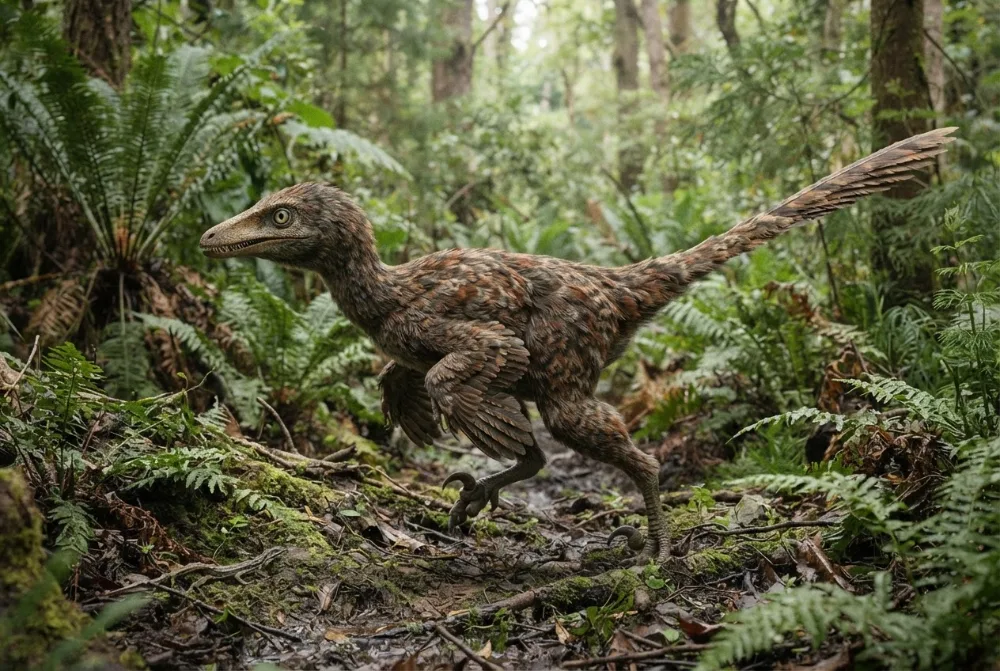
Eyona mibuzo ibuzwa kakhulu: Richardoestesia
?What did Richardoestesia eat?
Richardoestesia was a meat-eating dinosaur, and some studies think it may have eaten fish because its teeth are often found in marine sites. Its long, slender teeth were good for catching small animals like lizards and mammals.14
?How big was Richardoestesia?
Nobody knows for sure because only its teeth have been found. One estimate from a tooth in Wyoming suggests it weighed about 100 kilograms (220 pounds), but scientists are not certain.4
?When did Richardoestesia live?
Richardoestesia lived during the Late Cretaceous, about 76.5 to 75 million years ago, based on teeth from the Dinosaur Park Formation. Some similar teeth are much older, from the Late Jurassic, but those may belong to different dinosaurs.1
?Was Richardoestesia a dinosaur?
Yes, Richardoestesia was a theropod dinosaur, a meat-eater related to raptors and other bird-like dinosaurs. It is known only from its teeth, not from a full skeleton.1
?Why is Richardoestesia known only from teeth?
Scientists have only found Richardoestesia's teeth, not its body fossils. That is why it is called a 'form taxon', because they group similar-looking teeth together without knowing the whole animal.1
?Could Richardoestesia swim?
Some scientists think Richardoestesia might have eaten fish because its teeth are often found in marine rocks, but nobody knows if it could swim. It was probably a land dinosaur that sometimes hunted near water.1
Inyaniso ngeentsomi
Intsomi: Richardoestesia is a well-known dinosaur with a complete skeleton.
Inyaniso: Richardoestesia is only known from isolated teeth. No complete skeleton has ever been found, so scientists are not sure what it looked like.1
Kwiingcali zeedayinaso
- Igama lenzululwazi
- Richardoestesia
- Inikwe igama ngu:
- Currie et al. 19905
- Iqela
- Iirapta
- Usapho / iclade
- Dromaeosauridae5
- Ukuhlelwa
- Theropoda > Dromaeosauridae5
- Ubudala bamatye
- 155 ukuya ku-66 izigidi zeminyaka (Kimmeridgian / Maastrichtian)5
- Izakhiwo zamatye
- Hell Creek, Milk River, Dinosaur Park5
- Amazwe
- iUSA, iKhanada, iSpeyin, iUzbekistan, iRomania, iMexico5
- Iirekhodi zeefosili
- 239 kwi-Paleobiology Database5
- Ukufunyanwa
- The first Richardoestesia fossils were jaws found in 1917 by Charles Hazelius Sternberg and his sons in Dinosaur Provincial Park, Alberta, Canada. The name was given in 1990 by paleontologist Philip Currie and colleagues.1
- Kusaxoxwa ngayo
- Scientists are not sure if all the teeth called Richardoestesia really belong to the same dinosaur. Many may come from different species that have not been named yet.1
Apho iinyani zivela khona
- Richardoestesia (en.wikipedia.org)
- Richardoestesia (elmirador.edu.co)
- Richardoestesia gilmorei | Dinosaur Database by DinoAnimals.com (dinoanimals.com)
- University of Colorado Museum of Natural History: Harvester Ants: Richardoestesia Tooth (cumuseum-archive.colorado.edu)
- Richardoestesia in The Paleobiology Database (CC BY 4.0): ubudala, iindawo, izakhiwo zamatye, ukuhlelwa.
Yonke inyani ekweli phepha inenombolo ebonisa umthombo wayo. Ukuba siphosisile, uxolo, sithanda iidayinaso, asiyojenali yenzululwazi. Sixelele apha: [email protected], siya kuyilungisa.
 URex ulambile! I-Dino Wiki yiprojekthi katata ukwenzela unyana wakhe othanda iidayinaso, isimahla, ayinazintengiso, ayinazilandeli. Abantu abadala banokuphakela uRex isidlwana ukuze incede ihlale kwi-intanethi.Phakela uRex
 Velociraptor
 Microraptor
 Deinonychus
 Asiamericana
 Saurornitholestes
 Troodon
 Stegosaurus
 Iguanodon
 Archaeopteryx
 Giganotosaurus
 Baryonyx
 Paronychodon