 Uyiyiphi idayinaso? Ikwizi
 Idabi leedayinaso
 Ugqatso lweedayinaso
 Imidlalo emincinci yeedayinaso
 I-albhamu yezitikha
 Iilisti ze-TOP zeedayinaso
 Ndothuse!
Samrukia
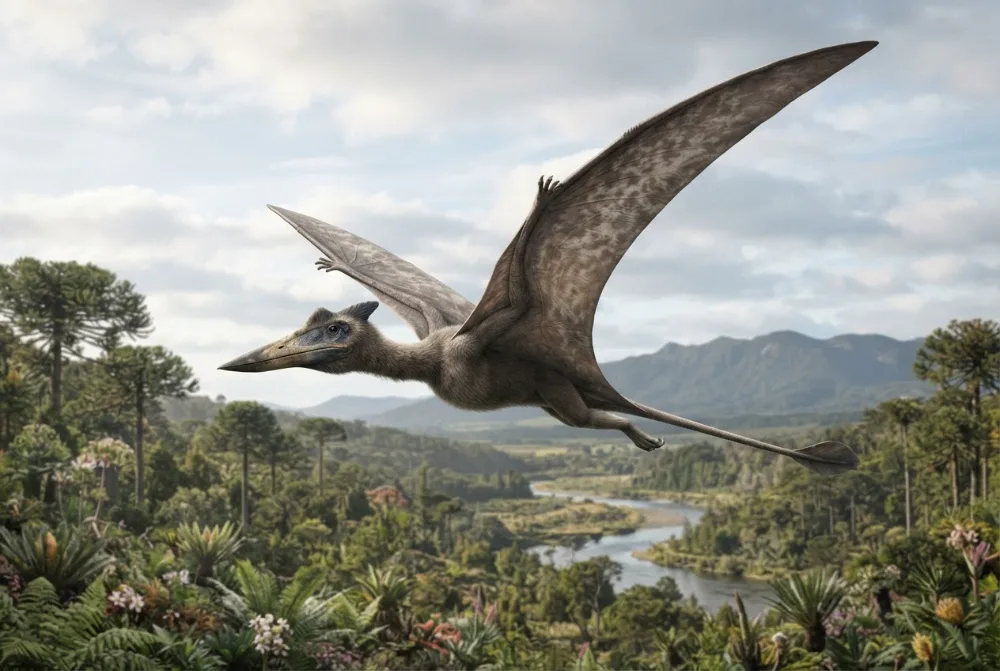
Samrukia was a huge flying reptile that lived in what is now Kazakhstan. It had a very long jaw, and scientists first thought it was a giant bird. Now they think it was a pterosaur, a flying reptile that lived at the same time as dinosaurs.1
Yaphila nini?
Yayinkulu kangakanani?
Amaphiko ayo ayebanzi kangakanani?
Yayiphakame kangakanani?
Yayinzima kangakanani?

 amaphiko abanzi njengeebhayisikile ezingama-2 zilandelelana
 inzima njengeekati zasekhaya ezingama-12🍉inzima njengamavatala angama-10🧸inzima njengabantwana basenkulisa abangama-2.5🎒inzima njengabantwana besikolo abangama-1.5⚽ibinokubhabha inqumle ibala lebhola ekhatywayo lonke ngemizuzwana engama-6
Samrukia wayemkhulu kangakanani xa ethelekiswa NAWE?
Yimathematika nje kwibhrawuza yakho. Akukho nto igcinwayo okanye ithunyelwe naphi na.
Yayikhawuleza kangakanani?


Iinyani ezimnandi
Samrukia is known only from a single lower jaw bone, which is more than 275 millimetres long.2
When first discovered, scientists thought Samrukia was a giant bird, but later studies showed it was a pterosaur.1
Samrukia lived about 84 million years ago, during the Late Cretaceous period.1
If Samrukia could fly, its wingspan might have been about 4 metres (13 feet). If it was flightless, it might have been 2 to 3 metres (6.6 to 9.8 feet) tall.1
The jaw of Samrukia has no teeth, so it probably had a beak.2
Samrukia is named after Samruk, a magical bird from Kazakh mythology.1
Eyona mibuzo ibuzwa kakhulu: Samrukia
?Was Samrukia a dinosaur?
No, Samrukia was a pterosaur, a flying reptile that lived at the same time as dinosaurs. It is not a dinosaur.1
?How big was Samrukia?
If it could fly, its wingspan might have been about 4 metres (13 feet). If it was flightless, it might have been 2 to 3 metres (6.6 to 9.8 feet) tall.1
?What did Samrukia eat?
Samrukia had no teeth in its lower jaw, so it probably had a beak. Scientists think it may have eaten fish or other small animals, but no one knows for sure.1
Inyaniso ngeentsomi
Intsomi: Samrukia was a giant bird.
Inyaniso: Scientists now agree that Samrukia was a pterosaur, not a bird. The jaw bone has features that are only found in pterosaurs.1
Kwiingcali zeedayinaso
- Igama lenzululwazi
- Samrukia
- Inikwe igama ngu:
- Naish et al. 20124
- Iqela
- Izirhubuluzi ezibhabhayo
- Usapho / iclade
- Pterosauria4
- Ukuhlelwa
- Pterosauria4
- Ubudala bamatye
- 86 ukuya ku-72 izigidi zeminyaka (Santonian / Campanian)4
- Izakhiwo zamatye
- Bostobe4
- Amazwe
- iKazakhstan4
- Iirekhodi zeefosili
- 1 kwi-Paleobiology Database4
- Ukufunyanwa
- Samrukia was named in 2012 by Darren Naish and his team. The only fossil, a lower jaw, was found in the Bostobynskaya Formation in Kazakhstan.14
- Kusaxoxwa ngayo
- Scientists are not sure if Samrukia could fly or if it was flightless, because only its jaw has been found.1
Apho iinyani zivela khona
- Samrukia (en.wikipedia.org)
- untitled (darrennaish.wordpress.com)
- Giant 'phoenix' bird rises again | Fossils | The Guardian (theguardian.com)
- Samrukia in The Paleobiology Database (CC BY 4.0): ubudala, iindawo, izakhiwo zamatye, ukuhlelwa.
Yonke inyani ekweli phepha inenombolo ebonisa umthombo wayo. Ukuba siphosisile, uxolo, sithanda iidayinaso, asiyojenali yenzululwazi. Sixelele apha: [email protected], siya kuyilungisa.
 URex ulambile! I-Dino Wiki yiprojekthi katata ukwenzela unyana wakhe othanda iidayinaso, isimahla, ayinazintengiso, ayinazilandeli. Abantu abadala banokuphakela uRex isidlwana ukuze incede ihlale kwi-intanethi.Phakela uRex
 Pteranodon
 Quetzalcoatlus
 Dorygnathus
 Rhamphorhynchus
 Anhanguera
 Pterodactylus
 Tyrannosaurus
 Triceratops
 Velociraptor
 Spinosaurus
 Ankylosaurus
 Parasaurolophus