 Uyiyiphi idayinaso? Ikwizi
 Idabi leedayinaso
 Ugqatso lweedayinaso
 Imidlalo emincinci yeedayinaso
 I-albhamu yezitikha
 Iilisti ze-TOP zeedayinaso
 Ndothuse!
Yaphila nini?

Yayinkulu kangakanani?
Yayinde kangakanani?
Yayiphakame kangakanani?
uqikelelo
Yayinzima kangakanani?
 inde njengeekati zasekhaya ezingama-2, impumlo ukuya emsileni🍌inde njengeebhanana ezingama-6 zilandelelanamalunga nobunzima bekati yasekhaya🍌inzima njengeebhanana ezingama-58🪑incinci ngokwaneleyo ukuba ihambe phantsi kwesitulo🏃ibinokubaleka iimitha ezili-100 ngemizuzwana engama-11 (oyena mntu ukhawulezayo udinga i-9,6)
Similicaudipteryx wayemkhulu kangakanani xa ethelekiswa NAWE?
Yimathematika nje kwibhrawuza yakho. Akukho nto igcinwayo okanye ithunyelwe naphi na.
Yayikhawuleza kangakanani?


Iinyani ezimnandi
Similicaudipteryx had a dagger-shaped pygostyle, a bone at the end of its tail that helped anchor long tail feathers.1
It was bigger than its close relative Caudipteryx, but still only about 1 meter long.1
The first fossil of Similicaudipteryx was found in the Jiufotang Formation, which is about 120 million years old.1
Its pubic bone was very long compared to its ilium, which is a unique feature among its relatives.1
Scientists think Similicaudipteryx had feathers even though the first fossil didn't show them, because of its pygostyle.1
Two other fossils that were thought to be Similicaudipteryx might actually belong to a different dinosaur called Incisivosaurus.1
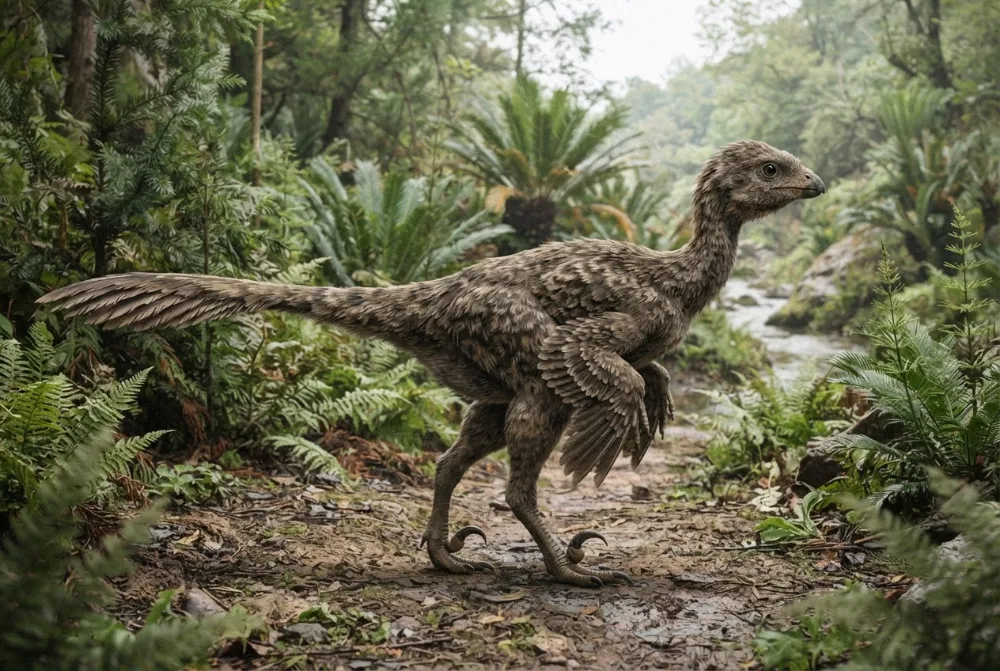
Eyona mibuzo ibuzwa kakhulu: Similicaudipteryx
?How big was Similicaudipteryx?
About 1 metre (3.3 feet) long and weighed about 7 kilograms (15 pounds).1
?Did Similicaudipteryx have feathers?
Yes, it had feathers. The first fossil didn't show them, but scientists think it had feathers because of its pygostyle, a bone that anchors tail feathers.1
?What did Similicaudipteryx eat?
The sources don't say exactly what it ate, but it was an oviraptorosaur, a group that likely ate plants or small animals.1
?When did Similicaudipteryx live?
It lived during the Early Cretaceous Period, about 120 million years ago.1
Kwiingcali zeedayinaso
- Igama lenzululwazi
- Similicaudipteryx
- Inikwe igama ngu:
- He et al. 20082
- Iqela
- Iidayinaso ezingaqhelekanga ezineentsiba
- Usapho / iclade
- Caudipterygidae2
- Ukuhlelwa
- Theropoda > Oviraptorosauria2
- Ubudala bamatye
- 121 ukuya ku-113 izigidi zeminyaka (Aptian)2
- Izakhiwo zamatye
- Jiufotang2
- Amazwe
- iTshayina2
- Iirekhodi zeefosili
- 1 kwi-Paleobiology Database2
- Ukufunyanwa
- Similicaudipteryx was named in 2008 by He Tao, Wang Xiaolin, and Zhou Zhonghe. The first fossil was found in Liaoning, China, in the Jiufotang Formation.12
- Kusaxoxwa ngayo
- Scientists are not sure if two fossils with feathers belong to Similicaudipteryx or to another dinosaur called Incisivosaurus.1
Apho iinyani zivela khona
- Similicaudipteryx (en.wikipedia.org)
- Similicaudipteryx in The Paleobiology Database (CC BY 4.0): ubudala, iindawo, izakhiwo zamatye, ukuhlelwa.
Yonke inyani ekweli phepha inenombolo ebonisa umthombo wayo. Ukuba siphosisile, uxolo, sithanda iidayinaso, asiyojenali yenzululwazi. Sixelele apha: [email protected], siya kuyilungisa.
 URex ulambile! I-Dino Wiki yiprojekthi katata ukwenzela unyana wakhe othanda iidayinaso, isimahla, ayinazintengiso, ayinazilandeli. Abantu abadala banokuphakela uRex isidlwana ukuze incede ihlale kwi-intanethi.Phakela uRex
Ezinye ezivela kwiqela elinye: Iidayinaso ezingaqhelekanga ezineentsiba
 TherizinosaurusIidayinaso ezingaqhelekanga ezineentsiba
 OviraptorIidayinaso ezingaqhelekanga ezineentsiba
 ChirostenotesIidayinaso ezingaqhelekanga ezineentsiba
 CitipesIidayinaso ezingaqhelekanga ezineentsiba
 LeptorhynchosIidayinaso ezingaqhelekanga ezineentsiba
 AvimimusIidayinaso ezingaqhelekanga ezineentsiba
 Stegosaurus
 Iguanodon
 Archaeopteryx
 Giganotosaurus
 Microraptor
 Deinonychus