 Uyiyiphi idayinaso? Ikwizi
 Idabi leedayinaso
 Ugqatso lweedayinaso
 Imidlalo emincinci yeedayinaso
 I-albhamu yezitikha
 Iilisti ze-TOP zeedayinaso
 Ndothuse!
Sisteronia
Sisteronia was a fast-swimming marine reptile that lived in the Cretaceous seas. It had sharp teeth for catching small fish and squid. Sisteronia was an ichthyosaur, not a dinosaur, and looked a bit like a modern dolphin.12
Yaphila nini?
Yayikhawuleza kangakanani?


Iinyani ezimnandi
Sisteronia had teeth that were rectangular in cross-section, which is unusual among ichthyosaurs.2
It lived during the Albian and early Cenomanian stages of the Cretaceous, about 112 to 100 million years ago.2
Sisteronia is known from fossils found in England, France, and Russia, showing it lived in the seas of western Europe.3
This ichthyosaur belonged to the group Platypterygiinae, which were the last surviving ichthyosaurs before they went extinct.2
The name Sisteronia comes from the town of Sisteron in France, near where some of its fossils were found.1
Sisteronia had a raised process on the floor of the foramen magnum (the hole in the skull for the spinal cord), a unique feature not seen in other ichthyosaurs.2
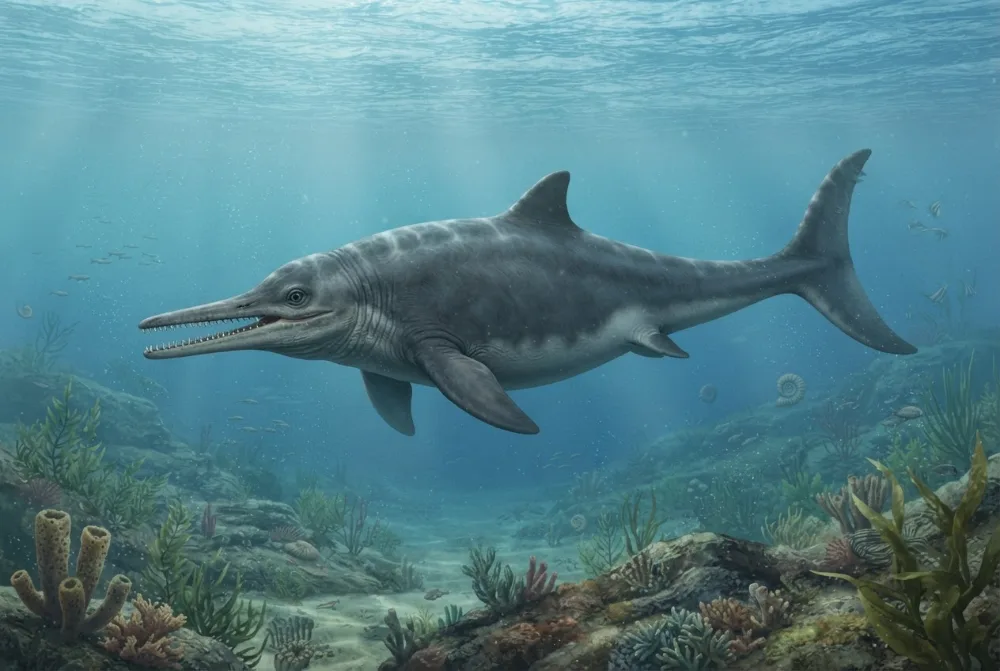
Kwiingcali zeedayinaso
- Igama lenzululwazi
- Sisteronia
- Inikwe igama ngu:
- Fischer et al. 20143
- Iqela
- Ii-ichthyosauri
- Usapho / iclade
- Ophthalmosauridae3
- Ukuhlelwa
- Ichthyosauria > Ichthyosauromorpha3
- Ubudala bamatye
- 113 ukuya ku-94 izigidi zeminyaka (Albian / Cenomanian)3
- Izakhiwo zamatye
- Marnes bleues, West Melbury Marly Chalk, Gault3
- Amazwe
- iUnited Kingdom, iFransi, iRashiya3
- Iirekhodi zeefosili
- 6 kwi-Paleobiology Database3
- Ukufunyanwa
- Sisteronia was named by Fischer and colleagues in 2014, based on fossils from the Cambridge Greensand Member in England and the Vocontian Basin in France.31
- Kusaxoxwa ngayo
- Scientists are still debating exactly how diverse late Cretaceous ichthyosaurs were, and whether Sisteronia was part of a broader European hotspot of ichthyosaur diversity.1
Apho iinyani zivela khona
- High Diversity in Cretaceous Ichthyosaurs from Europe Prior to Their Extinction (pmc.ncbi.nlm.nih.gov)
- Sisteronia (en.wikipedia.org)
- Sisteronia in The Paleobiology Database (CC BY 4.0): ubudala, iindawo, izakhiwo zamatye, ukuhlelwa.
Yonke inyani ekweli phepha inenombolo ebonisa umthombo wayo. Ukuba siphosisile, uxolo, sithanda iidayinaso, asiyojenali yenzululwazi. Sixelele apha: [email protected], siya kuyilungisa.
 URex ulambile! I-Dino Wiki yiprojekthi katata ukwenzela unyana wakhe othanda iidayinaso, isimahla, ayinazintengiso, ayinazilandeli. Abantu abadala banokuphakela uRex isidlwana ukuze incede ihlale kwi-intanethi.Phakela uRex
 Ichthyosaurus
 Platypterygius
 Stenopterygius
 Khudiakovia
 Ophthalmosaurus
 Chonespondylus
 Stegosaurus
 Iguanodon
 Archaeopteryx
 Giganotosaurus
 Microraptor
 Deinonychus