 Uyiyiphi idayinaso? Ikwizi
 Idabi leedayinaso
 Ugqatso lweedayinaso
 Imidlalo emincinci yeedayinaso
 I-albhamu yezitikha
 Iilisti ze-TOP zeedayinaso
 Ndothuse!
Woolly mammoth
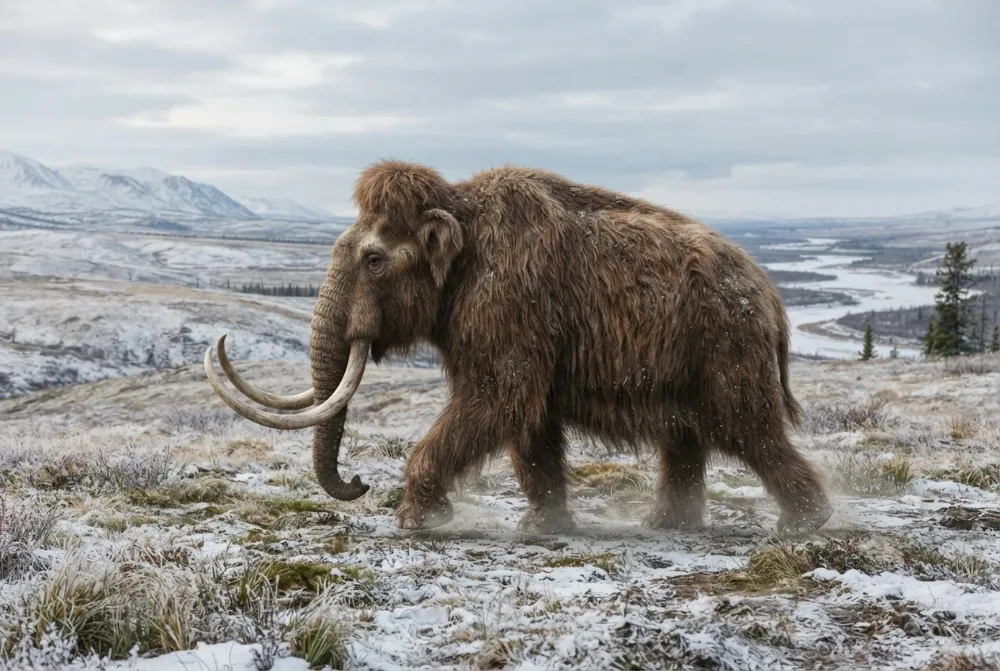
The woolly mammoth was a huge, furry elephant that lived during the Ice Age. It had long, curved tusks and a thick coat of hair to keep warm in the freezing cold. These amazing animals roamed across Europe, Asia, and North America.1
Yaphila nini?
Yayinkulu kangakanani?
Yayinde kangakanani?
Yayiphakame kangakanani?
Yayinzima kangakanani?

 inde njengezinja ezingama-4, impumlo ukuya emsileni🍌inde njengeebhanana ezingama-25 zilandelelana
 inzima njengeendlovu ezingama-1.5🍉inzima njengamavatala angama-1600🎒inzima njengamagumbi okufundela apheleleyo abantwana angama-10🐻❄️inzima njengeebhere ezimhlophe ezingama-18🏃ibinokubaleka iimitha ezili-100 ngemizuzwana engama-14 (oyena mntu ukhawulezayo udinga i-9,6)
Woolly mammoth wayemkhulu kangakanani xa ethelekiswa NAWE?
Yimathematika nje kwibhrawuza yakho. Akukho nto igcinwayo okanye ithunyelwe naphi na.
Yayikhawuleza kangakanani?


Iinyani ezimnandi
Woolly mammoths had very small ears and a short tail to stop them from getting frostbite in the cold.1
A newborn woolly mammoth calf weighed about 90 kilograms (200 pounds), as much as a large adult human.1
Woolly mammoths and Columbian mammoths sometimes mated and had hybrid babies in North America.1
The last woolly mammoths lived on Wrangel Island in the Arctic Ocean until about 4,000 years ago, when the Egyptian pyramids were already built.1
Woolly mammoths had four molars that were replaced six times during their life, just like modern elephants.1
Scientists have found frozen woolly mammoth carcasses with fur, skin, and even stomach contents still preserved.1
Eyona mibuzo ibuzwa kakhulu: Woolly mammoth
?How big was a woolly mammoth?
About the same size as a modern African elephant. Males stood 2.67 to 3.49 metres tall at the shoulder and weighed 3.9 to 8.2 tonnes.1
?What did woolly mammoths eat?
They mainly ate forbs and grasses. Their diet was similar to that of modern elephants.1
?When did woolly mammoths go extinct?
Most woolly mammoths died out about 10,000 years ago, but small groups survived on islands. The very last ones lived on Wrangel Island until about 4,000 years ago.1
?Did woolly mammoths have fur?
Yes, they had a thick, shaggy coat of fur to keep warm in the Ice Age cold. It had long guard hairs and a shorter, dense undercoat.1
?How long were woolly mammoth tusks?
Their tusks were long and curved, but the exact length varied. They used them for fighting, foraging, and moving objects.1
?Did humans hunt woolly mammoths?
Yes, early humans hunted woolly mammoths for food and used their bones and tusks to make art, tools, and shelters.1
?Are woolly mammoths dinosaurs?
No, they are not dinosaurs. Woolly mammoths are mammals, specifically a type of extinct elephant.1
?Why did woolly mammoths have small ears?
Their small ears helped prevent frostbite and reduce heat loss in the freezing cold.1
?Can we bring woolly mammoths back?
Scientists have talked about trying to revive them using DNA, but none of those methods are possible right now.1
Inyaniso ngeentsomi
Intsomi: Many people think woolly mammoths lived only in snowy, icy landscapes.
Inyaniso: Woolly mammoths actually lived on a dry, grassy steppe called the mammoth steppe, which was not covered in ice and snow all year.1
Kwiingcali zeedayinaso
- Igama lenzululwazi
- Mammuthus primigenius
- Inikwe igama ngu:
- (Blumenbach 1799)4
- Iqela
- Amagorha amandulo
- Usapho / iclade
- Elephantidae4
- Ukuhlelwa
- Mammalia > Proboscidea > Elephantidae4
- Ubudala bamatye
- 7.2 ukuya ku-0.01 izigidi zeminyaka (Messinian / Holocene)4
- Izakhiwo zamatye
- Wiota Gravels, Oberer Travertin4
- Amazwe
- iUSA, iKhanada, iJamani, iUnited Kingdom, iRashiya, iNetherlands4
- Iirekhodi zeefosili
- 77 kwi-Paleobiology Database4
- Ukufunyanwa
- In 1796, French scientist Georges Cuvier was the first to show that woolly mammoth fossils were from an extinct species, not modern elephants. German naturalist Johann Friedrich Blumenbach gave it the scientific name Elephas primigenius in 1799.1
- Kusaxoxwa ngayo
- Scientists are still debating exactly why woolly mammoths went extinct, whether it was due to climate change, hunting by humans, or a combination of both.1
Apho iinyani zivela khona
- Woolly mammoth (en.wikipedia.org)
- Genomics of adaptive evolution in the woolly mammoth: Current Biology (cell.com)
- Woolly Mammoth — size, diet & habitat | DinoLifePedia (dinolifepedia.com)
- Woolly mammoth in The Paleobiology Database (CC BY 4.0): ubudala, iindawo, izakhiwo zamatye, ukuhlelwa.
Yonke inyani ekweli phepha inenombolo ebonisa umthombo wayo. Ukuba siphosisile, uxolo, sithanda iidayinaso, asiyojenali yenzululwazi. Sixelele apha: [email protected], siya kuyilungisa.
 URex ulambile! I-Dino Wiki yiprojekthi katata ukwenzela unyana wakhe othanda iidayinaso, isimahla, ayinazintengiso, ayinazilandeli. Abantu abadala banokuphakela uRex isidlwana ukuze incede ihlale kwi-intanethi.Phakela uRex
 Megalodon
 Sabre-toothed cat
 Dimetrodon
 Arthropleura
 Helicoprion
 Deinosuchus