 Uyiyiphi idayinaso? Ikwizi
 Idabi leedayinaso
 Ugqatso lweedayinaso
 Imidlalo emincinci yeedayinaso
 I-albhamu yezitikha
 Iilisti ze-TOP zeedayinaso
 Ndothuse!
Yaphila nini?

Yayinkulu kangakanani?
Yayinde kangakanani?
Yayiphakame kangakanani?
uqikelelo
Yayinzima kangakanani?
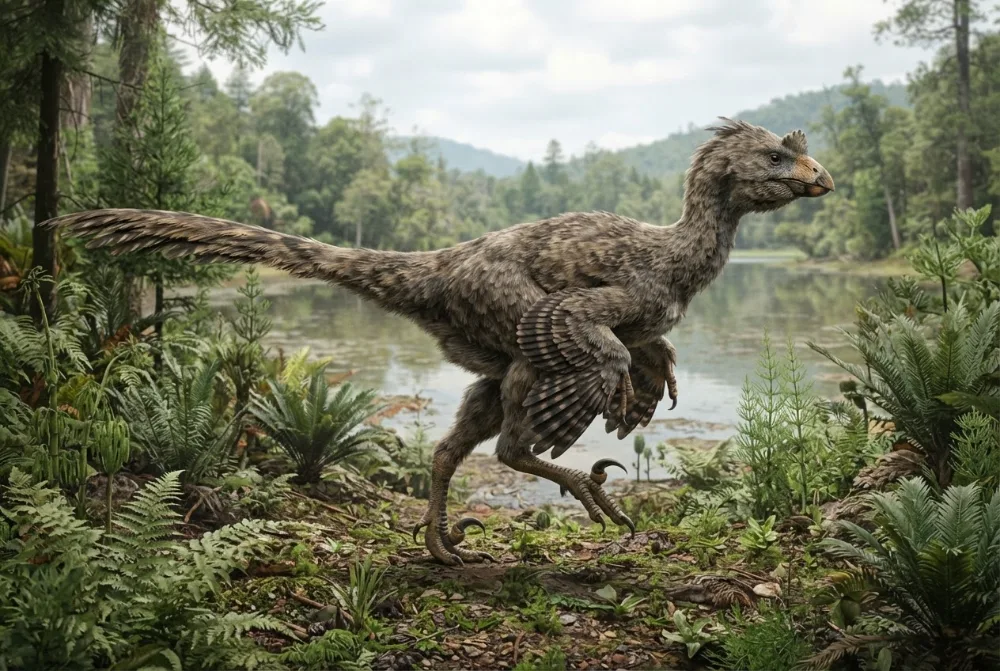
 inde njengeekati zasekhaya ezingama-4, impumlo ukuya emsileni🍌inde njengeebhanana ezingama-11 zilandelelana🍌inzima njengeebhanana ezingama-120🏃ibinokubaleka iimitha ezili-100 ngemizuzwana engama-10 (oyena mntu ukhawulezayo udinga i-9,6)
Yuanyanglong wayemkhulu kangakanani xa ethelekiswa NAWE?
Yimathematika nje kwibhrawuza yakho. Akukho nto igcinwayo okanye ithunyelwe naphi na.
Yayikhawuleza kangakanani?


Iinyani ezimnandi
Yuanyanglong is the first Early Cretaceous oviraptorosaur named from the Gobi Desert region, while other Gobi relatives come from later rocks.1
The name Yuanyanglong comes from the Mandarin word for lovebirds, because the two fossil skeletons were found together on the same block.1
The species name bainian means 'a hundred years' in Chinese, celebrating 100 years since the first oviraptorosaurs were named in 1924.1
Scientists found two partial skeletons, one with a poorly preserved skull and the other with parts of the hips, legs, and arms.1
Yuanyanglong is a basal oviraptorosaur, meaning it branched off early in the group's family tree, before many other oviraptorosaurs.1
Eyona mibuzo ibuzwa kakhulu: Yuanyanglong
?How big was Yuanyanglong?
It was a relatively small dinosaur, though its exact size is not given in the sources. It is described as a 'smaller' oviraptorosaur based on the two partial skeletons found.3
?What did Yuanyanglong eat?
It was an omnivore, meaning it ate both plants and small animals. Scientists found gastroliths (stomach stones) in its body cavity, which helped it grind up food.43
?Could Yuanyanglong run fast?
It had long legs and narrow feet, which usually help with running, but its hip bone had a very short area for leg muscles to attach. Scientists think it was probably not a fast runner and may have been better at wading in water like a modern wading bird.3
?Why was it called Yuanyanglong?
The name means 'lovebird dragon' in Chinese, because the two fossil skeletons were found lying together on the same rock block, like a pair of lovebirds.1
Kwiingcali zeedayinaso
- Igama lenzululwazi
- Yuanyanglong
- Inikwe igama ngu:
- Hao et al. 20254
- Iqela
- Iidayinaso ezingaqhelekanga ezineentsiba
- Usapho / iclade
- Oviraptorosauria4
- Ukuhlelwa
- Theropoda > Oviraptorosauria4
- Ubudala bamatye
- 121 ukuya ku-100 izigidi zeminyaka (Aptian / Albian)4
- Izakhiwo zamatye
- Miaogou4
- Amazwe
- iTshayina4
- Iirekhodi zeefosili
- 1 kwi-Paleobiology Database4
- Ukufunyanwa
- The fossils were discovered in 2021 in the Miaogou Formation in Inner Mongolia, China. In 2024, Hao and colleagues announced the new genus and species Yuanyanglong bainian, and the full description was published in 2025.1
- Kusaxoxwa ngayo
- Scientists are still debating exactly where Yuanyanglong sits on the oviraptorosaur family tree, since its skeleton is incomplete.1
Apho iinyani zivela khona
- Yuanyanglong (en.wikipedia.org)
- Yuanyanglong bainian | Dinosaur Database by DinoAnimals.com (dinoanimals.com)
- 内蒙古发现窃蛋龙类恐龙新属种——百年鸳鸯龙----中国科学院古脊椎动物与古人类研究所 (ivpp.ac.cn)
- Yuanyanglong in The Paleobiology Database (CC BY 4.0): ubudala, iindawo, izakhiwo zamatye, ukuhlelwa.
Yonke inyani ekweli phepha inenombolo ebonisa umthombo wayo. Ukuba siphosisile, uxolo, sithanda iidayinaso, asiyojenali yenzululwazi. Sixelele apha: [email protected], siya kuyilungisa.
 URex ulambile! I-Dino Wiki yiprojekthi katata ukwenzela unyana wakhe othanda iidayinaso, isimahla, ayinazintengiso, ayinazilandeli. Abantu abadala banokuphakela uRex isidlwana ukuze incede ihlale kwi-intanethi.Phakela uRex
Ezinye ezivela kwiqela elinye: Iidayinaso ezingaqhelekanga ezineentsiba
 TherizinosaurusIidayinaso ezingaqhelekanga ezineentsiba
 OviraptorIidayinaso ezingaqhelekanga ezineentsiba
 ChirostenotesIidayinaso ezingaqhelekanga ezineentsiba
 CitipesIidayinaso ezingaqhelekanga ezineentsiba
 LeptorhynchosIidayinaso ezingaqhelekanga ezineentsiba
 AvimimusIidayinaso ezingaqhelekanga ezineentsiba
 Stegosaurus
 Iguanodon
 Archaeopteryx
 Giganotosaurus
 Microraptor
 Deinonychus