 Woyɛ dino bɛn? Nsɛmmisa agoro
 Dino ko
 Dino mmirikatuo
 Dino agodie nketewa
 Stika nwoma
 Dino TOP nhyehyɛeɛ
 Ma me nwanwa!
Amanasaurus
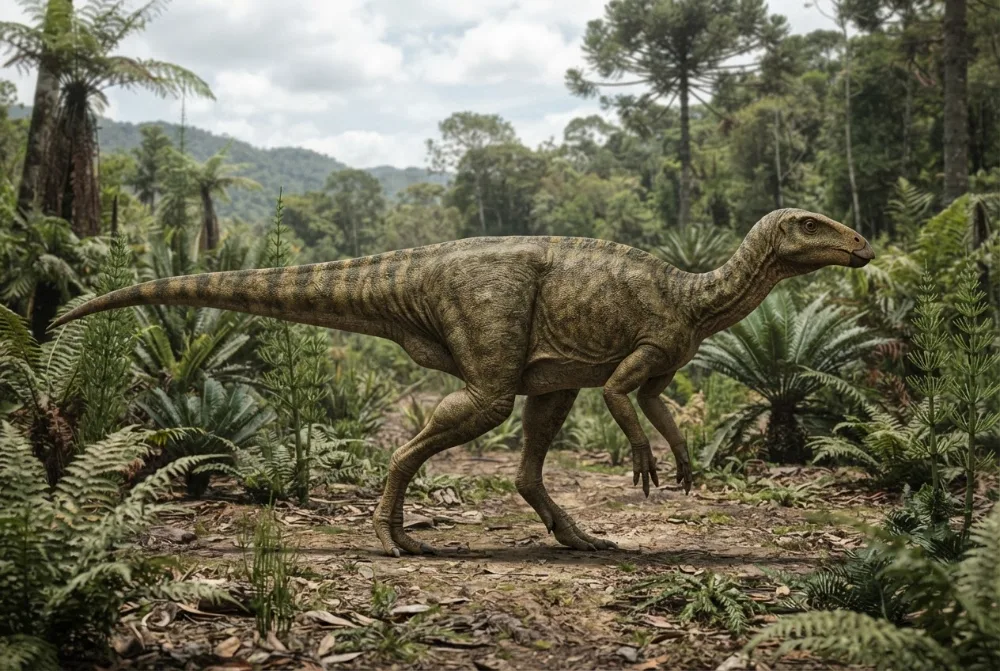
Amanasaurus was a plant-eating dinosaur that lived about 233 million years ago in what is now Brazil. It had a beak-like mouth and walked on four legs, munching on ferns and other plants. This dinosaur was about the size of a large dog, making it one of the bigger plant-eaters of its time.26
Berɛ bɛn na ɛtenaa ase?
Na ne kɛseɛ yɛ sɛn?
Na ne tenten yɛ sɛn?
Na ne korɔn yɛ sɛn?
nsusuiɛ
Na ne mu yɛ duru sɛn?
 ne tenten te sɛ fie agyinamoa 2.5 firi hwene kɔsi dua🍌ne tenten te sɛ kwadu 7 a wɔde abɔ toatoa sone mu duru bɛyɛ sɛ fie agyinamoa🍌ne mu duru te sɛ kwadu 29🪑ketewa ara ma ɔbɛtumi afa akonnwa ase🏃anka ɔbɛtumi atu mmirika mita 100 wɔ sikɛn 14 mu (onipa a ɔyɛ ntɛm sen biara hia 9.6)
Amanasaurus kɛseɛ yɛ sɛn sɛ wode toto WO ho a?
Akontaa nko ara wɔ wo browser mu. Yɛnkora biribiara so, na yɛmmfa biribiara nkɔ baabiara.
Na ɛyɛ ntɛm sɛn?


Nsɛm a ɛyɛ anigye
Amanasaurus lived during a time called the Carnian pluvial episode, a wet period when it rained a lot. Its name 'rain lizard' comes from that.12
Scientists know Amanasaurus from just two leg bones: a top part of a right thigh bone and a bottom part of a left thigh bone. These bones were found in the same spot.21
Amanasaurus was about the same size as the earliest dinosaurs that lived alongside it. This surprised scientists, who thought silesaurids were always smaller.2
The thigh bone of Amanasaurus had a special groove called a cleft between the top of the anterior trochanter and the shaft. This is the oldest such feature seen in any silesaurid.2
Nsɛm a wɔbisa bebree fa Amanasaurus ho
?How big was Amanasaurus?
About 1.3 metres (4.3 feet) long, based on the larger leg bone found. That is roughly the size of a large dog.4
?Was Amanasaurus a dinosaur?
Scientists disagree. Some say it was a very early ornithischian dinosaur, while others say it was a close cousin of dinosaurs. Either way, it is a dinosauriform, meaning it is closely related to dinosaurs.51
?What did Amanasaurus eat?
It was a plant-eater. It used its beak-like mouth to munch on ferns and other plants that grew during the rainy Carnian period.4
Ma dino ho animdefoɔ
- Nyansahu din
- Amanasaurus
- Obi a ɔtoo din
- Müller and Garcia 20236
- Kuo
- Ahabandifoɔ a wɔwɔ anomaa ano
- Abusua / kuo kɛseɛ
- Silesauridae6
- Nkyekyɛmu
- Ornithischia6
- Abotan no mfeɛ
- mfeɛ ɔpepem 237 kɔsi 227 (Carnian)6
- Aman
- Brazil6
- Fɔsil nkyerɛwee
- 1 wɔ The Paleobiology Database mu6
- Nhunumu
- Amanasaurus was named in 2023 by paleontologists Rodrigo T. Müller and Maurício S. Garcia. They studied two fossil leg bones found at the Pivetta site in Brazil.62
- Wɔda so gye ho akyinnye
- Scientists are not sure if Amanasaurus was a true dinosaur or a very close relative. Some studies place it inside Ornithischia, while others put it just outside Dinosauria.21
Baabi a nsɛm no firi
- Amanasaurus (en.wikipedia.org)
- A new silesaurid from Carnian beds of Brazil fills a gap in the radiation of avian line archosaurs (nature.com)
- Amanasaurus nesbitti | Dinosaur Database by DinoAnimals.com (dinoanimals.com)
- Paleontólogos da UFSM descobrem nova espécie pré-histórica que preenche lacuna na evolução dos dinossauros – UFSM (ufsm.br)
- A new silesaurid from Carnian beds of Brazil fills a gap in the radiation of avian line archosaurs | Scientific Reports (nature.com)
- Amanasaurus in The Paleobiology Database (CC BY 4.0): mfeɛ, mmeaeɛ, abotan nhyehyɛeɛ, nkyekyɛmu.
Asɛm biara a ɛwɔ krataafa yi so wɔ nɔma a ɛkyerɛ baabi a ɛfiri. Sɛ yɛfom biribi a, kafra, yɛyɛ dino dɔfoɔ, yɛnyɛ nyansahu nsɛmma krataa. Ka kyerɛ yɛn wɔ [email protected] na yɛbɛsiesie.
 Ɔkɔm de Rex! Dino Wiki yɛ agya bi adwuma a ɔyɛɛ maa ne babarima a ɔdɔ dino. Ɛyɛ kwa, dawurubɔ biara nni mu, akyidifoɔ biara nni mu. Mpanimfoɔ bɛtumi ama Rex aduane kakra, na aboa ama Dino Wiki atena intanɛt so.Ma Rex aduane
 Iguanodon
 Tenontosaurus
 Thescelosaurus
 Zalmoxes
 Camptosaurus
 Rhabdodon
 Nothosaurus
 Massospondylus
 Plateosaurus
 Coelophysis
 Podokesaurus
 Simosaurus