 Woyɛ dino bɛn? Nsɛmmisa agoro
 Dino ko
 Dino mmirikatuo
 Dino agodie nketewa
 Stika nwoma
 Dino TOP nhyehyɛeɛ
 Ma me nwanwa!
Amygdalodon
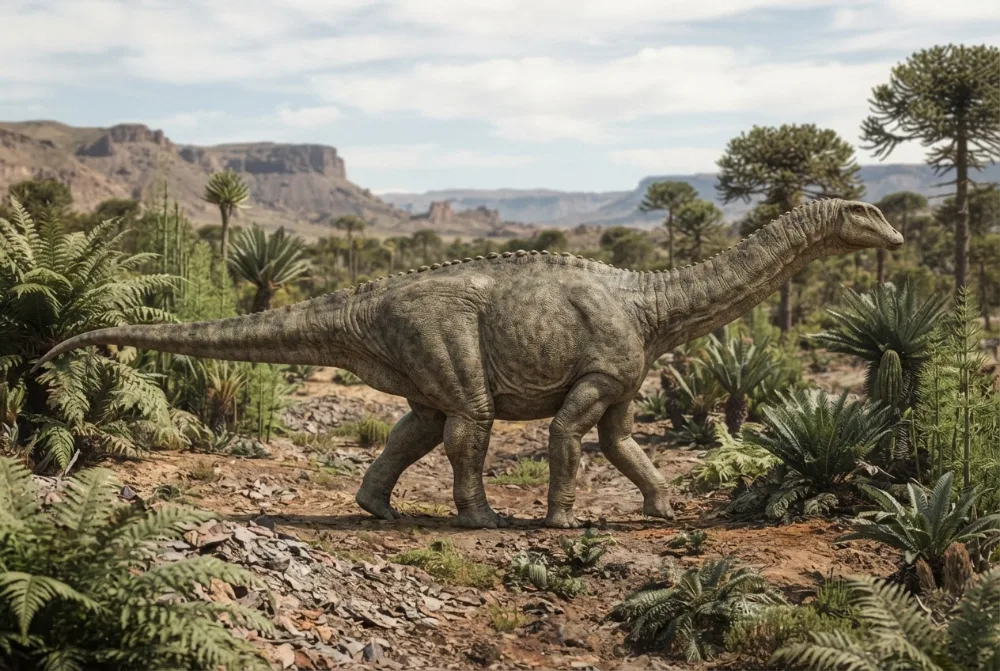
Amygdalodon was a huge, long-necked plant-eater that lived in Argentina during the Early Jurassic, about 180 million years ago. It was one of the very first sauropod dinosaurs ever found in South America, and scientists only know it from a single partial skeleton.12
Berɛ bɛn na ɛtenaa ase?
Na ne kɛseɛ yɛ sɛn?
Na ne tenten yɛ sɛn?
Na ne korɔn yɛ sɛn?
Na ne mu yɛ duru sɛn?
 ne tenten te sɛ kaa 3 a wɔde agyina toatoa so🍌ne tenten te sɛ kwadu 83 a wɔde abɔ toatoa so
 ne mu duru bɛyɛ sɛ ɔsono🍉ne mu duru te sɛ watamɛlɔn 1000🎒ne mu duru te sɛ sukuu klaas mũ 6 mu mmofra🐻❄️ne mu duru te sɛ polar bea 11🏃anka ɔbɛtumi atu mmirika mita 100 wɔ sikɛn 19 mu (onipa a ɔyɛ ntɛm sen biara hia 9.6)
Amygdalodon kɛseɛ yɛ sɛn sɛ wode toto WO ho a?
Akontaa nko ara wɔ wo browser mu. Yɛnkora biribiara so, na yɛmmfa biribiara nkɔ baabiara.
Na ɛyɛ ntɛm sɛn?


Nsɛm a ɛyɛ anigye
It was discovered in 1936 after a local scientist mentioned finding bones of a large reptile, and Dr. Tomás Suero went to look for more.1
The only known fossils include some vertebrae, ribs, teeth, and parts of the pelvis and shoulder blade.1
Amygdalodon lived about 180 to 172 million years ago, during the Toarcian stage of the Jurassic.1
It was a quadruped, meaning it walked on all four legs, like other sauropods.1
Scientists think Amygdalodon was a basal sauropod, meaning it was an early relative of the giant long-necked dinosaurs that came later.1
Some studies suggest it might be closely related to the Asian dinosaur Gongxianosaurus.1
Nsɛm a wɔbisa bebree fa Amygdalodon ho
?How big was Amygdalodon?
Amygdalodon was about 12 metres (39 feet) long and 4 metres (13 feet) tall, and weighed over 5 tonnes (5.5 short tons). Estimates vary, with some sources suggesting a length of 15 metres (49 feet).12
?What did Amygdalodon eat?
Amygdalodon was a plant-eater, or herbivore. Its almond-shaped teeth show early signs of adapting for bulk feeding, which later sauropods used to eat lots of plants.12
Ma dino ho animdefoɔ
- Nyansahu din
- Amygdalodon
- Obi a ɔtoo din
- Cabrera 19473
- Kuo
- Kɔn tenten
- Abusua / kuo kɛseɛ
- Gravisauria3
- Nkyekyɛmu
- Sauropodomorpha > Sauropoda3
- Abotan no mfeɛ
- mfeɛ ɔpepem 193 kɔsi 183 (Pliensbachian / Toarcian)3
- Abotan nhyehyɛeɛ
- Cerro Carnerero3
- Aman
- Argentina3
- Fɔsil nkyerɛwee
- 1 wɔ The Paleobiology Database mu3
- Nhunumu
- Amygdalodon was named by Argentine paleontologist Ángel Cabrera in 1947, based on fossils found in 1936 by Dr. Tomás Suero in Chubut, Argentina.12
- Wɔda so gye ho akyinnye
- Scientists are still debating exactly where Amygdalodon fits in the sauropod family tree, with some placing it as a very early sauropod and others as a more advanced eusauropod.1
Baabi a nsɛm no firi
- Amygdalodon (en.wikipedia.org)
- Amygdalodon | Natural History Museum (nhm.ac.uk)
- Amygdalodon in The Paleobiology Database (CC BY 4.0): mfeɛ, mmeaeɛ, abotan nhyehyɛeɛ, nkyekyɛmu.
Asɛm biara a ɛwɔ krataafa yi so wɔ nɔma a ɛkyerɛ baabi a ɛfiri. Sɛ yɛfom biribi a, kafra, yɛyɛ dino dɔfoɔ, yɛnyɛ nyansahu nsɛmma krataa. Ka kyerɛ yɛn wɔ [email protected] na yɛbɛsiesie.
 Ɔkɔm de Rex! Dino Wiki yɛ agya bi adwuma a ɔyɛɛ maa ne babarima a ɔdɔ dino. Ɛyɛ kwa, dawurubɔ biara nni mu, akyidifoɔ biara nni mu. Mpanimfoɔ bɛtumi ama Rex aduane kakra, na aboa ama Dino Wiki atena intanɛt so.Ma Rex aduane
 Brachiosaurus
 Diplodocus
 Brontosaurus
 Argentinosaurus
 Camarasaurus
 Morosaurus
 Dilophosaurus
 Stenopterygius
 Dorygnathus
 Scutellosaurus
 Sinosaurus
 Temnodontosaurus