 Woyɛ dino bɛn? Nsɛmmisa agoro
 Dino ko
 Dino mmirikatuo
 Dino agodie nketewa
 Stika nwoma
 Dino TOP nhyehyɛeɛ
 Ma me nwanwa!
Dorygnathus
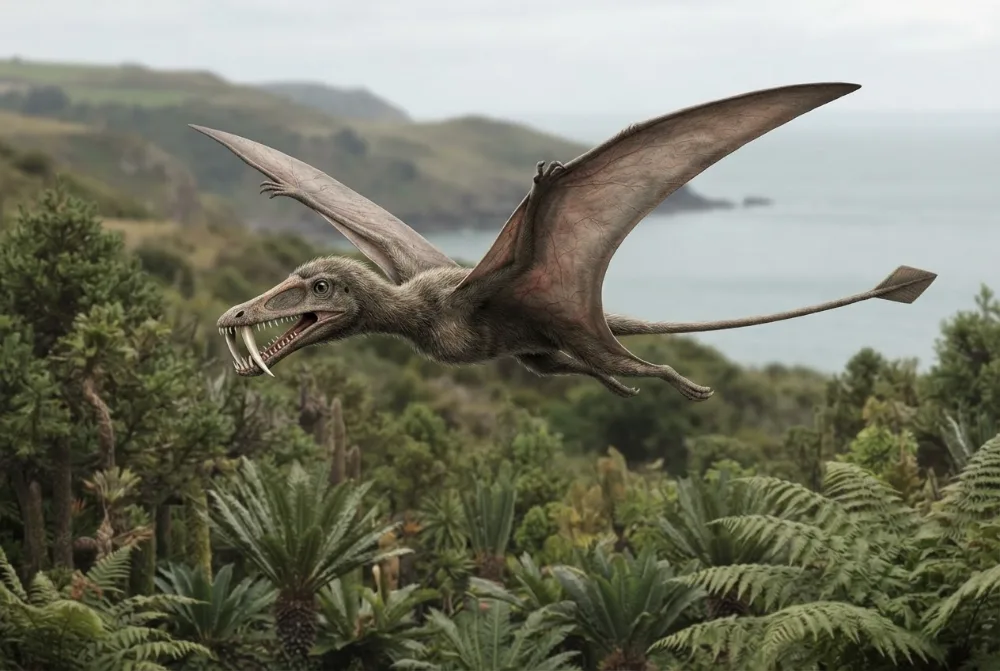
Dorygnathus was a flying reptile that lived during the Early Jurassic, about 180 million years ago. It had a short wingspan of around 1.5 metres (4.9 feet) and a long tail. Its most striking feature was its mouth full of large, curved fangs at the front and smaller teeth at the back.1
Berɛ bɛn na ɛtenaa ase?
Na ne kɛseɛ yɛ sɛn?
Na ne ntaban trɛ sɛn?
 ne tenten te sɛ fie agyinamoa 3 firi hwene kɔsi dua⚽anka ɔbɛtumi atu atwa bɔɔlobɔ prama mũ wɔ sikɛn 8.4 mu
Dorygnathus kɛseɛ yɛ sɛn sɛ wode toto WO ho a?
Akontaa nko ara wɔ wo browser mu. Yɛnkora biribiara so, na yɛmmfa biribiara nkɔ baabiara.
Na ɛyɛ ntɛm sɛn?


Nsɛm a ɛyɛ anigye
Dorygnathus had different kinds of teeth: four large fangs in the upper jaw and three or four in the lower jaw at the front, with smaller, straighter teeth behind. This is called heterodonty and is rare in modern reptiles.1
The fifth toe on its hind feet was unusually long and pointed sideways. Scientists think it may have supported a membrane, like the one on its wings.1
Dorygnathus was a close relative of the later pterosaur Rhamphorhynchus, and lived at the same time as another pterosaur called Campylognathoides in Germany.1
Over 50 specimens of Dorygnathus have been found, many in slate quarries. The best fossils are kept at the State Museum of Natural History Stuttgart in Germany.1
Some Dorygnathus teeth show wear from eating hard food like crustaceans or mollusks, not just fish.1
The smallest known Dorygnathus had a wingspan of 60 centimetres (2 feet). Scientists think very young juveniles could not fly far over the open sea.1
Nsɛm a wɔbisa bebree fa Dorygnathus ho
?How big was Dorygnathus?
Dorygnathus had a wingspan of about 1.5 metres (4.9 feet), though some large individuals reached 1.7 metres (5.6 feet).12
?What did Dorygnathus eat?
Dorygnathus ate small fish, as shown by fossilised stomach contents. Some teeth also show wear from eating hard food like crustaceans or mollusks.13
?Could Dorygnathus fly?
Yes, Dorygnathus was a flying reptile. It had wings made of skin and other membranes, and its flight muscles attached to a small triangular breastbone.1
?Is Dorygnathus a dinosaur?
No, Dorygnathus was a pterosaur, a flying reptile that lived during the age of dinosaurs, but it was not a dinosaur.1
Ma dino ho animdefoɔ
- Nyansahu din
- Dorygnathus
- Obi a ɔtoo din
- Wagner 18604
- Kuo
- Wim mmoa a wɔwea
- Abusua / kuo kɛseɛ
- Rhamphorhynchidae4
- Nkyekyɛmu
- Pterosauria > Rhamphorhynchidae4
- Abotan no mfeɛ
- mfeɛ ɔpepem 184 kɔsi 183 (Toarcian)4
- Abotan nhyehyɛeɛ
- Posidonia Shale, Posidonienschiefer, Marne de Flize4
- Aman
- Gyaaman, Frɛnse4
- Fɔsil nkyerɛwee
- 37 wɔ The Paleobiology Database mu4
- Nhunumu
- The first fossils of Dorygnathus were found near Banz, Bavaria, Germany, and were described in 1830 by Carl Theodori as Ornithocephalus banthensis. In 1860, Johann Andreas Wagner gave it the name Dorygnathus, meaning 'spear jaw'.1
- Wɔda so gye ho akyinnye
- Scientists still debate whether Dorygnathus walked on two legs or four. Some think it could walk on two legs because of its long tail, but most now believe all pterosaurs walked on all fours.1
Baabi a nsɛm no firi
- Dorygnathus (en.wikipedia.org)
- The Early Jurassic Pterosaur Dorygnathus Banthensis (Theodori, 1830) | The Palaeontological Association (palass.org)
- Press | State Museum of Natural History Stuttgart (naturkundemuseum-bw.de)
- Dorygnathus in The Paleobiology Database (CC BY 4.0): mfeɛ, mmeaeɛ, abotan nhyehyɛeɛ, nkyekyɛmu.
Asɛm biara a ɛwɔ krataafa yi so wɔ nɔma a ɛkyerɛ baabi a ɛfiri. Sɛ yɛfom biribi a, kafra, yɛyɛ dino dɔfoɔ, yɛnyɛ nyansahu nsɛmma krataa. Ka kyerɛ yɛn wɔ [email protected] na yɛbɛsiesie.
 Ɔkɔm de Rex! Dino Wiki yɛ agya bi adwuma a ɔyɛɛ maa ne babarima a ɔdɔ dino. Ɛyɛ kwa, dawurubɔ biara nni mu, akyidifoɔ biara nni mu. Mpanimfoɔ bɛtumi ama Rex aduane kakra, na aboa ama Dino Wiki atena intanɛt so.Ma Rex aduane
 Pteranodon
 Quetzalcoatlus
 Rhamphorhynchus
 Anhanguera
 Pterodactylus
 Eudimorphodon
 Dilophosaurus
 Stenopterygius
 Lufengosaurus
 Scutellosaurus
 Yunnanosaurus
 Sinosaurus