 Woyɛ dino bɛn? Nsɛmmisa agoro
 Dino ko
 Dino mmirikatuo
 Dino agodie nketewa
 Stika nwoma
 Dino TOP nhyehyɛeɛ
 Ma me nwanwa!
Berɛ bɛn na ɛtenaa ase?

Na ne kɛseɛ yɛ sɛn?
Na ne tenten yɛ sɛn?
Na ne korɔn yɛ sɛn?
Na ne mu yɛ duru sɛn?
 ne tenten te sɛ kaa 2 a wɔde agyina toatoa so🍌ne tenten te sɛ kwadu 56 a wɔde abɔ toatoa so
 ne mu duru bɛyɛ sɛ ɔsono🍉ne mu duru te sɛ watamɛlɔn 1100🎒ne mu duru te sɛ sukuu klaas mũ 7 mu mmofra🐻❄️ne mu duru te sɛ polar bea 12🏃anka ɔbɛtumi atu mmirika mita 100 wɔ sikɛn 20 mu (onipa a ɔyɛ ntɛm sen biara hia 9.6)
Antetonitrus kɛseɛ yɛ sɛn sɛ wode toto WO ho a?
Akontaa nko ara wɔ wo browser mu. Yɛnkora biribiara so, na yɛmmfa biribiara nkɔ baabiara.
Na ɛyɛ ntɛm sɛn?


Nsɛm a ɛyɛ anigye
Antetonitrus lived about 201 to 193 million years ago, during the Early Jurassic.2
Its name means 'before thunder' because it lived before the famous sauropod Brontosaurus, whose name means 'thunder lizard'.1
Unlike later sauropods, Antetonitrus had a flexible thumb that could grasp, not just support weight.1
Its fossils were first found in 1981 and were originally thought to belong to another dinosaur called Euskelosaurus.1
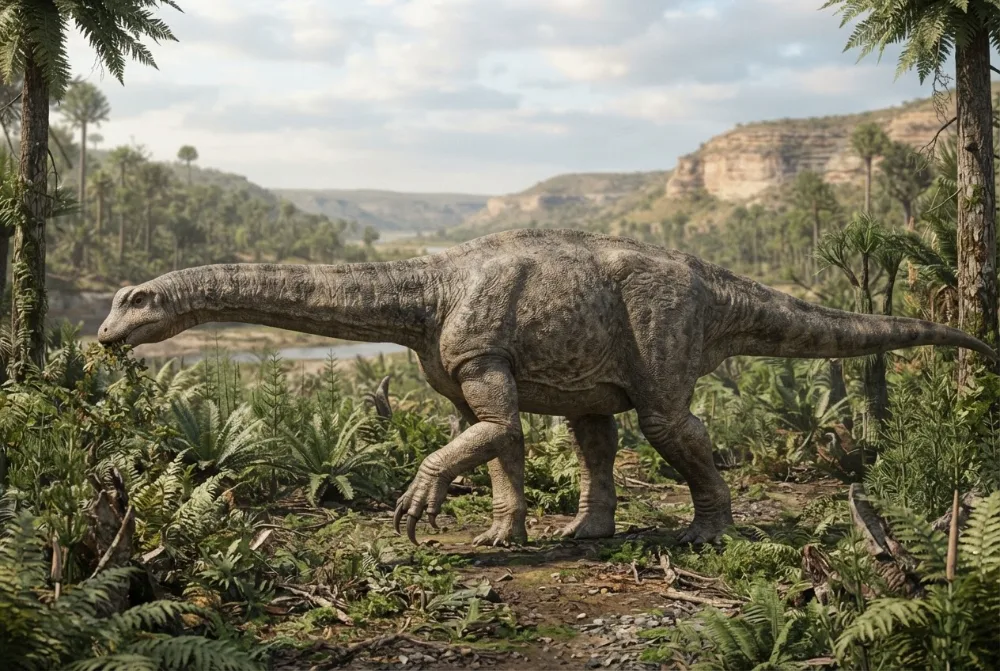
Antetonitrus was about 8 to 10 metres long and weighed as much as a large elephant.1
Its thigh bone was slightly S-shaped when viewed from the side, unlike the straight thigh bones of later sauropods.1
Antetonitrus is one of the oldest known sauropods, tied with other early sauropods from the same formation in South Africa.1
Nsɛm a wɔbisa bebree fa Antetonitrus ho
?How big was Antetonitrus?
Antetonitrus was about 8 to 10 metres (26 to 33 feet) long, stood 1.5 to 2 metres (5 to 6.5 feet) tall at the hip, and weighed around 5.6 metric tons (6.2 short tons). It may not have been fully grown yet.34
?Could Antetonitrus grab things with its hands?
Yes. Unlike later sauropods, Antetonitrus had a flexible thumb that could grasp, not just support weight. Its wrist bones were not locked into a permanent weight-supporting position.35
Ma dino ho animdefoɔ
- Nyansahu din
- Antetonitrus
- Obi a ɔtoo din
- Yates and Kitching 20036
- Kuo
- Kɔn tenten
- Abusua / kuo kɛseɛ
- Lessemsauridae6
- Nkyekyɛmu
- Sauropodomorpha > Sauropoda6
- Abotan no mfeɛ
- mfeɛ ɔpepem 201 kɔsi 193 (Hettangian / Sinemurian)6
- Abotan nhyehyɛeɛ
- Elliot6
- Aman
- Afrika Anaafoɔ6
- Fɔsil nkyerɛwee
- 2 wɔ The Paleobiology Database mu6
- Nhunumu
- Antetonitrus was named in 2003 by Adam Yates and James Kitching. The fossils were discovered by Kitching in 1981 in the Free State of South Africa and were stored as Euskelosaurus until Yates recognized them as a new dinosaur.1
- Wɔda so gye ho akyinnye
- Scientists are not sure if Antetonitrus was a true sauropod or a very close relative, because it had both primitive and advanced features.1
Baabi a nsɛm no firi
- Antetonitrus (en.wikipedia.org)
- PBDB Taxon (paleobiodb.org)
- Antetonitrus (en.wikipedia.org)
- A Giant Dinosaur from the Earliest Jurassic of South Africa and the Transition to Quadrupedality in Early Sauropodomorphs: Current Biology (cell.com)
- The earliest known sauropod dinosaur and the first steps towards sauropod locomotion (royalsocietypublishing.org)
- Antetonitrus in The Paleobiology Database (CC BY 4.0): mfeɛ, mmeaeɛ, abotan nhyehyɛeɛ, nkyekyɛmu.
Asɛm biara a ɛwɔ krataafa yi so wɔ nɔma a ɛkyerɛ baabi a ɛfiri. Sɛ yɛfom biribi a, kafra, yɛyɛ dino dɔfoɔ, yɛnyɛ nyansahu nsɛmma krataa. Ka kyerɛ yɛn wɔ [email protected] na yɛbɛsiesie.
 Ɔkɔm de Rex! Dino Wiki yɛ agya bi adwuma a ɔyɛɛ maa ne babarima a ɔdɔ dino. Ɛyɛ kwa, dawurubɔ biara nni mu, akyidifoɔ biara nni mu. Mpanimfoɔ bɛtumi ama Rex aduane kakra, na aboa ama Dino Wiki atena intanɛt so.Ma Rex aduane
 Brachiosaurus
 Diplodocus
 Brontosaurus
 Argentinosaurus
 Camarasaurus
 Morosaurus
 Dilophosaurus
 Stenopterygius
 Dorygnathus
 Scutellosaurus
 Sinosaurus
 Temnodontosaurus