 Woyɛ dino bɛn? Nsɛmmisa agoro
 Dino ko
 Dino mmirikatuo
 Dino agodie nketewa
 Stika nwoma
 Dino TOP nhyehyɛeɛ
 Ma me nwanwa!
Berɛ bɛn na ɛtenaa ase?

Na ne kɛseɛ yɛ sɛn?
Na ne tenten yɛ sɛn?
Na ne korɔn yɛ sɛn?
nsusuiɛ
Na ne mu yɛ duru sɛn?
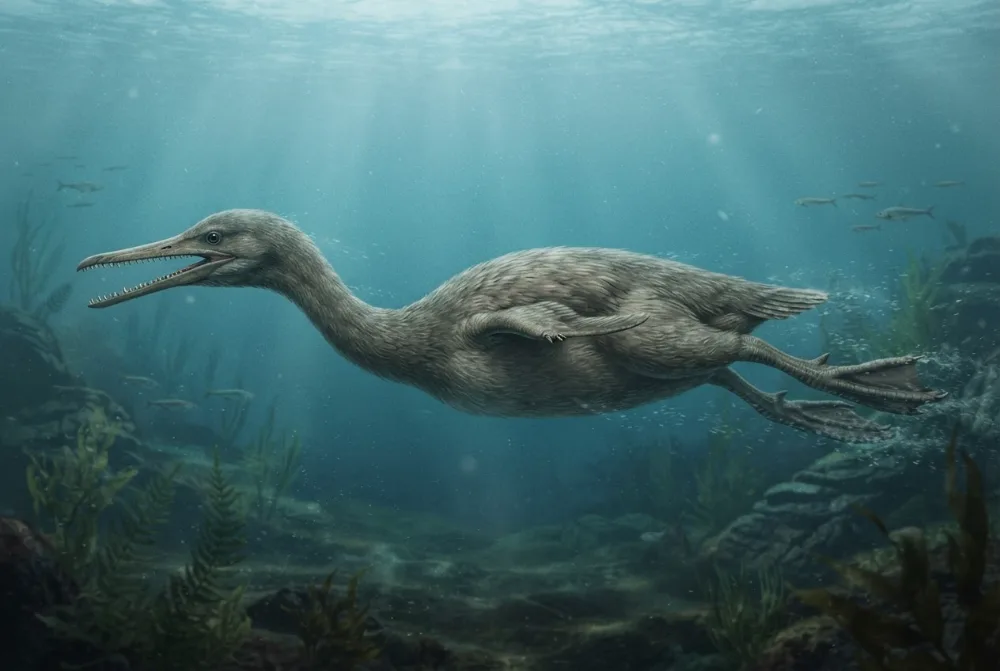
 ne tenten te sɛ fie agyinamoa 4 firi hwene kɔsi dua🍌ne tenten te sɛ kwadu 10 a wɔde abɔ toatoa so🍌ne mu duru te sɛ kwadu 88🏊anka ɔbɛtumi aguare nsuguarebea kɛseɛ (50 m) tenten wɔ sikɛn 11 mu
Hesperornis kɛseɛ yɛ sɛn sɛ wode toto WO ho a?
Akontaa nko ara wɔ wo browser mu. Yɛnkora biribiara so, na yɛmmfa biribiara nkɔ baabiara.
Na ɛyɛ ntɛm sɛn?


Nsɛm a ɛyɛ anigye
Hesperornis was one of the first birds to give up flying and become a full-time swimmer.2
Its legs were placed far back on its body, like a loon, making it clumsy on land but a powerful diver.1
The first fossils of Hesperornis were found by famous fossil hunter Othniel Charles Marsh in 1870 in Kansas.12
Several species of Hesperornis lived from about 90 to 66 million years ago, during the Late Cretaceous.5
Hesperornis fossils have been found in many places, including Canada, the United States, Russia, and Sweden.5
Nsɛm a wɔbisa bebree fa Hesperornis ho
?How big was Hesperornis?
About 1.5 to 2 metres (4.9 to 6.6 ft) long and weighed around 10.6 kilograms (23 lb).1
?Did Hesperornis have teeth?
Yes, it had teeth in its beak, which is rare for birds. The teeth sat in a groove, not in individual sockets.1
?Could Hesperornis fly?
No, it could not fly. Its wings were tiny and useless for flight, and its breastbone lacked a keel for flight muscles.13
?What did Hesperornis eat?
It ate fish, which it caught with its tooth-lined beak while diving in the sea.4
?When did Hesperornis live?
It lived during the Late Cretaceous period, about 83.6 to 72 million years ago, and possibly into the early Maastrichtian.1
?Where was Hesperornis found?
Fossils have been found in Kansas, Canada, Russia, Sweden, and other places, mostly in marine rocks.1
?Could Hesperornis walk on land?
It was clumsy on land. Its legs were placed far back, so it probably pushed itself along on its belly like a seal.1
Atosɛm sɛefoɔ
Atosɛm: Some people think Hesperornis was a dinosaur.
Nokorɛ: Hesperornis was a bird, not a dinosaur. Birds evolved from dinosaurs, but Hesperornis itself is classified as a bird.1
Ma dino ho animdefoɔ
- Nyansahu din
- Hesperornis
- Obi a ɔtoo din
- Marsh 18725
- Kuo
- Nnomaa a wɔdii kan
- Abusua / kuo kɛseɛ
- Hesperornithidae5
- Nkyekyɛmu
- Theropoda > Avialae5
- Abotan no mfeɛ
- mfeɛ ɔpepem 90 kɔsi 66 (Coniacian / Maastrichtian)5
- Abotan nhyehyɛeɛ
- Pierre Shale, Rybushka, Niobrara5
- Aman
- Kanada, Amerika, Rɔhyea, Swiidin5
- Fɔsil nkyerɛwee
- 65 wɔ The Paleobiology Database mu5
- Wɔsan frɛ no
- Coniornis, Hargeria, Lestornis (din dada no nso, yɛkan no sɛ aboa korɔ no ara)5
- Nhunumu
- Othniel Charles Marsh discovered the first Hesperornis fossil in 1870 near the Smoky Hill River in Kansas. He named it Hesperornis regalis in 1872.12
- Wɔda so gye ho akyinnye
- Scientists are still debating exactly how many species of Hesperornis existed, because many fossils are incomplete.1
Baabi a nsɛm no firi
- Hesperornis (en.wikipedia.org)
- The Hesperornithiformes: A Review of the Diversity, Distribution, and Ecology of the Earliest Diving Birds (mdpi.com)
- Hesperornis - Scholars | Britannica Kids | Encyclopedia (kids.britannica.com)
- Hesperornis Facts, Artwork, Information - National Geographic | National Geographic (nationalgeographic.com)
- Hesperornis in The Paleobiology Database (CC BY 4.0): mfeɛ, mmeaeɛ, abotan nhyehyɛeɛ, nkyekyɛmu.
Asɛm biara a ɛwɔ krataafa yi so wɔ nɔma a ɛkyerɛ baabi a ɛfiri. Sɛ yɛfom biribi a, kafra, yɛyɛ dino dɔfoɔ, yɛnyɛ nyansahu nsɛmma krataa. Ka kyerɛ yɛn wɔ [email protected] na yɛbɛsiesie.
 Ɔkɔm de Rex! Dino Wiki yɛ agya bi adwuma a ɔyɛɛ maa ne babarima a ɔdɔ dino. Ɛyɛ kwa, dawurubɔ biara nni mu, akyidifoɔ biara nni mu. Mpanimfoɔ bɛtumi ama Rex aduane kakra, na aboa ama Dino Wiki atena intanɛt so.Ma Rex aduane
 Archaeopteryx
 Ichthyornis
 Baptornis
 Jurapteryx
 Gobipteryx
 Martinavis
 Tyrannosaurus
 Triceratops
 Velociraptor
 Spinosaurus
 Ankylosaurus
 Parasaurolophus