 Woyɛ dino bɛn? Nsɛmmisa agoro
 Dino ko
 Dino mmirikatuo
 Dino agodie nketewa
 Stika nwoma
 Dino TOP nhyehyɛeɛ
 Ma me nwanwa!
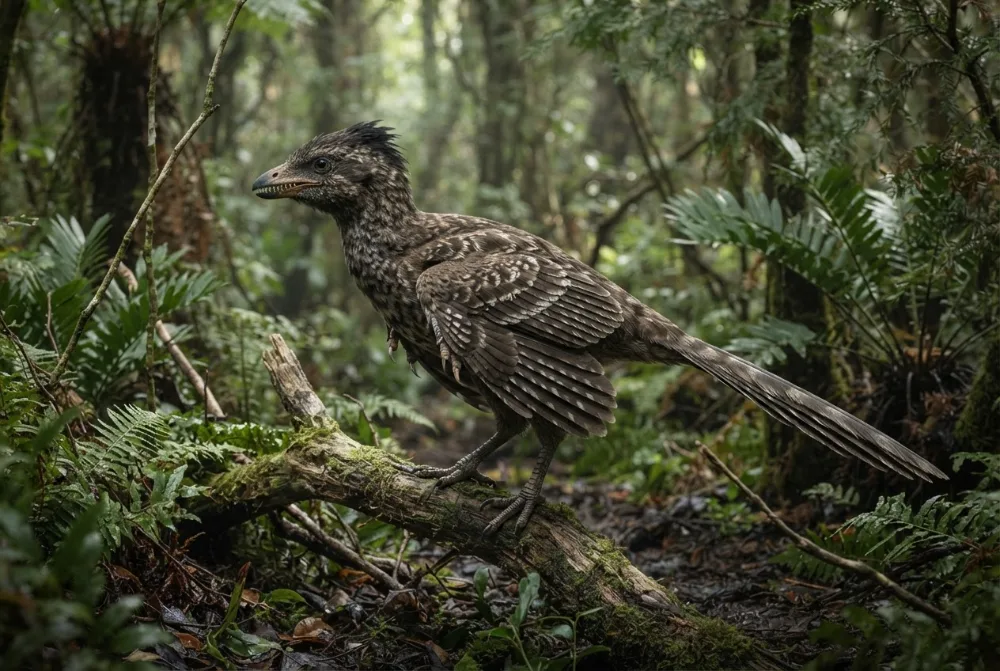
Jurapteryx
Jurapteryx was a small, feathered avialan that lived during the Jurassic and Cretaceous periods. It could fly and had sharp teeth for catching fish and insects. Think of it as an early, toothed bird that fluttered through ancient forests.4
Berɛ bɛn na ɛtenaa ase?
Na ne kɛseɛ yɛ sɛn?
Na ne tenten yɛ sɛn?
Na ne korɔn yɛ sɛn?
nsusuiɛ
Na ne mu yɛ duru sɛn?
Jurapteryx kɛseɛ yɛ sɛn sɛ wode toto WO ho a?
Akontaa nko ara wɔ wo browser mu. Yɛnkora biribiara so, na yɛmmfa biribiara nkɔ baabiara.
Na ɛyɛ ntɛm sɛn?


Nsɛm a ɛyɛ anigye
Jurapteryx is sometimes considered a synonym of Archaeopteryx, meaning some scientists think they are the same animal.4
Its name means 'Jurassic wing', because it lived during the Jurassic Period and had wings for flying.4
The only known fossil of Jurapteryx is a complete skeleton, found in the Altmühltal Formation of Germany.4
Jurapteryx lived in a coastal environment, near shallow lagoons where it could hunt for fish.4
It was a small avialan, about the size of a modern crow, with a wingspan of around half a meter.4
Jurapteryx had teeth, unlike modern birds, which it used to catch slippery prey like fish.4
Nsɛm a wɔbisa bebree fa Jurapteryx ho
?Is Jurapteryx a dinosaur?
Yes, Jurapteryx is a small, feathered avialan dinosaur, sometimes considered a synonym of Archaeopteryx.12
?How big was Jurapteryx?
Jurapteryx was about the size of a modern crow, with a body length of up to 50 centimetres (20 inches) and a wingspan of around 70 centimetres (28 inches).12
?Could Jurapteryx fly?
Yes, Jurapteryx could fly or glide. It had broad, feathered wings, but scientists are not sure if it was a strong flapper or mostly a glider.12
?What did Jurapteryx eat?
Jurapteryx was carnivorous and likely ate small prey such as fish, insects, and small reptiles, catching them with its sharp teeth.12
?Did Jurapteryx have teeth?
Yes, Jurapteryx had many small, sharp teeth, unlike modern birds, which it used to catch slippery prey like fish.12
?When did Jurapteryx live?
Jurapteryx lived during the Late Jurassic Period, around 150 to 145 million years ago.12
?Where was Jurapteryx found?
The only known fossil of Jurapteryx was found in the Altmühltal Formation of Germany, near Solnhofen.12
?Is Jurapteryx the same as Archaeopteryx?
Many scientists think Jurapteryx is a synonym of Archaeopteryx, meaning they may be the same animal, but some consider it a separate species.13
Atosɛm sɛefoɔ
Atosɛm: Jurapteryx is a completely separate species from Archaeopteryx.
Nokorɛ: Many scientists think Jurapteryx is actually a synonym of Archaeopteryx, meaning it may be the same genus.4
Ma dino ho animdefoɔ
- Nyansahu din
- Jurapteryx
- Obi a ɔtoo din
- Howgate 19854
- Kuo
- Nnomaa a wɔdii kan
- Abusua / kuo kɛseɛ
- Avialae4
- Nkyekyɛmu
- Theropoda > Avialae4
- Abotan no mfeɛ
- mfeɛ ɔpepem 149 kɔsi 121 (Tithonian / Barremian)4
- Abotan nhyehyɛeɛ
- Altmühltal4
- Aman
- Gyaaman4
- Fɔsil nkyerɛwee
- 10 wɔ The Paleobiology Database mu4
- Nhunumu
- Jurapteryx was named by M. E. Howgate in 1985, based on a complete skeleton found at Workerszell, Eichstätt, Germany.4
- Wɔda so gye ho akyinnye
- Scientists are still debating whether Jurapteryx is a distinct genus or just a species of Archaeopteryx.4
Baabi a nsɛm no firi
- Archaeopteryx (Wikipedia) (Wikipedia)
- Archaeopteryx | Natural History Museum (nhm.ac.uk)
- Jurapteryx recurva and Serikornis (reptileevolution.com)
- Jurapteryx in The Paleobiology Database (CC BY 4.0): mfeɛ, mmeaeɛ, abotan nhyehyɛeɛ, nkyekyɛmu.
Asɛm biara a ɛwɔ krataafa yi so wɔ nɔma a ɛkyerɛ baabi a ɛfiri. Sɛ yɛfom biribi a, kafra, yɛyɛ dino dɔfoɔ, yɛnyɛ nyansahu nsɛmma krataa. Ka kyerɛ yɛn wɔ [email protected] na yɛbɛsiesie.
 Ɔkɔm de Rex! Dino Wiki yɛ agya bi adwuma a ɔyɛɛ maa ne babarima a ɔdɔ dino. Ɛyɛ kwa, dawurubɔ biara nni mu, akyidifoɔ biara nni mu. Mpanimfoɔ bɛtumi ama Rex aduane kakra, na aboa ama Dino Wiki atena intanɛt so.Ma Rex aduane
 Archaeopteryx
 Hesperornis
 Ichthyornis
 Baptornis
 Gobipteryx
 Martinavis
 Stegosaurus
 Iguanodon
 Giganotosaurus
 Microraptor
 Deinonychus
 Baryonyx