 Woyɛ dino bɛn? Nsɛmmisa agoro
 Dino ko
 Dino mmirikatuo
 Dino agodie nketewa
 Stika nwoma
 Dino TOP nhyehyɛeɛ
 Ma me nwanwa!
Arrudatitan
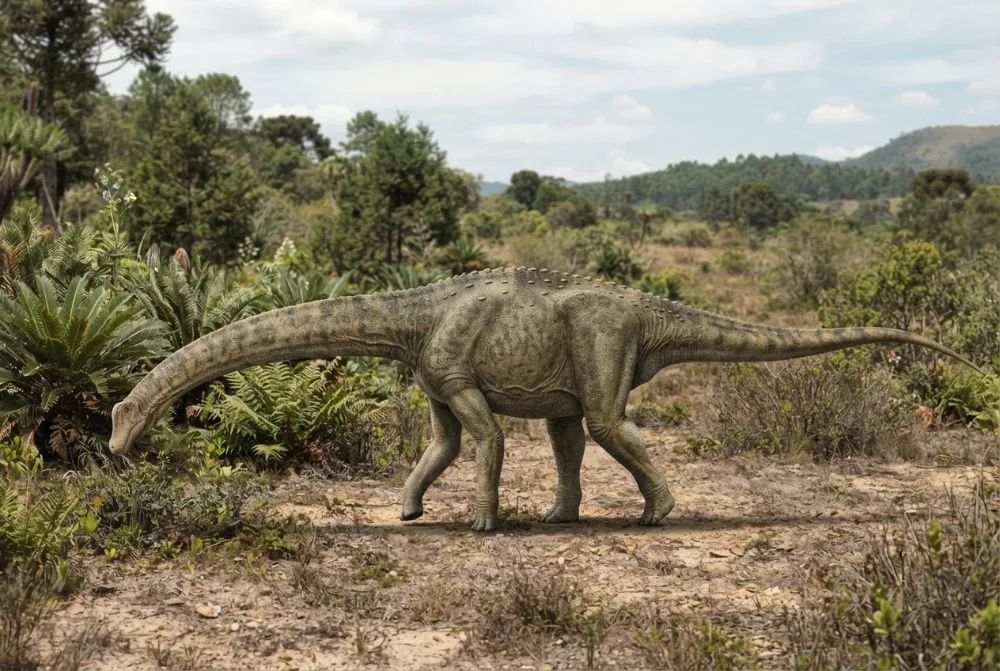
Arrudatitan was a huge, long-necked plant-eater that lived in Brazil during the Late Cretaceous. It was a titanosaur, a group of sauropods that included some of the biggest land animals ever. Even though it was giant, Arrudatitan was more slender and graceful than many of its relatives.1
Berɛ bɛn na ɛtenaa ase?
Na ne kɛseɛ yɛ sɛn?
Na ne tenten yɛ sɛn?
Na ne korɔn yɛ sɛn?
nsusuiɛ
Na ne mu yɛ duru sɛn?

 ne tenten te sɛ kaa 3 a wɔde agyina toatoa so🍌ne tenten te sɛ kwadu 83 a wɔde abɔ toatoa sone mu duru te sɛ kaa 8🍉ne mu duru te sɛ watamɛlɔn 2500🎒ne mu duru te sɛ sukuu klaas mũ 15 mu mmofra🐻❄️ne mu duru te sɛ polar bea 27🏃anka ɔbɛtumi atu mmirika mita 100 wɔ sikɛn 26 mu (onipa a ɔyɛ ntɛm sen biara hia 9.6)
Arrudatitan kɛseɛ yɛ sɛn sɛ wode toto WO ho a?
Akontaa nko ara wɔ wo browser mu. Yɛnkora biribiara so, na yɛmmfa biribiara nkɔ baabiara.
Na ɛyɛ ntɛm sɛn?


Nsɛm a ɛyɛ anigye
Arrudatitan was first thought to be a species of Aeolosaurus, but scientists later gave it its own genus name in 2021.12
The first fossils were found in 1997 by a farmer and his 12-year-old nephew in a field in Cândido Rodrigues, Brazil.1
Its femur (thigh bone) was 1.55 metres (5.1 feet) long, which helps scientists estimate its total length at about 15 metres (49 feet).1
Crocodylomorph and theropod teeth were found near the Arrudatitan skeleton, but there were no bite marks on the bones.1
Arrudatitan lived during the Campanian to Maastrichtian stages of the Late Cretaceous, about 72 to 68 million years ago.1
The name Arrudatitan honors Brazilian paleontologist Antônio Celso de Arruda Campos.1
Nsɛm a wɔbisa bebree fa Arrudatitan ho
?How big was Arrudatitan?
Arrudatitan grew up to about 15 metres (49 feet) long, based on its fossils. Its thigh bone was 1.55 metres (5.1 feet) long.1
?What did Arrudatitan eat?
It was a plant-eater, or herbivore. As a titanosaur sauropod, it ate plants.4
?When did Arrudatitan live?
Arrudatitan lived during the Late Cretaceous, about 72 to 68 million years ago.1
?Where was Arrudatitan found?
Its fossils were found in the Adamantina Formation of Brazil, in a field near Cândido Rodrigues.1
Ma dino ho animdefoɔ
- Nyansahu din
- Arrudatitan
- Obi a ɔtoo din
- Silva Junior et al. 20224
- Kuo
- Kɔn tenten
- Abusua / kuo kɛseɛ
- Rinconsauria4
- Nkyekyɛmu
- Sauropodomorpha > Sauropoda > Titanosauria > Macronaria4
- Abotan no mfeɛ
- mfeɛ ɔpepem 84 kɔsi 66 (Campanian / Maastrichtian)4
- Abotan nhyehyɛeɛ
- Adamantina4
- Aman
- Brazil4
- Fɔsil nkyerɛwee
- 1 wɔ The Paleobiology Database mu4
- Nhunumu
- The first fossils were found in 1997 by Ademir Frare and his 12-year-old nephew Luiz Augusto dos Santos Frare in a field in Cândido Rodrigues, Brazil. They told paleontologist Antônio Celso de Arruda Campos, and the bones were collected by staff of the Museu de Paleontologia de Monte Alto. The species was first named Aeolosaurus maximus in 2011, but moved to its own genus Arrudatitan in 2021.1
- Wɔda so gye ho akyinnye
- Scientists are still debating exactly how Arrudatitan is related to other titanosaurs, and whether it belongs in the group Rinconsauria or is closer to other South American giants.14
Baabi a nsɛm no firi
- Arrudatitan (en.wikipedia.org)
- Reassessment of Aeolosaurus maximus, a titanosaur dinosaur from the Late Cretaceous of Southeastern Brazil (exa.ai)
- Arrudatitan maximus | Dinosaur Database by DinoAnimals.com (dinoanimals.com)
- Arrudatitan in The Paleobiology Database (CC BY 4.0): mfeɛ, mmeaeɛ, abotan nhyehyɛeɛ, nkyekyɛmu.
Asɛm biara a ɛwɔ krataafa yi so wɔ nɔma a ɛkyerɛ baabi a ɛfiri. Sɛ yɛfom biribi a, kafra, yɛyɛ dino dɔfoɔ, yɛnyɛ nyansahu nsɛmma krataa. Ka kyerɛ yɛn wɔ [email protected] na yɛbɛsiesie.
 Ɔkɔm de Rex! Dino Wiki yɛ agya bi adwuma a ɔyɛɛ maa ne babarima a ɔdɔ dino. Ɛyɛ kwa, dawurubɔ biara nni mu, akyidifoɔ biara nni mu. Mpanimfoɔ bɛtumi ama Rex aduane kakra, na aboa ama Dino Wiki atena intanɛt so.Ma Rex aduane
 Brachiosaurus
 Diplodocus
 Brontosaurus
 Argentinosaurus
 Camarasaurus
 Morosaurus
 Tyrannosaurus
 Triceratops
 Velociraptor
 Spinosaurus
 Ankylosaurus
 Parasaurolophus