 Woyɛ dino bɛn? Nsɛmmisa agoro
 Dino ko
 Dino mmirikatuo
 Dino agodie nketewa
 Stika nwoma
 Dino TOP nhyehyɛeɛ
 Ma me nwanwa!
Barapasaurus
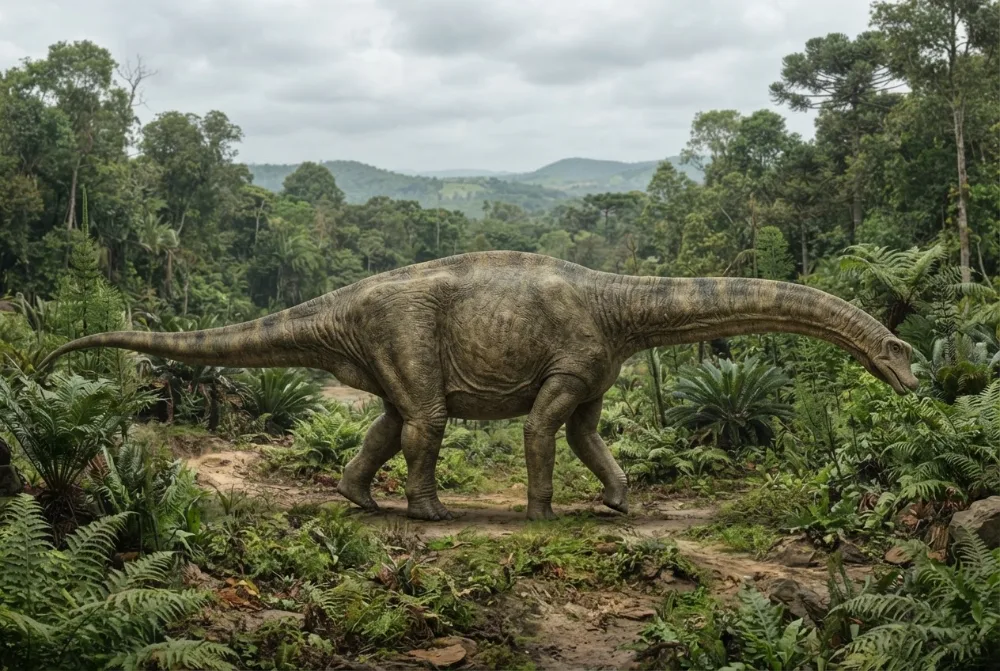
Barapasaurus was one of the very first giant long-necked dinosaurs. It lived in India about 190 million years ago and grew as long as a bus! Even though it was an early sauropod, it already had the long neck and big body that later giants like Brachiosaurus would have.1
Berɛ bɛn na ɛtenaa ase?
Na ne kɛseɛ yɛ sɛn?
Na ne tenten yɛ sɛn?
Na ne korɔn yɛ sɛn?
nsusuiɛ
Na ne mu yɛ duru sɛn?
 ne tenten te sɛ kaa 3 a wɔde agyina toatoa so🍌ne tenten te sɛ kwadu 78 a wɔde abɔ toatoa so
 ne mu duru bɛyɛ sɛ ɔsono🍉ne mu duru te sɛ watamɛlɔn 1400🎒ne mu duru te sɛ sukuu klaas mũ 9 mu mmofra🐻❄️ne mu duru te sɛ polar bea 16🏃anka ɔbɛtumi atu mmirika mita 100 wɔ sikɛn 21 mu (onipa a ɔyɛ ntɛm sen biara hia 9.6)
Barapasaurus kɛseɛ yɛ sɛn sɛ wode toto WO ho a?
Akontaa nko ara wɔ wo browser mu. Yɛnkora biribiara so, na yɛmmfa biribiara nkɔ baabiara.
Na ɛyɛ ntɛm sɛn?


Nsɛm a ɛyɛ anigye
Barapasaurus is known from about 300 bones from at least six different individuals, making it one of the most complete early sauropods ever found.1
Its name means 'big-legged lizard' in several Indian languages, because a single thigh bone (femur) was over 1.7 metres (5.6 feet) long.1
No skull has ever been found, only a few teeth. The largest tooth is just 5.8 centimetres (2.3 inches) tall.1
The fossils were discovered in 1958 and dug up in 1960 and 1961, but the dinosaur was not officially named until 1975.1
Barapasaurus lived alongside another early sauropod called Kotasaurus, as well as some of the earliest mammals like Kotatherium.1
Its backbone already had hollow spaces and extra joints that helped support its huge body, a feature later sauropods perfected.1
Nsɛm a wɔbisa bebree fa Barapasaurus ho
?How big was Barapasaurus?
Barapasaurus was about 12 to 14 metres long and weighed around 7 tonnes. That is about as long as a bus.12
?What did Barapasaurus eat?
Barapasaurus was a herbivore, meaning it ate plants. Its spoon-shaped teeth were good for stripping leaves.12
?When did Barapasaurus live?
Barapasaurus lived during the Early Jurassic period, about 184 to 200 million years ago. Some scientists think it might have lived a bit later, in the Middle Jurassic.12
?Where was Barapasaurus found?
Barapasaurus fossils were found in central India, near the village of Pochampally. The first bones were discovered in 1958.1
?Why is it called Barapasaurus?
Barapasaurus means big legged lizard in several Indian languages. It got that name because its thigh bone was over 1.7 metres long.1
?Did Barapasaurus have a long neck?
Yes, Barapasaurus had a long neck, just like later sauropods. Its neck bones were elongated, which helped it reach high plants.1
Atosɛm sɛefoɔ
Atosɛm: Barapasaurus had a tiny head like later sauropods such as Brachiosaurus.
Nokorɛ: Scientists have not found a skull, only a few teeth, so we do not know what its head looked like.1
Ma dino ho animdefoɔ
- Nyansahu din
- Barapasaurus
- Obi a ɔtoo din
- Jain et al. 19753
- Kuo
- Kɔn tenten
- Abusua / kuo kɛseɛ
- Gravisauria3
- Nkyekyɛmu
- Sauropodomorpha > Sauropoda3
- Abotan no mfeɛ
- mfeɛ ɔpepem 200 kɔsi 184 (Sinemurian / Pliensbachian)3
- Abotan nhyehyɛeɛ
- Kota3
- Aman
- India3
- Fɔsil nkyerɛwee
- 2 wɔ The Paleobiology Database mu3
- Nhunumu
- The first bones were found in 1958 near Pochampally, India. Most fossils were collected in 1960 and 1961, and the dinosaur was named Barapasaurus tagorei in 1975 by paleontologist Sohan Lal Jain and colleagues.1
- Wɔda so gye ho akyinnye
- Scientists disagree on whether Barapasaurus was more primitive than the early sauropod Vulcanodon or more advanced. Some place it inside the group Eusauropoda, others outside it.1
Baabi a nsɛm no firi
- Barapasaurus (en.wikipedia.org)
- Barapasaurus | Natural History Museum (nhm.ac.uk)
- Barapasaurus in The Paleobiology Database (CC BY 4.0): mfeɛ, mmeaeɛ, abotan nhyehyɛeɛ, nkyekyɛmu.
Asɛm biara a ɛwɔ krataafa yi so wɔ nɔma a ɛkyerɛ baabi a ɛfiri. Sɛ yɛfom biribi a, kafra, yɛyɛ dino dɔfoɔ, yɛnyɛ nyansahu nsɛmma krataa. Ka kyerɛ yɛn wɔ [email protected] na yɛbɛsiesie.
 Ɔkɔm de Rex! Dino Wiki yɛ agya bi adwuma a ɔyɛɛ maa ne babarima a ɔdɔ dino. Ɛyɛ kwa, dawurubɔ biara nni mu, akyidifoɔ biara nni mu. Mpanimfoɔ bɛtumi ama Rex aduane kakra, na aboa ama Dino Wiki atena intanɛt so.Ma Rex aduane
 Brachiosaurus
 Diplodocus
 Brontosaurus
 Argentinosaurus
 Camarasaurus
 Morosaurus
 Dilophosaurus
 Stenopterygius
 Dorygnathus
 Scutellosaurus
 Sinosaurus
 Temnodontosaurus