 Woyɛ dino bɛn? Nsɛmmisa agoro
 Dino ko
 Dino mmirikatuo
 Dino agodie nketewa
 Stika nwoma
 Dino TOP nhyehyɛeɛ
 Ma me nwanwa!
Berɛ bɛn na ɛtenaa ase?

Na ne kɛseɛ yɛ sɛn?
Na ne tenten yɛ sɛn?
Na ne korɔn yɛ sɛn?
Na ne mu yɛ duru sɛn?
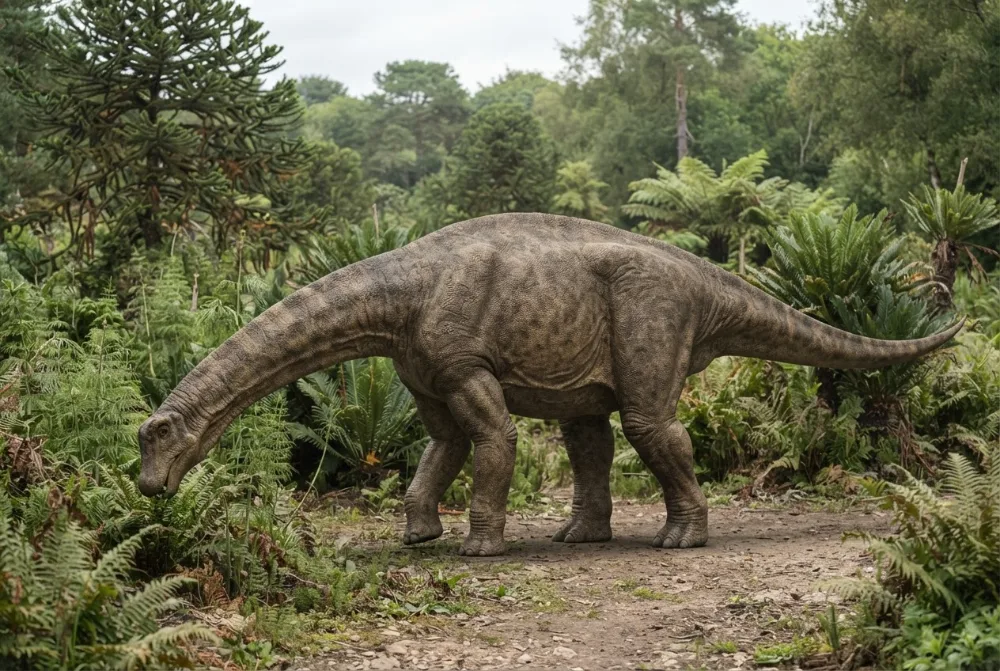
 ne tenten te sɛ kaa 2 a wɔde agyina toatoa so🍌ne tenten te sɛ kwadu 56 a wɔde abɔ toatoa so
 ne mu duru te sɛ nkraman 190🍉ne mu duru te sɛ watamɛlɔn 760🎒ne mu duru te sɛ sukuu klaas mũ 5 mu mmofra🐻❄️ne mu duru te sɛ polar bea 8🏃anka ɔbɛtumi atu mmirika mita 100 wɔ sikɛn 18 mu (onipa a ɔyɛ ntɛm sen biara hia 9.6)
Camelotia kɛseɛ yɛ sɛn sɛ wode toto WO ho a?
Akontaa nko ara wɔ wo browser mu. Yɛnkora biribiara so, na yɛmmfa biribiara nkɔ baabiara.
Na ɛyɛ ntɛm sɛn?


Nsɛm a ɛyɛ anigye
Camelotia lived about 205 to 201 million years ago, during the Rhaetian stage of the Late Triassic.3
Its thigh bone (femur) is about 1 metre (3.3 feet) long, which helped scientists guess its size.1
Camelotia is named after Camelot, the legendary castle of King Arthur, because its fossils were found in Somerset, near where the stories take place.1
It was one of the largest sauropodomorphs from the Triassic, weighing about 3.8 tonnes (8,400 pounds).1
Scientists think Camelotia walked on all four legs, like later sauropods, because its relatives were becoming more quadrupedal.1
The first fossils of Camelotia were discovered in 1894 in a quarry in Wedmore, but they were not named until 1985.1
Some large dinosaur footprints found in Wales might have been made by Camelotia, but scientists are not sure.1
Nsɛm a wɔbisa bebree fa Camelotia ho
?How big was Camelotia?
Camelotia was about 8 to 10 metres long and weighed around 3.8 tonnes. That is about as long as a school bus.1
?What did Camelotia eat?
Camelotia was a plant-eater. Its teeth were leaf-shaped and serrated, perfect for eating plants.1
?Did Camelotia walk on two legs or four?
Scientists think Camelotia walked on all four legs, like later sauropods. Its relatives were becoming more quadrupedal.1
?Where was Camelotia found?
Camelotia's fossils were found in a quarry in Wedmore, Somerset, England. That is near the legendary castle of King Arthur, Camelot.1
Atosɛm sɛefoɔ
Atosɛm: Camelotia was a meat-eater because its teeth were found near its bones.
Nokorɛ: The teeth found with Camelotia actually belong to a different dinosaur, a theropod called Newtonsaurus. Camelotia itself was a plant-eater.1
Ma dino ho animdefoɔ
- Nyansahu din
- Camelotia
- Obi a ɔtoo din
- Galton 19853
- Kuo
- Kɔn tenten
- Abusua / kuo kɛseɛ
- Sauropodiformes3
- Nkyekyɛmu
- Sauropodomorpha3
- Abotan no mfeɛ
- mfeɛ ɔpepem 206 kɔsi 201 (Rhaetian)3
- Abotan nhyehyɛeɛ
- Westbury3
- Aman
- Engiresi3
- Fɔsil nkyerɛwee
- 2 wɔ The Paleobiology Database mu3
- Nhunumu
- The first fossils were found in 1894 in a quarry near Wedmore, England. They were named Camelotia borealis by Peter M. Galton in 1985.1
- Wɔda so gye ho akyinnye
- Scientists are not sure exactly where Camelotia fits on the dinosaur family tree. Some think it is a close relative of Melanorosaurus, while others think it is a very early sauropod.1
Baabi a nsɛm no firi
- Camelotia (en.wikipedia.org)
- Camelotia - Justapedia (justapedia.org)
- Camelotia in The Paleobiology Database (CC BY 4.0): mfeɛ, mmeaeɛ, abotan nhyehyɛeɛ, nkyekyɛmu.
Asɛm biara a ɛwɔ krataafa yi so wɔ nɔma a ɛkyerɛ baabi a ɛfiri. Sɛ yɛfom biribi a, kafra, yɛyɛ dino dɔfoɔ, yɛnyɛ nyansahu nsɛmma krataa. Ka kyerɛ yɛn wɔ [email protected] na yɛbɛsiesie.
 Ɔkɔm de Rex! Dino Wiki yɛ agya bi adwuma a ɔyɛɛ maa ne babarima a ɔdɔ dino. Ɛyɛ kwa, dawurubɔ biara nni mu, akyidifoɔ biara nni mu. Mpanimfoɔ bɛtumi ama Rex aduane kakra, na aboa ama Dino Wiki atena intanɛt so.Ma Rex aduane
 Brachiosaurus
 Diplodocus
 Brontosaurus
 Argentinosaurus
 Camarasaurus
 Morosaurus
 Nothosaurus
 Coelophysis
 Podokesaurus
 Simosaurus
 Eudimorphodon
 Herrerasaurus