 Woyɛ dino bɛn? Nsɛmmisa agoro
 Dino ko
 Dino mmirikatuo
 Dino agodie nketewa
 Stika nwoma
 Dino TOP nhyehyɛeɛ
 Ma me nwanwa!
Ophthalmosaurus
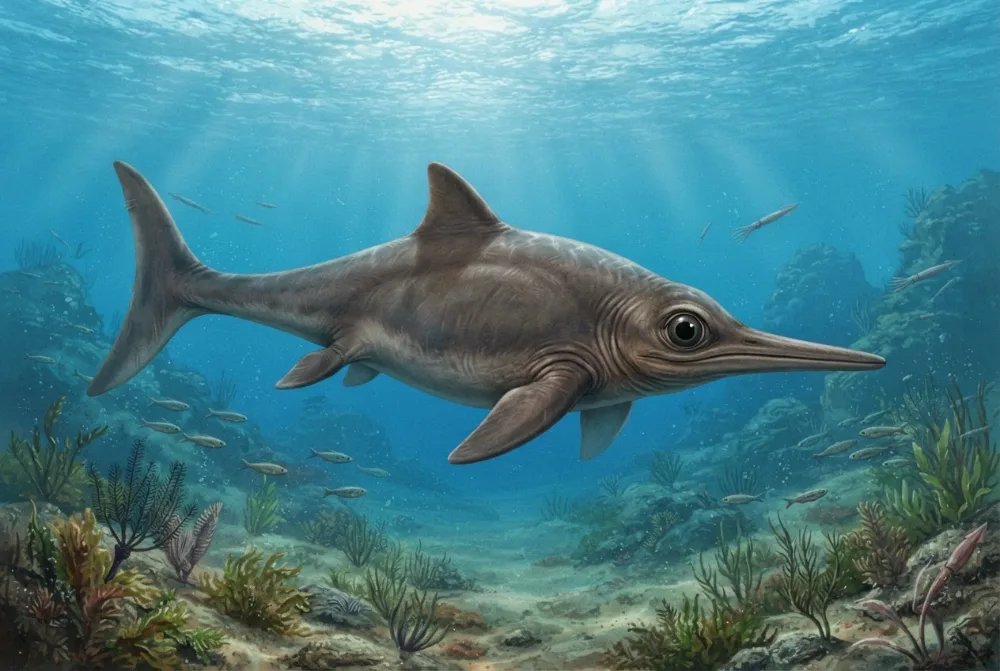
Ophthalmosaurus was a sleek, fast-swimming marine reptile with enormous eyes, almost as big as dinner plates. It lived in the warm seas of the Jurassic period and hunted small fish and squid. Even though it looked like a dolphin, it was actually an ichthyosaur, not a dinosaur.1
Berɛ bɛn na ɛtenaa ase?
Na ne kɛseɛ yɛ sɛn?
Na ne tenten yɛ sɛn?
Na ne mu yɛ duru sɛn?
 ne tenten te sɛ nkraman 4 firi hwene kɔsi dua🍌ne tenten te sɛ kwadu 22 a wɔde abɔ toatoa so🍉ne mu duru te sɛ watamɛlɔn 190🧸ne mu duru te sɛ nkɔkɔaa sukuu mmofra 50🎒ne mu duru te sɛ sukuu mmofra 30🐻❄️ne mu duru te sɛ polar bea 2🏊anka ɔbɛtumi aguare nsuguarebea kɛseɛ (50 m) tenten wɔ sikɛn 4 mu
Ophthalmosaurus kɛseɛ yɛ sɛn sɛ wode toto WO ho a?
Akontaa nko ara wɔ wo browser mu. Yɛnkora biribiara so, na yɛmmfa biribiara nkɔ baabiara.
Na ɛyɛ ntɛm sɛn?


Nsɛm a ɛyɛ anigye
Ophthalmosaurus had eyes that measured about 22 to 23 centimetres (8.7 to 9.1 inches) across, which is bigger than a human head.1
It could dive to depths of 600 metres (2,000 feet) or more, reaching the twilight zone of the ocean, and stay underwater for about 20 minutes.1
Its tail ended in a two-lobed fin, with the lower half supported by the backbone and the upper half made only of soft tissue, helping it swim fast.1
Ophthalmosaurus had short, rounded limbs, with the front ones bigger than the back ones, which it used for steering rather than paddling.1
Fossils show it lived in shallow seas, like the Oxford Clay in England, which was only about 50 metres (160 feet) deep at the time.1
Some scientists think Ophthalmosaurus could swim at about 2 metres per second (6.6 feet per second) when chasing prey.1
Atosɛm sɛefoɔ
Atosɛm: Ophthalmosaurus was a dinosaur that lived in the water.
Nokorɛ: Ophthalmosaurus was an ichthyosaur, a marine reptile, not a dinosaur. Ichthyosaurs were a different group of reptiles that lived in the oceans.1
Ma dino ho animdefoɔ
- Nyansahu din
- Ophthalmosaurus
- Obi a ɔtoo din
- Seeley 18742
- Kuo
- Iktiosɔɔ
- Abusua / kuo kɛseɛ
- Ophthalmosauridae2
- Nkyekyɛmu
- Ichthyosauria > Ichthyosauromorpha2
- Abotan no mfeɛ
- mfeɛ ɔpepem 201 kɔsi 133 (Hettangian / Valanginian)2
- Abotan nhyehyɛeɛ
- Oxford Clay, Sundance, Vaca Muerta2
- Aman
- Engiresi, Argentina, Amerika, Rɔhyea, Frɛnse, Greenland2
- Fɔsil nkyerɛwee
- 27 wɔ The Paleobiology Database mu2
- Wɔsan frɛ no
- Ancanamunia, Yasykovia (din dada no nso, yɛkan no sɛ aboa korɔ no ara)2
- Nhunumu
- Ophthalmosaurus was first described by Harry Seeley in 1874, based on fossils from the Oxford Clay in England. He focused on the shape of the collarbone bones.12
- Wɔda so gye ho akyinnye
- Scientists still debate whether some species, like Ophthalmosaurus natans from North America, are really separate species or just close relatives.1
Baabi a nsɛm no firi
- Ophthalmosaurus (en.wikipedia.org)
- Ophthalmosaurus in The Paleobiology Database (CC BY 4.0): mfeɛ, mmeaeɛ, abotan nhyehyɛeɛ, nkyekyɛmu.
Asɛm biara a ɛwɔ krataafa yi so wɔ nɔma a ɛkyerɛ baabi a ɛfiri. Sɛ yɛfom biribi a, kafra, yɛyɛ dino dɔfoɔ, yɛnyɛ nyansahu nsɛmma krataa. Ka kyerɛ yɛn wɔ [email protected] na yɛbɛsiesie.
 Ɔkɔm de Rex! Dino Wiki yɛ agya bi adwuma a ɔyɛɛ maa ne babarima a ɔdɔ dino. Ɛyɛ kwa, dawurubɔ biara nni mu, akyidifoɔ biara nni mu. Mpanimfoɔ bɛtumi ama Rex aduane kakra, na aboa ama Dino Wiki atena intanɛt so.Ma Rex aduane
 Ichthyosaurus
 Platypterygius
 Stenopterygius
 Khudiakovia
 Chonespondylus
 Cymbospondylus
 Pterodactylus
 Peloneustes
 Rhamphocephalus
 Gongbusaurus
 Shunosaurus
 Bishanopliosaurus