 Woyɛ dino bɛn? Nsɛmmisa agoro
 Dino ko
 Dino mmirikatuo
 Dino agodie nketewa
 Stika nwoma
 Dino TOP nhyehyɛeɛ
 Ma me nwanwa!
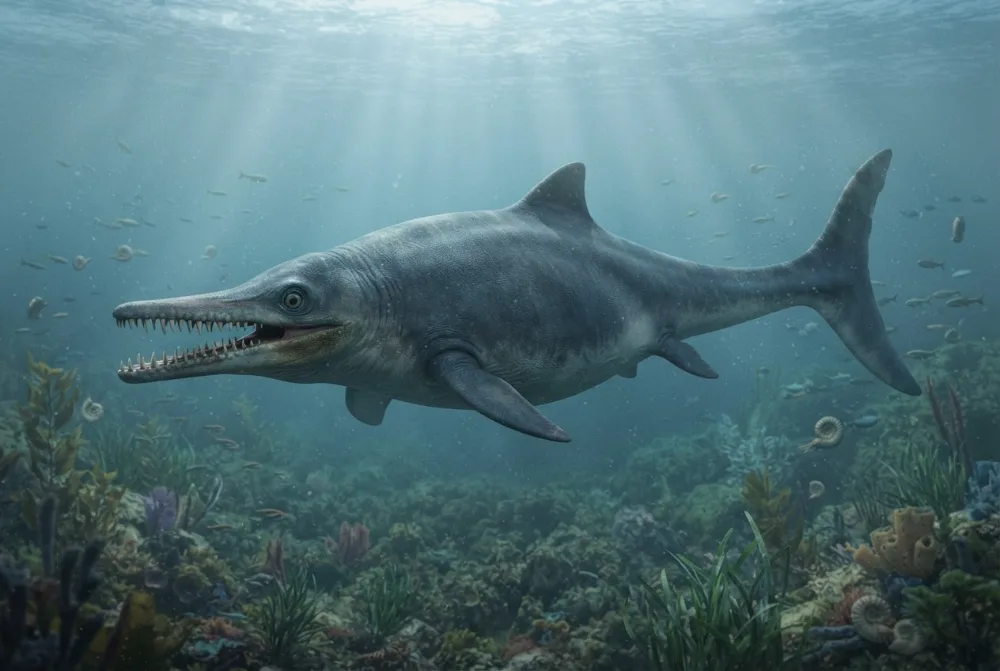
Platypterygius
Platypterygius was a giant marine reptile that swam in the seas during the time of the dinosaurs. It looked a bit like a dolphin but had a long snout full of sharp teeth. It was a fast hunter that ate fish, sea turtles, and even baby birds.1
Berɛ bɛn na ɛtenaa ase?
Na ne kɛseɛ yɛ sɛn?
Na ne tenten yɛ sɛn?
 ne tenten te sɛ nkraman 7 firi hwene kɔsi dua🍌ne tenten te sɛ kwadu 39 a wɔde abɔ toatoa so🏊anka ɔbɛtumi aguare nsuguarebea kɛseɛ (50 m) tenten wɔ sikɛn 4.4 mu
Platypterygius kɛseɛ yɛ sɛn sɛ wode toto WO ho a?
Akontaa nko ara wɔ wo browser mu. Yɛnkora biribiara so, na yɛmmfa biribiara nkɔ baabiara.
Na ɛyɛ ntɛm sɛn?


Nsɛm a ɛyɛ anigye
Platypterygius means 'flat fin' because its flippers were wide and flat, like paddles.1
It lived from about 161 to 94 million years ago, during the Jurassic and Cretaceous periods.3
Fossils of Platypterygius have been found on every continent except Antarctica.3
Some Platypterygius fossils have baby sea turtles and bird bones in their stomachs, showing what it ate.1
Scientists think Platypterygius was a fast swimmer that chased prey in the open ocean.3
The name Platypterygius has been used for many different ichthyosaurs, and some scientists think it might include several different species.1
Nsɛm a wɔbisa bebree fa Platypterygius ho
?How big was Platypterygius?
Different species reached different sizes. Platypterygius platydactylus was about 5 metres (16 ft) long, while Platypterygius australis was about 7 metres (23 ft) long.1
?What did Platypterygius eat?
It was a large predator that ate fish, squid, and other marine animals. One fossil even had baby sea turtles and bird bones in its stomach.12
?Is Platypterygius a dinosaur?
No, it is not a dinosaur. It is an ichthyosaur, a marine reptile that lived in the sea at the same time as dinosaurs.12
?When did Platypterygius live?
Platypterygius lived during the Cretaceous period, from about 141 million years ago to 65 million years ago.2
Ma dino ho animdefoɔ
- Nyansahu din
- Platypterygius
- Obi a ɔtoo din
- von Huene 19223
- Kuo
- Iktiosɔɔ
- Abusua / kuo kɛseɛ
- Ophthalmosauridae3
- Nkyekyɛmu
- Ichthyosauria > Ichthyosauromorpha3
- Abotan no mfeɛ
- mfeɛ ɔpepem 162 kɔsi 94 (Oxfordian / Cenomanian)3
- Abotan nhyehyɛeɛ
- Toolebuc, Zapata, Marnes bleues3
- Aman
- Ɔstrelia, Frɛnse, Amerika, Kyili, Rɔhyea, Gyaaman3
- Fɔsil nkyerɛwee
- 62 wɔ The Paleobiology Database mu3
- Wɔsan frɛ no
- Longirostria, Myobradypterygius, Myopterygius, Plutoniosaurus, Tenuirostria (din dada no nso, yɛkan no sɛ aboa korɔ no ara)3
- Nhunumu
- Platypterygius was named by German paleontologist Friedrich von Huene in 1922. The first fossils were found in Germany.3
- Wɔda so gye ho akyinnye
- Scientists are not sure which species really belong to Platypterygius, because many different ichthyosaurs have been lumped into this group.1
Baabi a nsɛm no firi
- Platypterygius (en.wikipedia.org)
- Dinosaurs - Platypterygius longmani - The Australian Museum (australian.museum)
- Platypterygius in The Paleobiology Database (CC BY 4.0): mfeɛ, mmeaeɛ, abotan nhyehyɛeɛ, nkyekyɛmu.
Asɛm biara a ɛwɔ krataafa yi so wɔ nɔma a ɛkyerɛ baabi a ɛfiri. Sɛ yɛfom biribi a, kafra, yɛyɛ dino dɔfoɔ, yɛnyɛ nyansahu nsɛmma krataa. Ka kyerɛ yɛn wɔ [email protected] na yɛbɛsiesie.
 Ɔkɔm de Rex! Dino Wiki yɛ agya bi adwuma a ɔyɛɛ maa ne babarima a ɔdɔ dino. Ɛyɛ kwa, dawurubɔ biara nni mu, akyidifoɔ biara nni mu. Mpanimfoɔ bɛtumi ama Rex aduane kakra, na aboa ama Dino Wiki atena intanɛt so.Ma Rex aduane
 Ichthyosaurus
 Stenopterygius
 Khudiakovia
 Ophthalmosaurus
 Chonespondylus
 Cymbospondylus
 Stegosaurus
 Iguanodon
 Archaeopteryx
 Giganotosaurus
 Microraptor
 Deinonychus