 Woyɛ dino bɛn? Nsɛmmisa agoro
 Dino ko
 Dino mmirikatuo
 Dino agodie nketewa
 Stika nwoma
 Dino TOP nhyehyɛeɛ
 Ma me nwanwa!
Berɛ bɛn na ɛtenaa ase?

Na ne kɛseɛ yɛ sɛn?
Na ne tenten yɛ sɛn?
Na ne korɔn yɛ sɛn?
 ne tenten te sɛ kaa 3 a wɔde agyina toatoa so🍌ne tenten te sɛ kwadu 72 a wɔde abɔ toatoa so🏃anka ɔbɛtumi atu mmirika mita 100 wɔ sikɛn 20 mu (onipa a ɔyɛ ntɛm sen biara hia 9.6)
Yunnanosaurus kɛseɛ yɛ sɛn sɛ wode toto WO ho a?
Akontaa nko ara wɔ wo browser mu. Yɛnkora biribiara so, na yɛmmfa biribiara nkɔ baabiara.
Na ɛyɛ ntɛm sɛn?


Nsɛm a ɛyɛ anigye
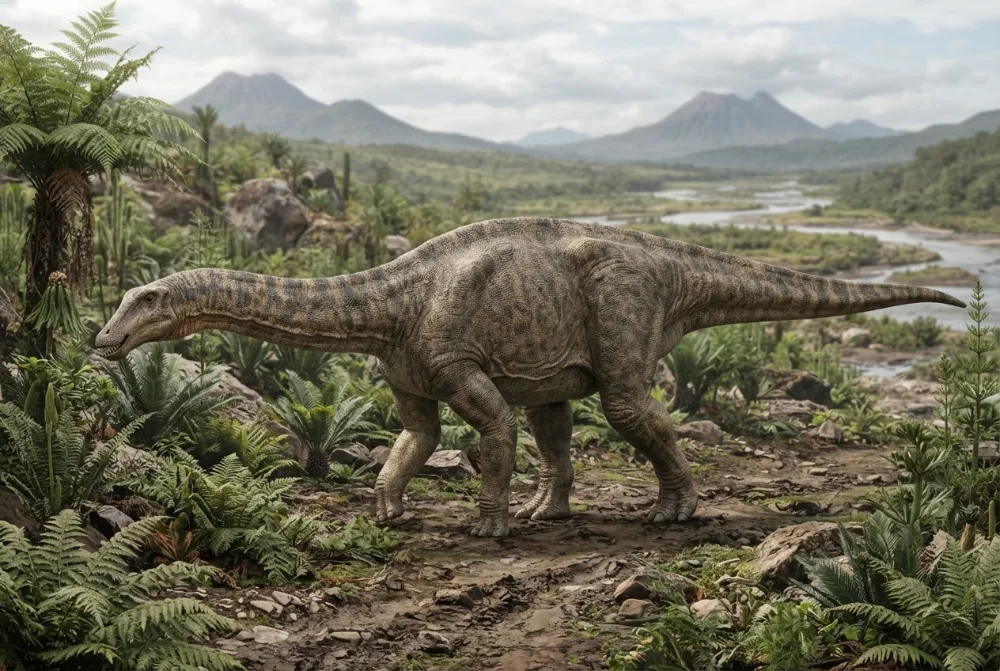
Yunnanosaurus had more than sixty spoon-shaped teeth that were self-sharpening because they wore against each other as the animal fed.1
Its teeth were advanced for an early sauropodomorph and looked like those of later giant sauropods, but scientists think this similarity evolved separately.1
The largest species, Yunnanosaurus youngi, reached about 13 metres (42 feet) long, as big as a school bus.1
The first fossils were discovered by Chinese paleontologist Yang Zhongjian (also known as C. C. Young) in the early 1940s.1
Yunnanosaurus lived between about 201 and 183 million years ago, during the Early Jurassic Period.12
It could walk on two legs or on all fours, making it a versatile mover through its ancient environment.1
Nsɛm a wɔbisa bebree fa Yunnanosaurus ho
?How big was Yunnanosaurus?
The smallest species, Y. huangi, was about 7 metres (23 feet) long, while the largest, Y. youngi, reached about 13 metres (43 feet) long, roughly the size of a school bus.13
?What did Yunnanosaurus eat?
It was a herbivore that ate plants. Its spoon-shaped teeth were self-sharpening, and it fed on softer, less fibrous plants than later giant sauropods.13
?When did Yunnanosaurus live?
Yunnanosaurus lived during the Early Jurassic Period, about 201 to 183 million years ago.13
?Where was Yunnanosaurus found?
Its fossils were found in Yunnan Province, China. The first skeletons were discovered in the Lufeng Formation.1
?Did Yunnanosaurus have feathers?
No known fossils show feathers on Yunnanosaurus. It is not related to feathered dinosaurs like birds.1
?Could Yunnanosaurus walk on two legs?
Yes, it could walk on two legs or on all fours. It was a versatile mover that could switch between bipedal and quadrupedal walking.1
Atosɛm sɛefoɔ
Atosɛm: Yunnanosaurus is often called a prosauropod, meaning it was a direct ancestor of sauropods.
Nokorɛ: Scientists now place Yunnanosaurus in a group called Sauropodiformes, which is closer to true sauropods but not a direct ancestor.1
Ma dino ho animdefoɔ
- Nyansahu din
- Yunnanosaurus
- Obi a ɔtoo din
- Young 19404
- Kuo
- Kɔn tenten
- Abusua / kuo kɛseɛ
- Sauropodiformes4
- Nkyekyɛmu
- Sauropodomorpha4
- Abotan no mfeɛ
- mfeɛ ɔpepem 201 kɔsi 184 (Hettangian / Pliensbachian)4
- Abotan nhyehyɛeɛ
- Lufeng, Fengjiahe4
- Aman
- Kyaena4
- Fɔsil nkyerɛwee
- 17 wɔ The Paleobiology Database mu4
- Nhunumu
- Chinese paleontologist C. C. Young (Yang Zhongjian) named Yunnanosaurus in 1942 after finding many skeletons in Yunnan, China. The type species is Yunnanosaurus huangi.1
- Wɔda so gye ho akyinnye
- Scientists are not sure whether Yunnanosaurus robustus is a separate species or just a larger individual of Yunnanosaurus huangi.1
Baabi a nsɛm no firi
- Yunnanosaurus (en.wikipedia.org)
- PBDB Taxon (paleobiodb.org)
- Yunnanosaurus | Natural History Museum (nhm.ac.uk)
- Yunnanosaurus in The Paleobiology Database (CC BY 4.0): mfeɛ, mmeaeɛ, abotan nhyehyɛeɛ, nkyekyɛmu.
Asɛm biara a ɛwɔ krataafa yi so wɔ nɔma a ɛkyerɛ baabi a ɛfiri. Sɛ yɛfom biribi a, kafra, yɛyɛ dino dɔfoɔ, yɛnyɛ nyansahu nsɛmma krataa. Ka kyerɛ yɛn wɔ [email protected] na yɛbɛsiesie.
 Ɔkɔm de Rex! Dino Wiki yɛ agya bi adwuma a ɔyɛɛ maa ne babarima a ɔdɔ dino. Ɛyɛ kwa, dawurubɔ biara nni mu, akyidifoɔ biara nni mu. Mpanimfoɔ bɛtumi ama Rex aduane kakra, na aboa ama Dino Wiki atena intanɛt so.Ma Rex aduane
 Brachiosaurus
 Diplodocus
 Brontosaurus
 Argentinosaurus
 Camarasaurus
 Morosaurus
 Dilophosaurus
 Stenopterygius
 Dorygnathus
 Scutellosaurus
 Sinosaurus
 Temnodontosaurus