 Woyɛ dino bɛn? Nsɛmmisa agoro
 Dino ko
 Dino mmirikatuo
 Dino agodie nketewa
 Stika nwoma
 Dino TOP nhyehyɛeɛ
 Ma me nwanwa!
Rhamphorhynchus
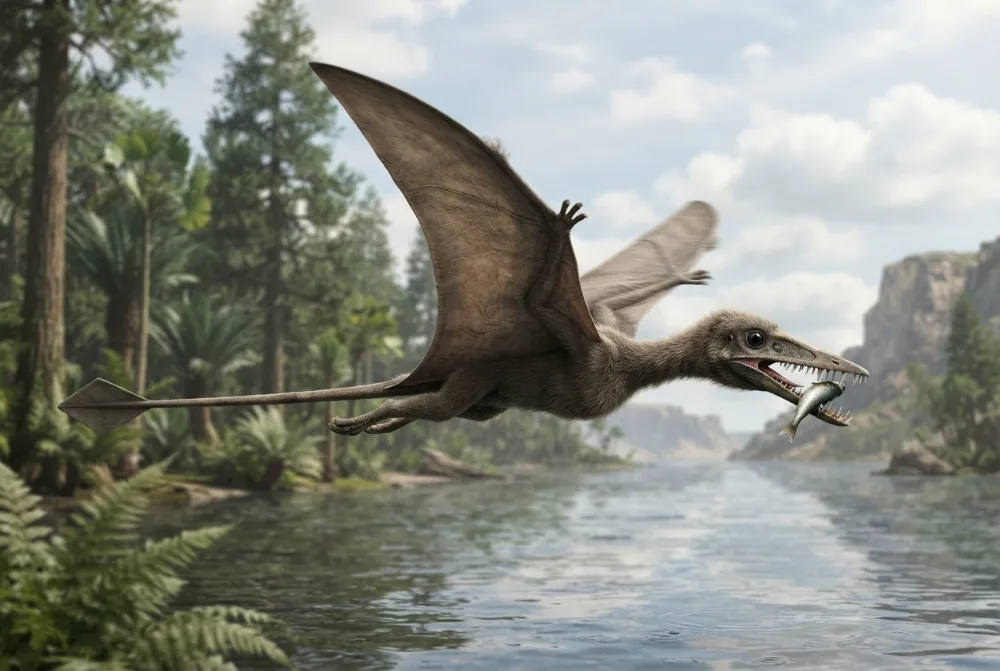
Rhamphorhynchus was a flying reptile that lived in the Late Jurassic. It had a very long tail with a diamond-shaped flap at the tip. It used its needle-like teeth to catch slippery fish.12
Berɛ bɛn na ɛtenaa ase?
Na ne kɛseɛ yɛ sɛn?
Na ne tenten yɛ sɛn?
Na ne mu yɛ duru sɛn?
 ne mu duru bɛyɛ sɛ fie agyinamoa🍌ne mu duru te sɛ kwadu 17🧱ne tenten te sɛ agodeɛ blɔk 16 a ɛtoatoa so⚽anka ɔbɛtumi atu atwa bɔɔlobɔ prama mũ wɔ sikɛn 6.8 mu
Rhamphorhynchus kɛseɛ yɛ sɛn sɛ wode toto WO ho a?
Akontaa nko ara wɔ wo browser mu. Yɛnkora biribiara so, na yɛmmfa biribiara nkɔ baabiara.
Na ɛyɛ ntɛm sɛn?


Nsɛm a ɛyɛ anigye
Its tail was stiffened with ligaments and ended in a diamond-shaped rudder, which may have helped it steer while flying.12
Rhamphorhynchus had no teeth at the very tip of its beak, but the rest of its beak held many forward-angled teeth that interlocked to trap fish.1
Fossils of Rhamphorhynchus often show impressions of soft parts, including wing membranes and fuzz-like pycnofibers.1
It probably swam and launched from the water like modern birds, not just flew over the waves.1
Rhamphorhynchus lived about 150 to 148 million years ago, during the late Jurassic Period.1
Nsɛm a wɔbisa bebree fa Rhamphorhynchus ho
?How big was Rhamphorhynchus?
Most adults had a wingspan of about 1 metre (3.3 feet), but the largest known specimen reached about 1.8 metres (5.9 feet) across. A huge fragmentary fossil may have had a wingspan of over 3 metres (10 feet).15
?What did Rhamphorhynchus eat?
It mainly ate fish and squid-like animals called cephalopods. Fossil stomach contents and droppings often contain fish and cephalopod remains.12
?Could Rhamphorhynchus swim?
Yes, it probably swam and launched from the water like modern birds. Its broad feet and body shape suggest it was good at swimming.1
?When did Rhamphorhynchus live?
It lived during the Late Jurassic Period, about 150 to 148 million years ago.12
?Was Rhamphorhynchus a dinosaur?
No, it was a pterosaur, a flying reptile that is not a dinosaur. Pterosaurs are close cousins of dinosaurs.12
?Why did Rhamphorhynchus have a long tail?
The long tail ended in a diamond-shaped flap that may have helped it steer while flying. The tail was stiffened with ligaments to keep it straight.12
?Did Rhamphorhynchus have feathers?
It did not have feathers, but it had a fuzzy coat called pycnofibers, which are like simple hairs. These are different from feathers.1
?Where have Rhamphorhynchus fossils been found?
The best fossils come from the Solnhofen limestone in Bavaria, Germany. Fragmentary remains have also been found in England, Tanzania, Spain, and Portugal.1
Atosɛm sɛefoɔ
Atosɛm: Some people think Rhamphorhynchus was a dinosaur.
Nokorɛ: Rhamphorhynchus was a pterosaur, a flying reptile, not a dinosaur.1
Ma dino ho animdefoɔ
- Nyansahu din
- Rhamphorhynchus
- Obi a ɔtoo din
- Meyer 18476
- Kuo
- Wim mmoa a wɔwea
- Abusua / kuo kɛseɛ
- Rhamphorhynchidae6
- Nkyekyɛmu
- Pterosauria > Rhamphorhynchidae6
- Abotan no mfeɛ
- mfeɛ ɔpepem 159 kɔsi 143 (Oxfordian / Tithonian)6
- Abotan nhyehyɛeɛ
- Solnhofen, Solnhofener Plattenkalk, Painten6
- Aman
- Gyaaman, Pɔtugal, Tanzania, Engiresi6
- Fɔsil nkyerɛwee
- 30 wɔ The Paleobiology Database mu6
- Nhunumu
- The first specimen was brought to scientist Samuel Thomas von Sömmerring in 1825. It was later named Ornithocephalus muensteri by Goldfuss in 1831, and then renamed Rhamphorhynchus by Hermann von Meyer in 1847.13
- Wɔda so gye ho akyinnye
- Scientists still debate exactly how many species of Rhamphorhynchus there were, because many similar fossils have been given different names.1
Baabi a nsɛm no firi
- Rhamphorhynchus (en.wikipedia.org)
- Rhamphorhynchus | Pterosaur, Jurassic & Flying Reptile | Britannica (britannica.com)
- PBDB Taxon (paleobiodb.org)
- Life History of Rhamphorhynchus Inferred from Bone Histology and the Diversity of Pterosaurian Growth Strategies (pmc.ncbi.nlm.nih.gov)
- A giant specimen of Rhamphorhynchus muensteri and comments on the ontogeny of rhamphorhynchines (pmc.ncbi.nlm.nih.gov)
- Rhamphorhynchus in The Paleobiology Database (CC BY 4.0): mfeɛ, mmeaeɛ, abotan nhyehyɛeɛ, nkyekyɛmu.
Asɛm biara a ɛwɔ krataafa yi so wɔ nɔma a ɛkyerɛ baabi a ɛfiri. Sɛ yɛfom biribi a, kafra, yɛyɛ dino dɔfoɔ, yɛnyɛ nyansahu nsɛmma krataa. Ka kyerɛ yɛn wɔ [email protected] na yɛbɛsiesie.
 Ɔkɔm de Rex! Dino Wiki yɛ agya bi adwuma a ɔyɛɛ maa ne babarima a ɔdɔ dino. Ɛyɛ kwa, dawurubɔ biara nni mu, akyidifoɔ biara nni mu. Mpanimfoɔ bɛtumi ama Rex aduane kakra, na aboa ama Dino Wiki atena intanɛt so.Ma Rex aduane
 Pteranodon
 Quetzalcoatlus
 Dorygnathus
 Anhanguera
 Pterodactylus
 Eudimorphodon
 Brachiosaurus
 Diplodocus
 Allosaurus
 Brontosaurus
 Compsognathus
 Camarasaurus