 Woyɛ dino bɛn? Nsɛmmisa agoro
 Dino ko
 Dino mmirikatuo
 Dino agodie nketewa
 Stika nwoma
 Dino TOP nhyehyɛeɛ
 Ma me nwanwa!
Pterodactylus
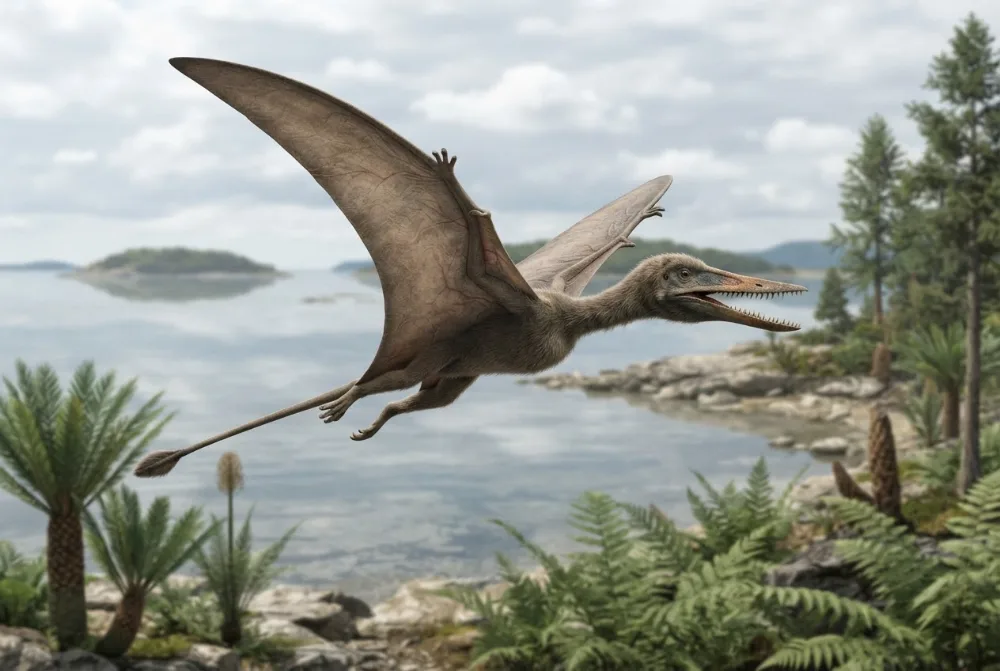
Pterodactylus was one of the first flying reptiles ever discovered. It lived during the Late Jurassic period, about 150 million years ago, and had wings made of skin and muscle that stretched from its long fourth finger to its back legs. It was a small pterosaur that probably ate insects and other small animals.12
Berɛ bɛn na ɛtenaa ase?
Na ne kɛseɛ yɛ sɛn?
Na ne tenten yɛ sɛn?
Na ne mu yɛ duru sɛn?
 ne tenten te sɛ fie agyinamoa 2 firi hwene kɔsi dua🍌ne tenten te sɛ kwadu 6 a wɔde abɔ toatoa sone mu duru bɛyɛ sɛ fie agyinamoa🍌ne mu duru te sɛ kwadu 17⚽anka ɔbɛtumi atu atwa bɔɔlobɔ prama mũ wɔ sikɛn 9 mu
Pterodactylus kɛseɛ yɛ sɛn sɛ wode toto WO ho a?
Akontaa nko ara wɔ wo browser mu. Yɛnkora biribiara so, na yɛmmfa biribiara nkɔ baabiara.
Na ɛyɛ ntɛm sɛn?


Nsɛm a ɛyɛ anigye
Pterodactylus was the first pterosaur ever named and identified as a flying reptile, in 1809 by French scientist Georges Cuvier.1
Its fossils are often found in the Solnhofen limestone of Germany, which preserved soft body parts like jellyfish and feathers.12
Pterodactylus lived alongside other pterosaurs such as Rhamphorhynchus and Anurognathus, as well as the early bird Archaeopteryx.1
Unlike birds, pterosaurs like Pterodactylus were reptiles and their wings were made of skin and muscle, not feathers.2
Pterodactylus had a relatively high bite force for its size, which helped it crush the shells of invertebrates.1
The name Pterodactylus means 'winged finger' because its wing was supported by one very long finger.1
Nsɛm a wɔbisa bebree fa Pterodactylus ho
?How big was Pterodactylus?
Pterodactylus was a small pterosaur with an estimated adult wingspan of about 1.04 metres (3.4 feet).1
?What did Pterodactylus eat?
Pterodactylus was a generalist carnivore that probably ate invertebrates and small vertebrates. It had a relatively high bite force that helped it crush the shells of invertebrates.1
?When did Pterodactylus live?
Pterodactylus lived during the Late Jurassic period, about 150.8 to 148.5 million years ago.1
?Where were Pterodactylus fossils found?
Most Pterodactylus fossils have been found in the Solnhofen limestone of Bavaria, Germany. A few fragmentary remains have also been tentatively identified from elsewhere in Europe and Africa.1
?Was Pterodactylus a dinosaur?
No, Pterodactylus was not a dinosaur. It was a pterosaur, a type of flying reptile that lived at the same time as dinosaurs.12
?How did Pterodactylus fly?
Pterodactylus had wings made of skin and muscle that stretched from its very long fourth finger to its hind legs. The wings were supported by fibres inside and ridges on the outside.1
?Why is it called Pterodactylus?
The name Pterodactylus means 'winged finger' because its wing was supported by one very long finger.1
?Who discovered Pterodactylus?
The first Pterodactylus fossil was described by Italian scientist Cosimo Alessandro Collini in 1784. It was later named Pterodactylus by French scientist Georges Cuvier in 1809.1
?Did Pterodactylus have teeth?
Yes, Pterodactylus had teeth. The shape, size and arrangement of its teeth show it was a carnivore that ate small animals.1
?What animals lived with Pterodactylus?
Pterodactylus lived alongside other small pterosaurs like Rhamphorhynchus and Anurognathus, as well as the early bird Archaeopteryx and small dinosaurs like Compsognathus.1
Atosɛm sɛefoɔ
Atosɛm: Many people think all pterosaurs are called pterodactyls and that they are dinosaurs.
Nokorɛ: Pterodactylus is just one genus of pterosaur, and pterosaurs are flying reptiles, not dinosaurs.2
Ma dino ho animdefoɔ
- Nyansahu din
- Pterodactylus
- Obi a ɔtoo din
- Cuvier 18094
- Kuo
- Wim mmoa a wɔwea
- Abusua / kuo kɛseɛ
- Monofenestrata4
- Nkyekyɛmu
- Pterosauria4
- Abotan no mfeɛ
- mfeɛ ɔpepem 201 kɔsi 133 (Hettangian / Valanginian)4
- Abotan nhyehyɛeɛ
- Solnhofener Plattenkalk, Solnhofen, Tendaguru4
- Aman
- Gyaaman, Tanzania, Frɛnse, Pɔtugal, Engiresi4
- Fɔsil nkyerɛwee
- 15 wɔ The Paleobiology Database mu4
- Wɔsan frɛ no
- Diopecephalus, Macrotrachelus, Pterotherium (din dada no nso, yɛkan no sɛ aboa korɔ no ara)4
- Nhunumu
- The first known pterosaur fossil was discovered in the Solnhofen limestone of Germany in 1784. It was later named Pterodactylus by Georges Cuvier in 1809, making it the first pterosaur ever scientifically described.12
- Wɔda so gye ho akyinnye
- Scientists still debate exactly how many species of Pterodactylus existed, with some suggesting that many fossils belong to just one species, Pterodactylus antiquus.1
Baabi a nsɛm no firi
- Pterodactylus (en.wikipedia.org)
- Pterosaurs: The truth about these ‘flying dinosaurs’ | Natural History Museum (nhm.ac.uk)
- Pterodactyl: The Misunderstood Pterosaur | Strange Animals (strangeanimals.info)
- Pterodactylus in The Paleobiology Database (CC BY 4.0): mfeɛ, mmeaeɛ, abotan nhyehyɛeɛ, nkyekyɛmu.
Asɛm biara a ɛwɔ krataafa yi so wɔ nɔma a ɛkyerɛ baabi a ɛfiri. Sɛ yɛfom biribi a, kafra, yɛyɛ dino dɔfoɔ, yɛnyɛ nyansahu nsɛmma krataa. Ka kyerɛ yɛn wɔ [email protected] na yɛbɛsiesie.
 Ɔkɔm de Rex! Dino Wiki yɛ agya bi adwuma a ɔyɛɛ maa ne babarima a ɔdɔ dino. Ɛyɛ kwa, dawurubɔ biara nni mu, akyidifoɔ biara nni mu. Mpanimfoɔ bɛtumi ama Rex aduane kakra, na aboa ama Dino Wiki atena intanɛt so.Ma Rex aduane
 Pteranodon
 Quetzalcoatlus
 Dorygnathus
 Rhamphorhynchus
 Anhanguera
 Eudimorphodon
 Ichthyosaurus
 Khudiakovia
 Ophthalmosaurus
 Peloneustes
 Gongbusaurus
 Shunosaurus