 Woyɛ dino bɛn? Nsɛmmisa agoro
 Dino ko
 Dino mmirikatuo
 Dino agodie nketewa
 Stika nwoma
 Dino TOP nhyehyɛeɛ
 Ma me nwanwa!
Efraasia
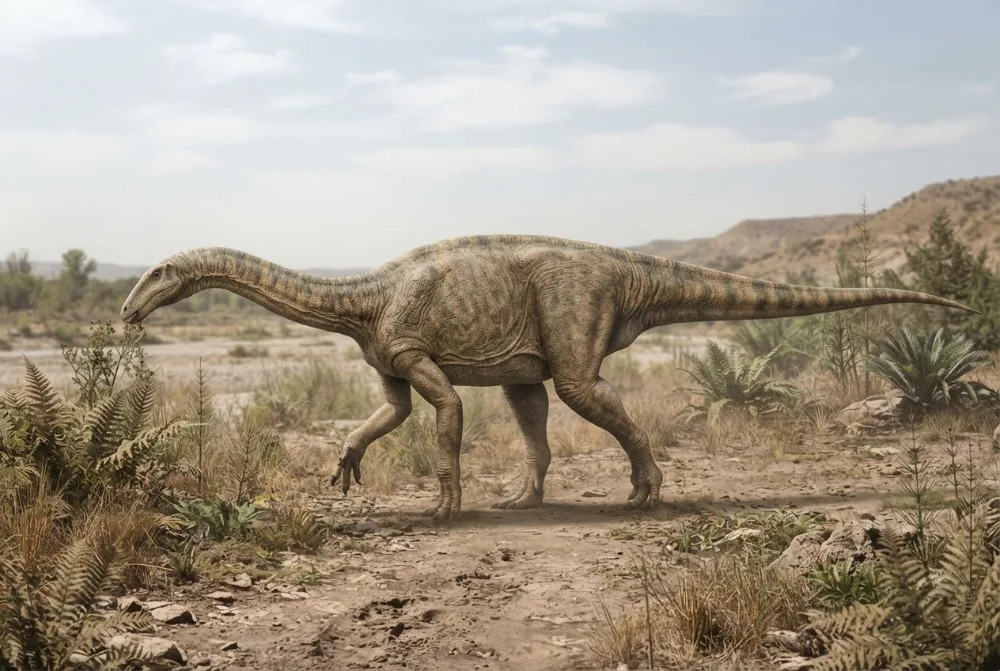
Efraasia was a long-necked plant-eater that lived in what is now Germany about 210 million years ago. It was a medium-sized dinosaur, about 6 to 7 metres long, and could walk on two or four legs. Its name honors the scientist Eberhard Fraas, who collected the first fossils.1
Berɛ bɛn na ɛtenaa ase?
Na ne kɛseɛ yɛ sɛn?
Na ne tenten yɛ sɛn?
Na ne korɔn yɛ sɛn?
nsusuiɛ
 ne tenten te sɛ nkraman 7 firi hwene kɔsi dua🍌ne tenten te sɛ kwadu 39 a wɔde abɔ toatoa so🏃anka ɔbɛtumi atu mmirika mita 100 wɔ sikɛn 12 mu (onipa a ɔyɛ ntɛm sen biara hia 9.6)
Efraasia kɛseɛ yɛ sɛn sɛ wode toto WO ho a?
Akontaa nko ara wɔ wo browser mu. Yɛnkora biribiara so, na yɛmmfa biribiara nkɔ baabiara.
Na ɛyɛ ntɛm sɛn?


Nsɛm a ɛyɛ anigye
Efraasia was once thought to be a small dinosaur only 2 to 3 metres long, but scientists later realized those fossils were from juveniles. Adults grew to about 6.5 metres.1
Its fossils were first mistaken for three different dinosaur species: Teratosaurus minor, Sellosaurus fraasi, and Paleosaurus diagnosticus. In 2003, scientists combined them into one species: Efraasia minor.1
Efraasia had long fingers and a flexible thumb, which it may have used to grasp food. Its wrists were shaped so it could walk on all fours easily.1
The first Efraasia fossils were discovered by a stonemason named Albert Burrer in a quarry near Pfaffenhofen, Germany, between 1906 and 1914.1
Efraasia is a basal sauropodomorph, meaning it is an early relative of the giant long-necked sauropods like Brachiosaurus and Diplodocus.1
Some scientists think Efraasia was an obligate biped, meaning it could only walk on two legs, because its lower arm could not rotate to point its hands downward.1
Nsɛm a wɔbisa bebree fa Efraasia ho
?What did Efraasia eat?
Efraasia was a herbivore, meaning it ate plants. It thrived on the lush vegetation of its time.12
?How big was Efraasia?
Efraasia was a medium sized dinosaur, about 6 to 7 metres long. It weighed between 300 and 600 kilograms.12
Atosɛm sɛefoɔ
Atosɛm: Efraasia was a meat-eating dinosaur.
Nokorɛ: Early researchers thought it was a predator, but in 1965 scientists proved it was a plant-eating sauropodomorph.1
Ma dino ho animdefoɔ
- Nyansahu din
- Efraasia
- Obi a ɔtoo din
- Galton 19733
- Kuo
- Kɔn tenten
- Abusua / kuo kɛseɛ
- Sauropodomorpha3
- Nkyekyɛmu
- Sauropodomorpha3
- Abotan no mfeɛ
- mfeɛ ɔpepem 227 kɔsi 206 (Norian)3
- Abotan nhyehyɛeɛ
- Löwenstein3
- Aman
- Gyaaman3
- Fɔsil nkyerɛwee
- 5 wɔ The Paleobiology Database mu3
- Nhunumu
- The first fossils were found by Albert Burrer in a quarry near Pfaffenhofen, Germany, starting in 1906. They were later studied by Friedrich von Huene and Eberhard Fraas. The genus Efraasia was named by Peter Galton in 1973 in honor of Fraas.1
- Wɔda so gye ho akyinnye
- Scientists still debate whether Efraasia walked on two legs or four. Some think its wrists allowed it to walk on all fours, while others argue it was an obligate biped.1
Baabi a nsɛm no firi
- Efraasia (en.wikipedia.org)
- Efraasia | Exploring the Late Triassic Herbivorous Giant (thedinosaurs.org)
- Efraasia in The Paleobiology Database (CC BY 4.0): mfeɛ, mmeaeɛ, abotan nhyehyɛeɛ, nkyekyɛmu.
Asɛm biara a ɛwɔ krataafa yi so wɔ nɔma a ɛkyerɛ baabi a ɛfiri. Sɛ yɛfom biribi a, kafra, yɛyɛ dino dɔfoɔ, yɛnyɛ nyansahu nsɛmma krataa. Ka kyerɛ yɛn wɔ [email protected] na yɛbɛsiesie.
 Ɔkɔm de Rex! Dino Wiki yɛ agya bi adwuma a ɔyɛɛ maa ne babarima a ɔdɔ dino. Ɛyɛ kwa, dawurubɔ biara nni mu, akyidifoɔ biara nni mu. Mpanimfoɔ bɛtumi ama Rex aduane kakra, na aboa ama Dino Wiki atena intanɛt so.Ma Rex aduane
 Brachiosaurus
 Diplodocus
 Brontosaurus
 Argentinosaurus
 Camarasaurus
 Morosaurus
 Nothosaurus
 Coelophysis
 Podokesaurus
 Simosaurus
 Eudimorphodon
 Herrerasaurus