 Woyɛ dino bɛn? Nsɛmmisa agoro
 Dino ko
 Dino mmirikatuo
 Dino agodie nketewa
 Stika nwoma
 Dino TOP nhyehyɛeɛ
 Ma me nwanwa!
Fluvionectes
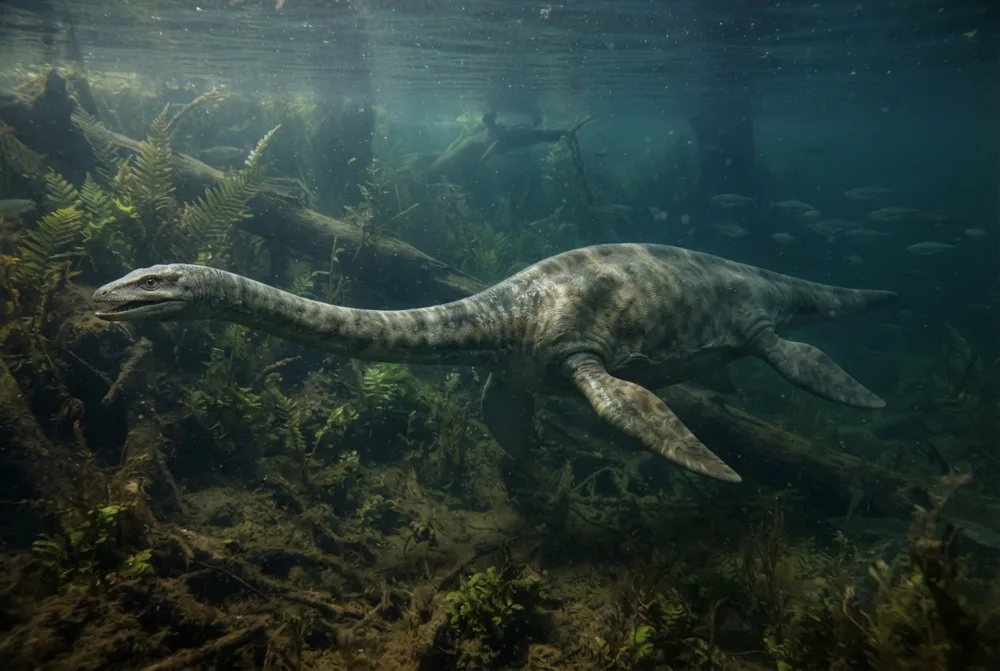
Fluvionectes was a long-necked marine reptile that swam in rivers and estuaries, not the open ocean. It was a type of plesiosaur called an elasmosaur, and it hunted fish and other prey in the water.1
Berɛ bɛn na ɛtenaa ase?
Na ne kɛseɛ yɛ sɛn?
Na ne tenten yɛ sɛn?
Na ne mu yɛ duru sɛn?
 ne tenten te sɛ nkraman 7 firi hwene kɔsi dua🍌ne tenten te sɛ kwadu 39 a wɔde abɔ toatoa so🍉ne mu duru te sɛ watamɛlɔn 78🧸ne mu duru te sɛ nkɔkɔaa sukuu mmofra 21🎒ne mu duru te sɛ sukuu mmofra 12🏊anka ɔbɛtumi aguare nsuguarebea kɛseɛ (50 m) tenten wɔ sikɛn 6.2 mu
Fluvionectes kɛseɛ yɛ sɛn sɛ wode toto WO ho a?
Akontaa nko ara wɔ wo browser mu. Yɛnkora biribiara so, na yɛmmfa biribiara nkɔ baabiara.
Na ɛyɛ ntɛm sɛn?


Nsɛm a ɛyɛ anigye
Fluvionectes is one of the few plesiosaurs found in non-marine rocks, meaning it lived in rivers and estuaries, not the open ocean.1
The holotype skeleton was found disarticulated, scattered over an area of about 2.5 square metres, with only two rib bones still connected.1
Fluvionectes had 22 dorsal vertebrae, which is a unique feature that helps scientists identify it as a new species.1
The name Fluvionectes comes from Latin and Greek words meaning 'river swimmer', because it lived in rivers.1
The species name sloanae honours Donna Sloan, who discovered the holotype and worked as a scientific illustrator at the Royal Tyrrell Museum.1
Fluvionectes was smaller than many other elasmosaurids that lived in the ocean, which might be because it lived in rivers.1
Nsɛm a wɔbisa bebree fa Fluvionectes ho
?How big was Fluvionectes?
About 5 to 5.2 metres (16 to 17 ft) long for the holotype, and the largest known specimen may have reached 7 metres (23 ft).23
?What did Fluvionectes eat?
It hunted fish and other vertebrates in the water, using its slender tooth and powerful flippers to catch prey.4
?Where did Fluvionectes live?
It lived in rivers and estuaries (brackish water) in what is now Alberta, Canada, not in the open ocean like most other elasmosaurs.23
?Is Fluvionectes a dinosaur?
No, it is a plesiosaur, a type of marine reptile that lived in the water during the time of dinosaurs.2
Atosɛm sɛefoɔ
Atosɛm: Some people think all plesiosaurs lived only in the ocean.
Nokorɛ: Fluvionectes shows that some plesiosaurs lived in rivers and estuaries, not just the open sea.1
Ma dino ho animdefoɔ
- Nyansahu din
- Fluvionectes
- Obi a ɔtoo din
- Campbell et al. 20215
- Kuo
- Plesiosɔɔ
- Abusua / kuo kɛseɛ
- Elasmosauridae5
- Nkyekyɛmu
- Plesiosauria > Elasmosauridae > Sauropterygia5
- Abotan no mfeɛ
- mfeɛ ɔpepem 84 kɔsi 72 (Campanian)5
- Abotan nhyehyɛeɛ
- Dinosaur Park5
- Aman
- Kanada5
- Fɔsil nkyerɛwee
- 6 wɔ The Paleobiology Database mu5
- Nhunumu
- The holotype was discovered by Donna Sloan in the Dinosaur Park Formation in Alberta, Canada. It was named by Campbell and colleagues in 2021.1
- Wɔda so gye ho akyinnye
- Scientists are still debating why Fluvionectes was smaller than ocean-living elasmosaurids, and whether it spent its whole life in rivers or moved between fresh and salt water.1
Baabi a nsɛm no firi
- PeerJ A new elasmosaurid (Sauropterygia: Plesiosauria) from the non-marine to paralic Dinosaur Park Formation of southern Alberta, Canada (peerj.com)
- Fluvionectes (en.wikipedia.org)
- A new elasmosaurid (Sauropterygia: Plesiosauria) from the non-marine to paralic Dinosaur Park Formation of southern Alberta, Canada (pmc.ncbi.nlm.nih.gov)
- New Late Cretaceous Marine Reptile publication by M. Ryan and J. Campbell | Department of Earth Sciences (earthsci.carleton.ca)
- Fluvionectes in The Paleobiology Database (CC BY 4.0): mfeɛ, mmeaeɛ, abotan nhyehyɛeɛ, nkyekyɛmu.
Asɛm biara a ɛwɔ krataafa yi so wɔ nɔma a ɛkyerɛ baabi a ɛfiri. Sɛ yɛfom biribi a, kafra, yɛyɛ dino dɔfoɔ, yɛnyɛ nyansahu nsɛmma krataa. Ka kyerɛ yɛn wɔ [email protected] na yɛbɛsiesie.
 Ɔkɔm de Rex! Dino Wiki yɛ agya bi adwuma a ɔyɛɛ maa ne babarima a ɔdɔ dino. Ɛyɛ kwa, dawurubɔ biara nni mu, akyidifoɔ biara nni mu. Mpanimfoɔ bɛtumi ama Rex aduane kakra, na aboa ama Dino Wiki atena intanɛt so.Ma Rex aduane
 Elasmosaurus
 Pliosaurus
 Plesiosaurus
 Cimoliasaurus
 Colymbosaurus
 Trinacromerum
 Tyrannosaurus
 Triceratops
 Velociraptor
 Spinosaurus
 Ankylosaurus
 Parasaurolophus