 Woyɛ dino bɛn? Nsɛmmisa agoro
 Dino ko
 Dino mmirikatuo
 Dino agodie nketewa
 Stika nwoma
 Dino TOP nhyehyɛeɛ
 Ma me nwanwa!
Pliosaurus
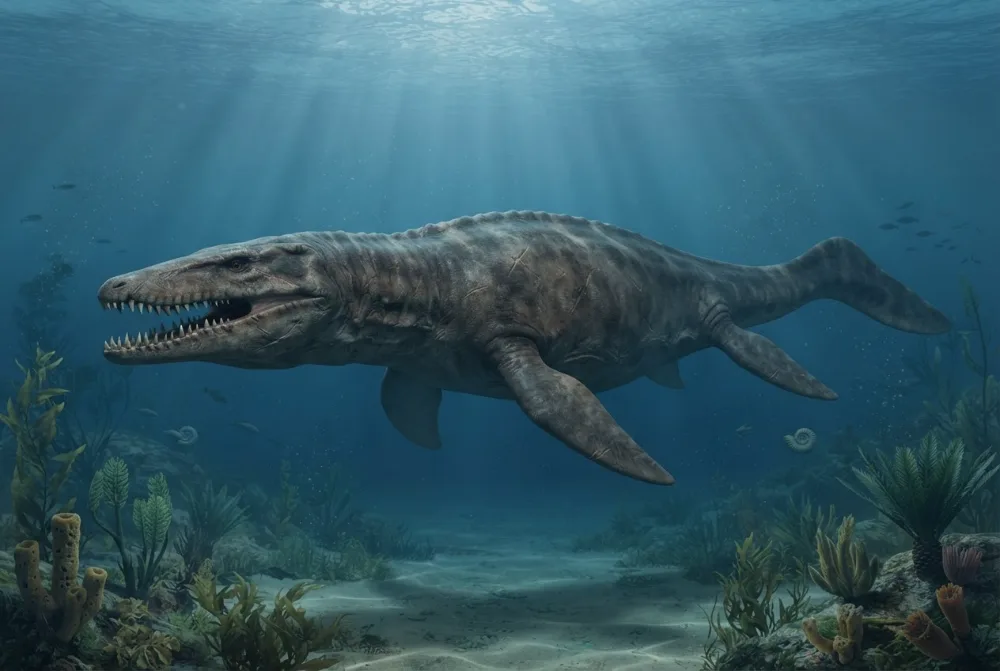
Pliosaurus was a giant marine reptile that ruled the Jurassic oceans. It had a huge head, a short neck, and powerful jaws full of sharp teeth. This predator could grow as long as a school bus and ate big prey like other sea creatures.1
Berɛ bɛn na ɛtenaa ase?
Na ne kɛseɛ yɛ sɛn?
Na ne tenten yɛ sɛn?
Na ne mu yɛ duru sɛn?
 ne tenten te sɛ kaa 3 a wɔde agyina toatoa so🍌ne tenten te sɛ kwadu 83 a wɔde abɔ toatoa so
 ne mu duru te sɛ asono 2🍉ne mu duru te sɛ watamɛlɔn 2200🎒ne mu duru te sɛ sukuu klaas mũ 14 mu mmofra🐻❄️ne mu duru te sɛ polar bea 24🏊anka ɔbɛtumi aguare nsuguarebea kɛseɛ (50 m) tenten wɔ sikɛn 9.5 mu
Pliosaurus kɛseɛ yɛ sɛn sɛ wode toto WO ho a?
Akontaa nko ara wɔ wo browser mu. Yɛnkora biribiara so, na yɛmmfa biribiara nkɔ baabiara.
Na ɛyɛ ntɛm sɛn?


Nsɛm a ɛyɛ anigye
Pliosaurus had a skull that could be up to 2.1 metres (about 7 feet) long, making it one of the largest-headed marine reptiles.1
Its teeth were trihedral, meaning they had three flat sides, which helped it grip slippery prey.1
Pliosaurus lived during the Late Jurassic, about 165 to 66 million years ago, and its fossils are often found in the Kimmeridge Clay Formation in England.4
The first Pliosaurus fossil was discovered in 1822 near Weymouth, England, and it was named by the famous scientist Richard Owen in 1841.1
Pliosaurus was a plesiosaur, but unlike the long-necked plesiosaurs, it had a short neck and a huge head.1
Some scientists think Pliosaurus could grow up to 15 metres (about 49 feet) long, but these estimates are debated.2
Nsɛm a wɔbisa bebree fa Pliosaurus ho
?How big was Pliosaurus?
The largest species, P. funkei and P. kevani, are estimated at around 10 metres (33 ft) long and weighed nearly 11 tonnes (12 short tons). Some estimates go up to 15 metres (49 ft), but these are debated.32
?Was Pliosaurus a dinosaur?
No, Pliosaurus was not a dinosaur. It was a marine reptile called a plesiosaur, specifically a pliosaur, that lived in the ocean.3
?What did Pliosaurus eat?
Pliosaurus ate large prey like fish, ichthyosaurs, and other plesiosaurs. Its powerful jaws and trihedral teeth helped it grip slippery animals.3
?How fast could Pliosaurus swim?
Probably up to about 19 km/h (12 mph), about as fast as a grown-up riding a bike. This is an estimate. It 'flew' through the water with its four flippers, like a sea turtle.3
?When did Pliosaurus live?
Pliosaurus lived from the Late Jurassic to the Early Cretaceous, about 154 to 137 million years ago.3
?Where was Pliosaurus found?
Fossils of Pliosaurus have been found in Europe (especially England) and South America. Many come from the Kimmeridge Clay Formation in England.31
?How big was Pliosaurus's skull?
The skull of the largest species could be over 2 metres (6.6 ft) long, making it one of the largest-headed marine reptiles.3
?What does the name Pliosaurus mean?
Pliosaurus means 'more lizard' in Greek. Richard Owen named it that because it looked more like a crocodile than the long-necked Plesiosaurus.3
Atosɛm sɛefoɔ
Atosɛm: Pliosaurus was a dinosaur.
Nokorɛ: Pliosaurus was not a dinosaur. It was a marine reptile called a plesiosaur, which lived in the ocean during the time of dinosaurs.1
Ma dino ho animdefoɔ
- Nyansahu din
- Pliosaurus
- Obi a ɔtoo din
- (Owen 1841)4
- Kuo
- Plesiosɔɔ
- Abusua / kuo kɛseɛ
- Pliosauridae4
- Nkyekyɛmu
- Plesiosauria > Pliosauridae > Sauropterygia4
- Abotan no mfeɛ
- mfeɛ ɔpepem 165 kɔsi 66 (Callovian / Maastrichtian)4
- Abotan nhyehyɛeɛ
- Kimmeridge Clay, Coral Rag, Oxford Clay4
- Aman
- Engiresi, Frɛnse, Rɔhyea, Nɔɔwe, Argentina, Poland4
- Fɔsil nkyerɛwee
- 57 wɔ The Paleobiology Database mu4
- Wɔsan frɛ no
- Ischyrodon, Spondylosaurus, Stretosaurus (din dada no nso, yɛkan no sɛ aboa korɔ no ara)4
- Nhunumu
- The first Pliosaurus fossils were found in the early 1800s in England. Richard Owen named the genus Pliosaurus in 1841, based on a partial skeleton from Market Rasen, Lincolnshire.1
- Wɔda so gye ho akyinnye
- Scientists still debate the exact maximum size of Pliosaurus, with estimates ranging from 10 to 15 metres long.2
Baabi a nsɛm no firi
- A Giant Pliosaurid Skull from the Late Jurassic of England | PLOS One (journals.plos.org)
- A taxonomic revision of the genus Pliosaurus (Owen, 1841a) Owen, 1841b (geologi.no)
- Pliosaurus (en.wikipedia.org)
- Pliosaurus in The Paleobiology Database (CC BY 4.0): mfeɛ, mmeaeɛ, abotan nhyehyɛeɛ, nkyekyɛmu.
Asɛm biara a ɛwɔ krataafa yi so wɔ nɔma a ɛkyerɛ baabi a ɛfiri. Sɛ yɛfom biribi a, kafra, yɛyɛ dino dɔfoɔ, yɛnyɛ nyansahu nsɛmma krataa. Ka kyerɛ yɛn wɔ [email protected] na yɛbɛsiesie.
 Ɔkɔm de Rex! Dino Wiki yɛ agya bi adwuma a ɔyɛɛ maa ne babarima a ɔdɔ dino. Ɛyɛ kwa, dawurubɔ biara nni mu, akyidifoɔ biara nni mu. Mpanimfoɔ bɛtumi ama Rex aduane kakra, na aboa ama Dino Wiki atena intanɛt so.Ma Rex aduane
 Elasmosaurus
 Plesiosaurus
 Cimoliasaurus
 Colymbosaurus
 Trinacromerum
 Cryptoclidus
 Stegosaurus
 Iguanodon
 Archaeopteryx
 Giganotosaurus
 Microraptor
 Deinonychus