 Woyɛ dino bɛn? Nsɛmmisa agoro
 Dino ko
 Dino mmirikatuo
 Dino agodie nketewa
 Stika nwoma
 Dino TOP nhyehyɛeɛ
 Ma me nwanwa!
Berɛ bɛn na ɛtenaa ase?

Na ne kɛseɛ yɛ sɛn?
Na ne tenten yɛ sɛn?
Na ne korɔn yɛ sɛn?
nsusuiɛ
Na ne mu yɛ duru sɛn?
 ne tenten te sɛ nkraman 5 firi hwene kɔsi dua🍌ne tenten te sɛ kwadu 26 a wɔde abɔ toatoa so🍉ne mu duru te sɛ watamɛlɔn 20🧸ne mu duru te sɛ nkɔkɔaa sukuu mmofra 5🎒ne mu duru te sɛ sukuu mmofra 3🏃anka ɔbɛtumi atu mmirika mita 100 wɔ sikɛn 5.5 mu (onipa a ɔyɛ ntɛm sen biara hia 9.6)
Garudimimus kɛseɛ yɛ sɛn sɛ wode toto WO ho a?
Akontaa nko ara wɔ wo browser mu. Yɛnkora biribiara so, na yɛmmfa biribiara nkɔ baabiara.
Na ɛyɛ ntɛm sɛn?


Nsɛm a ɛyɛ anigye
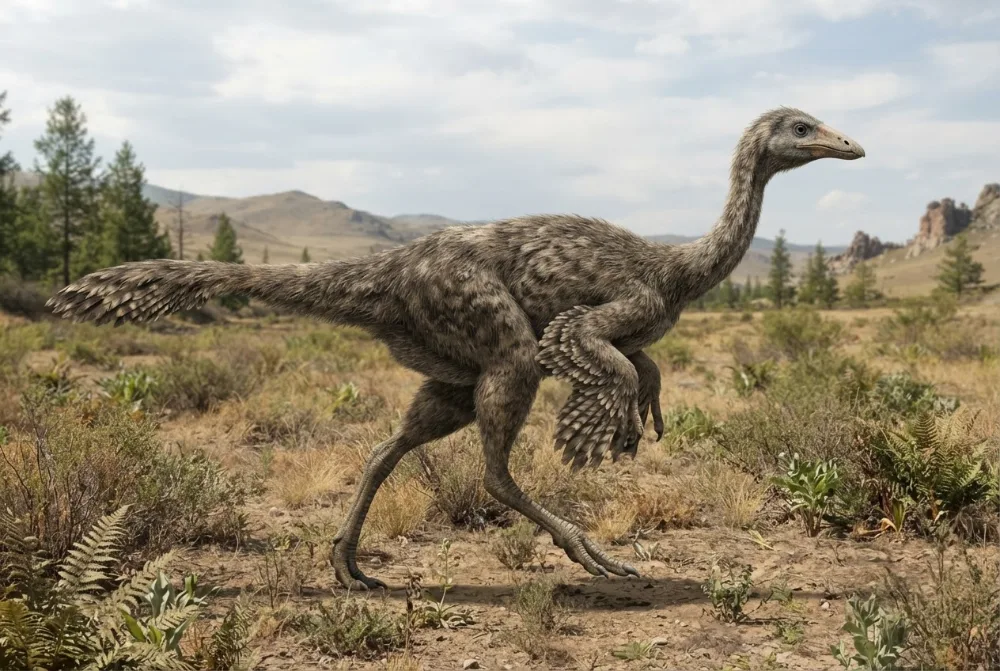
Garudimimus had four toes on each foot, but the first toe was very small. Most later ornithomimids had only three toes.1
Scientists once thought Garudimimus had a horn on its skull. Later they realized it was just a crushed bone.1
Garudimimus was not built for fast running. Its leg muscles were not as strong as those of speedier ornithomimids.1
The only known skeleton of Garudimimus is almost complete and still has its bones connected.1
Garudimimus lived alongside turtles, crocodile relatives, and other dinosaurs in a warm, semi-arid floodplain.1
The name Garudimimus comes from Garuda, a mythical bird-like creature in Mongolian Buddhism.1
Nsɛm a wɔbisa bebree fa Garudimimus ho
?How big was Garudimimus?
About 3.5 metres (11.5 feet) long and weighed around 77 to 98 kilograms (170 to 216 pounds).1
?What did Garudimimus eat?
It was an omnivore or herbivore, eating plants and maybe small animals. It had a toothless beak and a weak bite.1
?Could Garudimimus run fast?
Yes, it was likely a fast runner. Its long legs and anatomy suggest it was built for speed, similar to other ornithomimosaurs.1
?Did Garudimimus have feathers?
Scientists think it probably had feathers, like many other ornithomimosaurs, but no direct feather impressions have been found on the only known skeleton.1
?When did Garudimimus live?
It lived during the Late Cretaceous period, about 99 to 89 million years ago.2
?Where was Garudimimus found?
In the Gobi Desert of Mongolia, at a place called Bayshin Tsav in the Bayan Shireh Formation.1
Atosɛm sɛefoɔ
Atosɛm: Garudimimus was a fast runner like an ostrich.
Nokorɛ: Garudimimus had short, stocky legs and weak leg muscles, so it was not a fast runner.1
Ma dino ho animdefoɔ
- Nyansahu din
- Garudimimus
- Obi a ɔtoo din
- Barsbold 19813
- Kuo
- Ɔstrik dino
- Abusua / kuo kɛseɛ
- Deinocheiridae3
- Nkyekyɛmu
- Theropoda > Ornithomimosauria3
- Abotan no mfeɛ
- mfeɛ ɔpepem 94 kɔsi 84 (Turonian / Santonian)3
- Abotan nhyehyɛeɛ
- Baynshire3
- Aman
- Mongolia3
- Fɔsil nkyerɛwee
- 1 wɔ The Paleobiology Database mu3
- Nhunumu
- A Soviet-Mongolian expedition found the skeleton in the Gobi Desert in 1981. Mongolian paleontologist Rinchen Barsbold named it Garudimimus brevipes that same year.1
- Wɔda so gye ho akyinnye
- Scientists are not sure if Garudimimus belongs in the family Deinocheiridae or in its own family, Garudimimidae.1
Baabi a nsɛm no firi
- Garudimimus (en.wikipedia.org)
- Garudimimus | Natural History Museum (nhm.ac.uk)
- Garudimimus in The Paleobiology Database (CC BY 4.0): mfeɛ, mmeaeɛ, abotan nhyehyɛeɛ, nkyekyɛmu.
Asɛm biara a ɛwɔ krataafa yi so wɔ nɔma a ɛkyerɛ baabi a ɛfiri. Sɛ yɛfom biribi a, kafra, yɛyɛ dino dɔfoɔ, yɛnyɛ nyansahu nsɛmma krataa. Ka kyerɛ yɛn wɔ [email protected] na yɛbɛsiesie.
 Ɔkɔm de Rex! Dino Wiki yɛ agya bi adwuma a ɔyɛɛ maa ne babarima a ɔdɔ dino. Ɛyɛ kwa, dawurubɔ biara nni mu, akyidifoɔ biara nni mu. Mpanimfoɔ bɛtumi ama Rex aduane kakra, na aboa ama Dino Wiki atena intanɛt so.Ma Rex aduane
 Gallimimus
 Ornithomimus
 Struthiomimus
 Deinocheirus
 Dromiceiomimus
 Archaeornithomimus
 Tyrannosaurus
 Triceratops
 Velociraptor
 Spinosaurus
 Ankylosaurus
 Parasaurolophus