 Woyɛ dino bɛn? Nsɛmmisa agoro
 Dino ko
 Dino mmirikatuo
 Dino agodie nketewa
 Stika nwoma
 Dino TOP nhyehyɛeɛ
 Ma me nwanwa!
Genusaurus
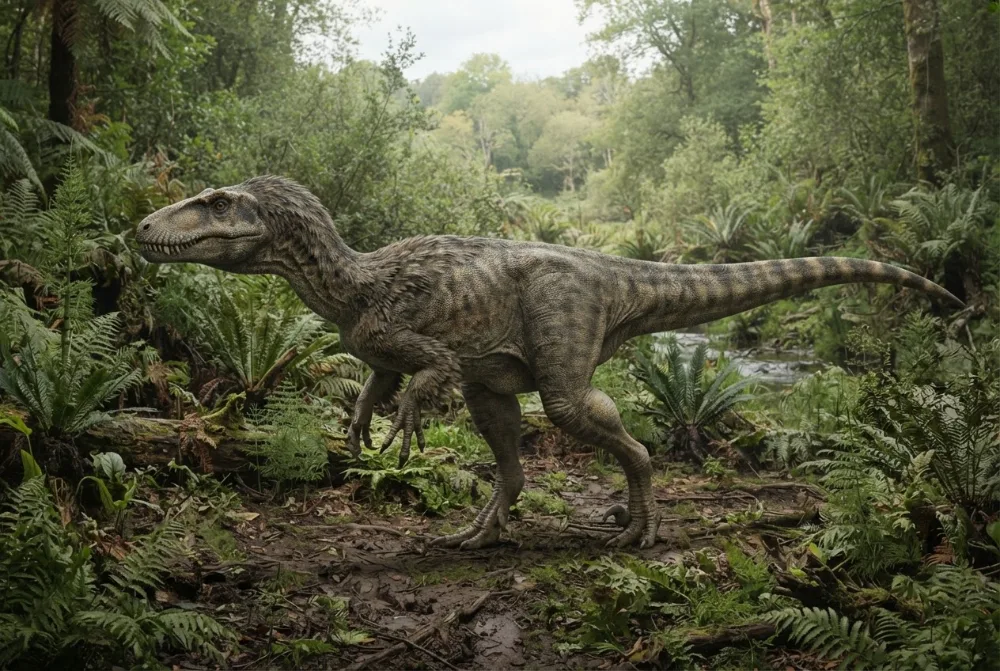
Genusaurus was a small, meat-eating dinosaur that lived in what is now France about 106 million years ago. It had a big bump on its shinbone, which is why its name means 'knee lizard'. This dinosaur was a primitive cousin of bigger predators like Carnotaurus.142
Berɛ bɛn na ɛtenaa ase?
Na ne kɛseɛ yɛ sɛn?
Na ne tenten yɛ sɛn?
Na ne korɔn yɛ sɛn?
nsusuiɛ
Na ne mu yɛ duru sɛn?
 ne tenten te sɛ nkraman 4 firi hwene kɔsi dua🍌ne tenten te sɛ kwadu 20 a wɔde abɔ toatoa so🍉ne mu duru te sɛ watamɛlɔn 26🧸ne mu duru te sɛ nkɔkɔaa sukuu mmofra 7🎒ne mu duru te sɛ sukuu mmofra 4🏃anka ɔbɛtumi atu mmirika mita 100 wɔ sikɛn 7.2 mu (onipa a ɔyɛ ntɛm sen biara hia 9.6)
Genusaurus kɛseɛ yɛ sɛn sɛ wode toto WO ho a?
Akontaa nko ara wɔ wo browser mu. Yɛnkora biribiara so, na yɛmmfa biribiara nkɔ baabiara.
Na ɛyɛ ntɛm sɛn?


Nsɛm a ɛyɛ anigye
Genusaurus is a ceratosaur, a group of primitive carnivorous dinosaurs that were once thought to have died out in the Jurassic. This fossil shows they survived into the Early Cretaceous.2
Its shinbone (tibia) had an extremely large cnemial crest, a bony bump that stuck out in front. That's why it was named 'knee lizard'.12
The only known skeleton includes parts of the hip, thigh, shin, foot bones, and several back vertebrae. No skull has been found.2
The bones were found in marine rocks, mixed with oyster shells and shark teeth. The dinosaur probably died on land and its body washed into the sea.2
The environment at the time was warm and humid, with wooded countryside and conifer trees.2
Genusaurus was a small dinosaur, but scientists don't know its exact size because only a partial skeleton has been found.2
Nsɛm a wɔbisa bebree fa Genusaurus ho
?How big was Genusaurus?
It was about 3 to 3.6 metres (10 to 12 feet) long and weighed between 35 and 50 kilograms (77 to 110 pounds).1
?What did Genusaurus eat?
Genusaurus was a meat-eater (carnivore). It probably hunted small animals or scavenged.1
?When did Genusaurus live?
It lived during the Early Cretaceous period, about 112 to 100 million years ago.1
?Why is it called 'knee lizard'?
Its name means 'knee lizard' because it had a very large bony bump (the cnemial crest) on its shinbone, near the knee.1
Ma dino ho animdefoɔ
- Nyansahu din
- Genusaurus
- Obi a ɔtoo din
- Accarie et al. 19954
- Kuo
- Dino a wɔwe nam
- Abusua / kuo kɛseɛ
- Abelisauridae4
- Nkyekyɛmu
- Theropoda > Ceratosauria > Abelisauridae4
- Abotan no mfeɛ
- mfeɛ ɔpepem 110 kɔsi 106 (Albian)4
- Abotan nhyehyɛeɛ
- Marnes bleues4
- Aman
- Frɛnse4
- Fɔsil nkyerɛwee
- 1 wɔ The Paleobiology Database mu4
- Nhunumu
- The first bones were found in 1984 by geologists Hugues Accarie, Bernard Beaudoin, and Gérard Friès while mapping rocks near Sisteron, France. The dinosaur was named and described in 1995 by Accarie and colleagues.21
- Wɔda so gye ho akyinnye
- Scientists are not sure exactly how Genusaurus is related to other ceratosaurs. Some features on its leg bones are also seen in more advanced theropods like Allosaurus, so its place in the family tree is still debated.2
Baabi a nsɛm no firi
- Genusaurus (en.wikipedia.org)
- Accarie et al. 1995 - Genusaurus sisteronis (naturalhistory.si.edu)
- Furileusaurian osteological characters in Genusaurus sisteronis Accarie et al., 1995, an abelisaurid dinosaur from the Albian (Lower Cretaceous) of south-eastern France (carnetsnatures.fr)
- Genusaurus in The Paleobiology Database (CC BY 4.0): mfeɛ, mmeaeɛ, abotan nhyehyɛeɛ, nkyekyɛmu.
Asɛm biara a ɛwɔ krataafa yi so wɔ nɔma a ɛkyerɛ baabi a ɛfiri. Sɛ yɛfom biribi a, kafra, yɛyɛ dino dɔfoɔ, yɛnyɛ nyansahu nsɛmma krataa. Ka kyerɛ yɛn wɔ [email protected] na yɛbɛsiesie.
 Ɔkɔm de Rex! Dino Wiki yɛ agya bi adwuma a ɔyɛɛ maa ne babarima a ɔdɔ dino. Ɛyɛ kwa, dawurubɔ biara nni mu, akyidifoɔ biara nni mu. Mpanimfoɔ bɛtumi ama Rex aduane kakra, na aboa ama Dino Wiki atena intanɛt so.Ma Rex aduane
 Allosaurus
 Carnotaurus
 Dilophosaurus
 Giganotosaurus
 Compsognathus
 Paronychodon
 Stegosaurus
 Iguanodon
 Archaeopteryx
 Microraptor
 Deinonychus
 Baryonyx