 Woyɛ dino bɛn? Nsɛmmisa agoro
 Dino ko
 Dino mmirikatuo
 Dino agodie nketewa
 Stika nwoma
 Dino TOP nhyehyɛeɛ
 Ma me nwanwa!
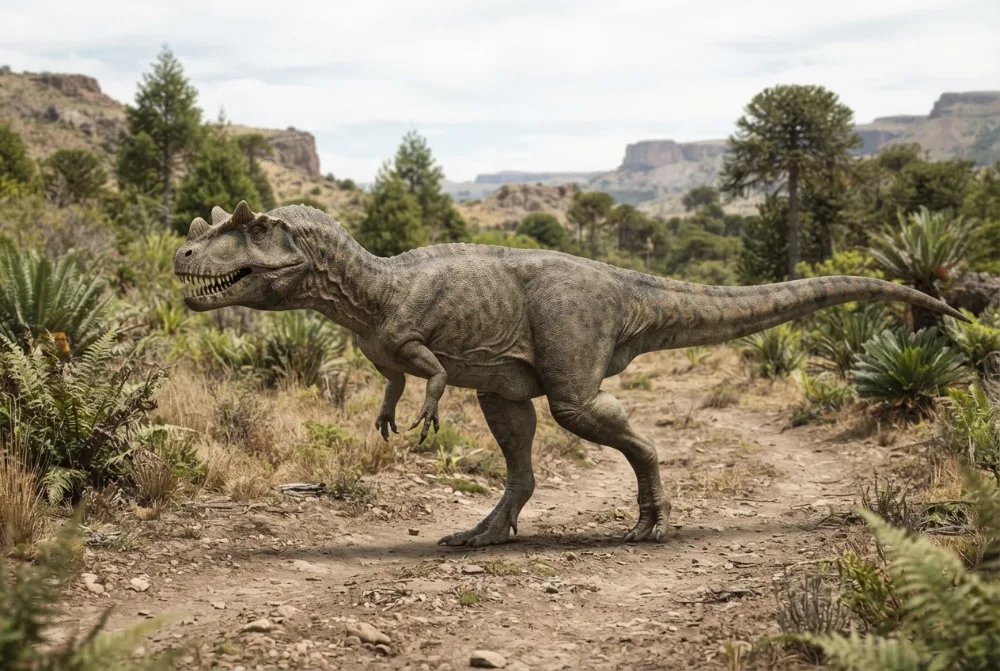
Genyodectes
Genyodectes was a meat-eating dinosaur with a big mouth full of sharp teeth. It lived in South America during the Early Cretaceous period, about 112 million years ago. This dinosaur was one of the first meat-eating dinosaurs ever found on that continent!12
Berɛ bɛn na ɛtenaa ase?
Na ne kɛseɛ yɛ sɛn?
Na ne tenten yɛ sɛn?
Na ne korɔn yɛ sɛn?
Na ne mu yɛ duru sɛn?
 ne tenten te sɛ nkraman 6 firi hwene kɔsi dua🍌ne tenten te sɛ kwadu 35 a wɔde abɔ toatoa so🍉ne mu duru te sɛ watamɛlɔn 160🧸ne mu duru te sɛ nkɔkɔaa sukuu mmofra 42🎒ne mu duru te sɛ sukuu mmofra 25🏃anka ɔbɛtumi atu mmirika mita 100 wɔ sikɛn 9.5 mu (onipa a ɔyɛ ntɛm sen biara hia 9.6)
Genyodectes kɛseɛ yɛ sɛn sɛ wode toto WO ho a?
Akontaa nko ara wɔ wo browser mu. Yɛnkora biribiara so, na yɛmmfa biribiara nkɔ baabiara.
Na ɛyɛ ntɛm sɛn?


Nsɛm a ɛyɛ anigye
Genyodectes had four teeth in its upper jaw (premaxilla), while its close relative Ceratosaurus had only three.1
The only known fossil of Genyodectes is a partial snout with teeth, found in the Cerro Barcino Formation of Argentina.12
For a long time, scientists thought Genyodectes might be a tyrannosaur or an abelisaur, but now they think it was a ceratosaur, closer to Ceratosaurus.1
Genyodectes was the second non-bird dinosaur ever described from South America, after Loncosaurus.1
The name Genyodectes means 'jaw bite' in Greek, from 'genys' (jaw) and 'dektes' (bite).1
The teeth of Genyodectes were arranged in an overlapping pattern, like shingles on a roof.1
Nsɛm a wɔbisa bebree fa Genyodectes ho
?How big was Genyodectes?
About 6.25 metres long and weighed around 790 kg. That is roughly as long as a large car.1
?What did Genyodectes eat?
It was a meat-eater, like other theropod dinosaurs. Its long, sharp teeth were perfect for biting and holding onto prey.1
?Did Genyodectes have feathers?
Nobody knows for sure, because only its snout and teeth have been found. Many meat-eating dinosaurs related to it may have had feathers, but there is no direct evidence for Genyodectes.1
?Where did Genyodectes live?
It lived in what is now Argentina, South America, about 112 million years ago during the Early Cretaceous period.1
?Is Genyodectes a dinosaur?
Yes, it is a dinosaur. It was a theropod, a group of mostly meat-eating dinosaurs that walked on two legs.1
?How many teeth did Genyodectes have?
It had four teeth in the front part of its upper jaw (the premaxilla), while its relative Ceratosaurus had only three. The total number of teeth is not known because only part of the skull was found.1
Atosɛm sɛefoɔ
Atosɛm: Some people thought Genyodectes might be the same as Abelisaurus.
Nokorɛ: Scientists now think Genyodectes is a different dinosaur, a ceratosaur, not an abelisaur.1
Ma dino ho animdefoɔ
- Nyansahu din
- Genyodectes
- Obi a ɔtoo din
- Woodward 19014
- Kuo
- Dino a wɔwe nam
- Abusua / kuo kɛseɛ
- Ceratosauria4
- Nkyekyɛmu
- Theropoda > Ceratosauria4
- Abotan no mfeɛ
- mfeɛ ɔpepem 113 kɔsi 100 (Albian)4
- Abotan nhyehyɛeɛ
- Cerro Barcino4
- Aman
- Argentina4
- Fɔsil nkyerɛwee
- 1 wɔ The Paleobiology Database mu4
- Nhunumu
- English paleontologist Sir Arthur Smith Woodward named Genyodectes in 1901. The only fossil, a partial skull, was found at Cañadón Grande in Chubut, Argentina.12
- Wɔda so gye ho akyinnye
- Scientists are still not sure exactly where in the Cerro Barcino Formation the Genyodectes fossil came from, because the original records were lost.1
Baabi a nsɛm no firi
- Genyodectes (en.wikipedia.org)
- PBDB Taxon (paleobiodb.org)
- Genyodectes | Early Cretaceous Carnivorous Dinosaur (thedinosaurs.org)
- Genyodectes in The Paleobiology Database (CC BY 4.0): mfeɛ, mmeaeɛ, abotan nhyehyɛeɛ, nkyekyɛmu.
Asɛm biara a ɛwɔ krataafa yi so wɔ nɔma a ɛkyerɛ baabi a ɛfiri. Sɛ yɛfom biribi a, kafra, yɛyɛ dino dɔfoɔ, yɛnyɛ nyansahu nsɛmma krataa. Ka kyerɛ yɛn wɔ [email protected] na yɛbɛsiesie.
 Ɔkɔm de Rex! Dino Wiki yɛ agya bi adwuma a ɔyɛɛ maa ne babarima a ɔdɔ dino. Ɛyɛ kwa, dawurubɔ biara nni mu, akyidifoɔ biara nni mu. Mpanimfoɔ bɛtumi ama Rex aduane kakra, na aboa ama Dino Wiki atena intanɛt so.Ma Rex aduane
 Allosaurus
 Carnotaurus
 Dilophosaurus
 Giganotosaurus
 Compsognathus
 Paronychodon
 Stegosaurus
 Iguanodon
 Archaeopteryx
 Microraptor
 Deinonychus
 Baryonyx