 Woyɛ dino bɛn? Nsɛmmisa agoro
 Dino ko
 Dino mmirikatuo
 Dino agodie nketewa
 Stika nwoma
 Dino TOP nhyehyɛeɛ
 Ma me nwanwa!
Gilmoreosaurus
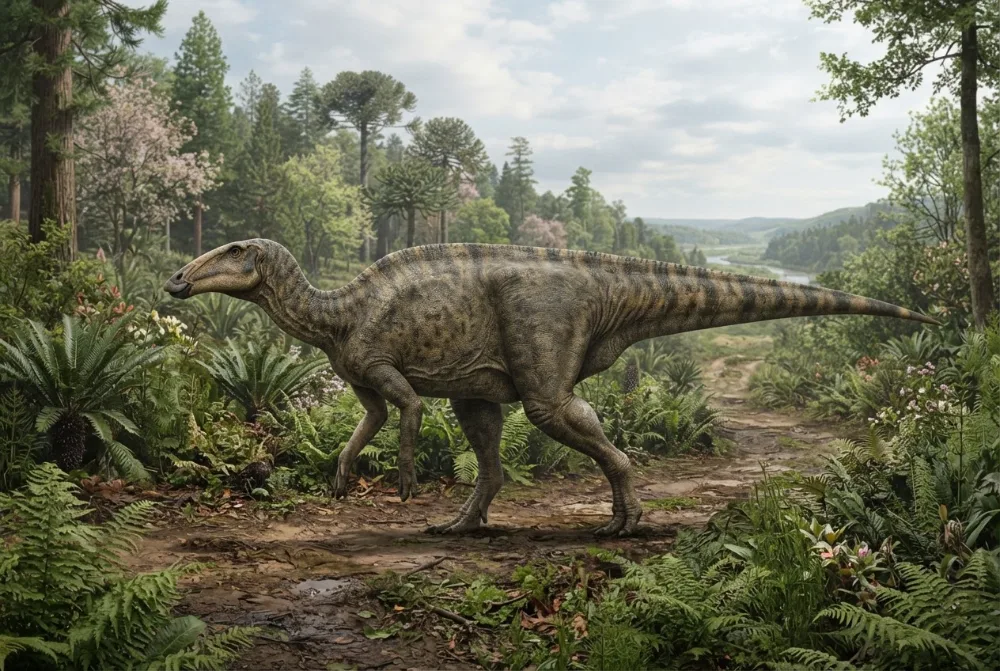
Gilmoreosaurus was a big, plant-eating dinosaur that lived in Asia during the Late Cretaceous. It had a beak and walked on four legs, but could also stand on two. Scientists think it was an early relative of the duck-billed dinosaurs.21
Berɛ bɛn na ɛtenaa ase?
Na ne kɛseɛ yɛ sɛn?
Na ne tenten yɛ sɛn?
Na ne korɔn yɛ sɛn?
nsusuiɛ
Na ne mu yɛ duru sɛn?

 ne tenten te sɛ nkraman 6 firi hwene kɔsi dua🍌ne tenten te sɛ kwadu 34 a wɔde abɔ toatoa sone mu duru te sɛ nkraman 180🍉ne mu duru te sɛ watamɛlɔn 720🎒ne mu duru te sɛ sukuu klaas mũ 4 mu mmofra🐻❄️ne mu duru te sɛ polar bea 8🏃anka ɔbɛtumi atu mmirika mita 100 wɔ sikɛn 13 mu (onipa a ɔyɛ ntɛm sen biara hia 9.6)
Gilmoreosaurus kɛseɛ yɛ sɛn sɛ wode toto WO ho a?
Akontaa nko ara wɔ wo browser mu. Yɛnkora biribiara so, na yɛmmfa biribiara nkɔ baabiara.
Na ɛyɛ ntɛm sɛn?


Nsɛm a ɛyɛ anigye
Gilmoreosaurus was named after Charles Whitney Gilmore, a famous American paleontologist who studied dinosaurs from Asia.2
Its fossils were found in the Iren Dabasu Formation in Inner Mongolia, which was once a floodplain with rivers and lots of plants.2
Gilmoreosaurus lived about 96 million years ago, during the Late Cretaceous period.2
This dinosaur had a mix of features from older iguanodonts and later hadrosaurs, making it an important link in dinosaur evolution.2
The first fossils of Gilmoreosaurus were collected in 1922 and 1923 by a team from the American Museum of Natural History.2
Gilmoreosaurus might have been hunted by the fast-running tyrannosauroid Alectrosaurus, which lived in the same area.2
Nsɛm a wɔbisa bebree fa Gilmoreosaurus ho
?How big was Gilmoreosaurus?
Gilmoreosaurus was about 6.2 metres long and weighed between 1.2 and 3.6 tonnes.21
?What did Gilmoreosaurus eat?
Gilmoreosaurus was a herbivore, meaning it ate plants. It had a beak and browsed on low to medium-height vegetation.21
Ma dino ho animdefoɔ
- Nyansahu din
- Gilmoreosaurus
- Obi a ɔtoo din
- Brett-Surman 19793
- Kuo
- Ahabandifoɔ a wɔwɔ anomaa ano
- Abusua / kuo kɛseɛ
- Hadrosauroidea3
- Nkyekyɛmu
- Ornithischia > Ornithopoda > Iguanodontia3
- Abotan no mfeɛ
- mfeɛ ɔpepem 84 kɔsi 72 (Campanian)3
- Abotan nhyehyɛeɛ
- Iren Dabasu3
- Aman
- Kyaena3
- Fɔsil nkyerɛwee
- 2 wɔ The Paleobiology Database mu3
- Nhunumu
- Gilmoreosaurus was named by Michael Brett-Surman in 1979. The first fossils were found in the 1920s by George Olsen, part of a team led by Walter Granger, in Inner Mongolia, China.21
- Wɔda so gye ho akyinnye
- Scientists are not sure exactly where Gilmoreosaurus fits in the dinosaur family tree. Some think it is a close relative of hadrosaurs, while others place it just outside the group.2
Baabi a nsɛm no firi
- Gilmoreosaurus | Natural History Museum (nhm.ac.uk)
- Gilmoreosaurus (en.wikipedia.org)
- Gilmoreosaurus in The Paleobiology Database (CC BY 4.0): mfeɛ, mmeaeɛ, abotan nhyehyɛeɛ, nkyekyɛmu.
Asɛm biara a ɛwɔ krataafa yi so wɔ nɔma a ɛkyerɛ baabi a ɛfiri. Sɛ yɛfom biribi a, kafra, yɛyɛ dino dɔfoɔ, yɛnyɛ nyansahu nsɛmma krataa. Ka kyerɛ yɛn wɔ [email protected] na yɛbɛsiesie.
 Ɔkɔm de Rex! Dino Wiki yɛ agya bi adwuma a ɔyɛɛ maa ne babarima a ɔdɔ dino. Ɛyɛ kwa, dawurubɔ biara nni mu, akyidifoɔ biara nni mu. Mpanimfoɔ bɛtumi ama Rex aduane kakra, na aboa ama Dino Wiki atena intanɛt so.Ma Rex aduane
 Iguanodon
 Tenontosaurus
 Thescelosaurus
 Zalmoxes
 Camptosaurus
 Rhabdodon
 Tyrannosaurus
 Triceratops
 Velociraptor
 Spinosaurus
 Ankylosaurus
 Parasaurolophus