 Woyɛ dino bɛn? Nsɛmmisa agoro
 Dino ko
 Dino mmirikatuo
 Dino agodie nketewa
 Stika nwoma
 Dino TOP nhyehyɛeɛ
 Ma me nwanwa!
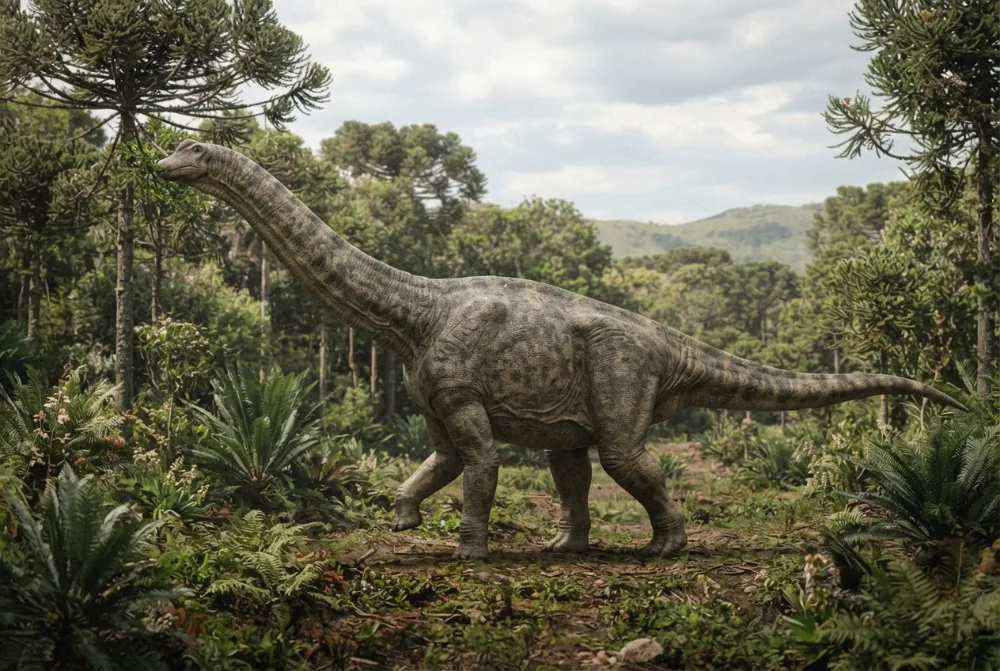
Gondwanatitan
Gondwanatitan was a long-necked plant-eater that stomped around Brazil near the end of the Age of Dinosaurs. It was small for a sauropod, about as long as a school bus, and probably used its tall neck to munch leaves from high trees.1
Berɛ bɛn na ɛtenaa ase?
Na ne kɛseɛ yɛ sɛn?
Na ne tenten yɛ sɛn?
Na ne korɔn yɛ sɛn?
nsusuiɛ
Na ne mu yɛ duru sɛn?
 ne tenten te sɛ nkraman 7 firi hwene kɔsi dua🍌ne tenten te sɛ kwadu 39 a wɔde abɔ toatoa so🍉ne mu duru te sɛ watamɛlɔn 200🧸ne mu duru te sɛ nkɔkɔaa sukuu mmofra 53🎒ne mu duru te sɛ sukuu mmofra 31🐻❄️ne mu duru te sɛ polar bea 2🏃anka ɔbɛtumi atu mmirika mita 100 wɔ sikɛn 12 mu (onipa a ɔyɛ ntɛm sen biara hia 9.6)
Gondwanatitan kɛseɛ yɛ sɛn sɛ wode toto WO ho a?
Akontaa nko ara wɔ wo browser mu. Yɛnkora biribiara so, na yɛmmfa biribiara nkɔ baabiara.
Na ɛyɛ ntɛm sɛn?


Nsɛm a ɛyɛ anigye
Gondwanatitan's middle tail bones are shaped like hearts, which helps scientists tell it apart from its close relative Aeolosaurus.1
Its limb bones were slender and graceful, not as heavy as those of many other sauropods.1
The shallow depressions on its vertebrae are similar to those seen in Saltasaurus, Alamosaurus, and Malawisaurus.1
The neural spines on its middle tail vertebrae point forward, a feature also seen in Cedarosaurus and Venenosaurus.1
In 2001, some scientists thought Gondwanatitan was the same as Aeolosaurus, but most now treat it as a separate genus.1
The type specimen was found on a farm in 1983, but it took until 1997 before scientists started preparing the bones.1
Nsɛm a wɔbisa bebree fa Gondwanatitan ho
?How big was Gondwanatitan?
It was about 7 to 8 metres long and weighed around 1 tonne. That is small for a sauropod, about as long as a school bus.12
?What did Gondwanatitan eat?
It was a herbivore, eating tough shoots and leaves from the tops of trees. Its tall neck helped it reach high branches.13
?When did Gondwanatitan live?
It lived during the Late Cretaceous Period, about 70 million years ago.1
Atosɛm sɛefoɔ
Atosɛm: Gondwanatitan was a giant like other sauropods.
Nokorɛ: Actually, Gondwanatitan was a fairly small sauropod, only about 7 meters long and weighing about 1 tonne.1
Ma dino ho animdefoɔ
- Nyansahu din
- Gondwanatitan
- Obi a ɔtoo din
- Kellner and Azevedo 19993
- Kuo
- Kɔn tenten
- Abusua / kuo kɛseɛ
- Aeolosaurini3
- Nkyekyɛmu
- Sauropodomorpha > Sauropoda > Titanosauria > Macronaria3
- Abotan no mfeɛ
- mfeɛ ɔpepem 84 kɔsi 66 (Campanian / Maastrichtian)3
- Abotan nhyehyɛeɛ
- Adamantina, Cambambe3
- Aman
- Brazil3
- Fɔsil nkyerɛwee
- 2 wɔ The Paleobiology Database mu3
- Nhunumu
- The type specimen was discovered in 1983 on a farm in São Paulo, Brazil, and was formally named Gondwanatitan faustoi by Kellner and de Azevedo in 1999.13
- Wɔda so gye ho akyinnye
- Scientists still debate whether Gondwanatitan is really a separate genus from Aeolosaurus, since some bones look very similar.1
Baabi a nsɛm no firi
- Gondwanatitan (en.wikipedia.org)
- Gondwanatitan (prehistoric-wildlife.com)
- Gondwanatitan in The Paleobiology Database (CC BY 4.0): mfeɛ, mmeaeɛ, abotan nhyehyɛeɛ, nkyekyɛmu.
Asɛm biara a ɛwɔ krataafa yi so wɔ nɔma a ɛkyerɛ baabi a ɛfiri. Sɛ yɛfom biribi a, kafra, yɛyɛ dino dɔfoɔ, yɛnyɛ nyansahu nsɛmma krataa. Ka kyerɛ yɛn wɔ [email protected] na yɛbɛsiesie.
 Ɔkɔm de Rex! Dino Wiki yɛ agya bi adwuma a ɔyɛɛ maa ne babarima a ɔdɔ dino. Ɛyɛ kwa, dawurubɔ biara nni mu, akyidifoɔ biara nni mu. Mpanimfoɔ bɛtumi ama Rex aduane kakra, na aboa ama Dino Wiki atena intanɛt so.Ma Rex aduane
 Brachiosaurus
 Diplodocus
 Brontosaurus
 Argentinosaurus
 Camarasaurus
 Morosaurus
 Tyrannosaurus
 Triceratops
 Velociraptor
 Spinosaurus
 Ankylosaurus
 Parasaurolophus