 Woyɛ dino bɛn? Nsɛmmisa agoro
 Dino ko
 Dino mmirikatuo
 Dino agodie nketewa
 Stika nwoma
 Dino TOP nhyehyɛeɛ
 Ma me nwanwa!
Berɛ bɛn na ɛtenaa ase?

Na ne kɛseɛ yɛ sɛn?
Na ne tenten yɛ sɛn?
Na ne korɔn yɛ sɛn?
nsusuiɛ
Na ne mu yɛ duru sɛn?

 ne tenten te sɛ nkraman 3 firi hwene kɔsi dua🍌ne tenten te sɛ kwadu 17 a wɔde abɔ toatoa so🍉ne mu duru te sɛ watamɛlɔn 7🏃anka ɔbɛtumi atu mmirika mita 100 wɔ sikɛn 11 mu (onipa a ɔyɛ ntɛm sen biara hia 9.6)
Guaibasaurus kɛseɛ yɛ sɛn sɛ wode toto WO ho a?
Akontaa nko ara wɔ wo browser mu. Yɛnkora biribiara so, na yɛmmfa biribiara nkɔ baabiara.
Na ɛyɛ ntɛm sɛn?


Nsɛm a ɛyɛ anigye
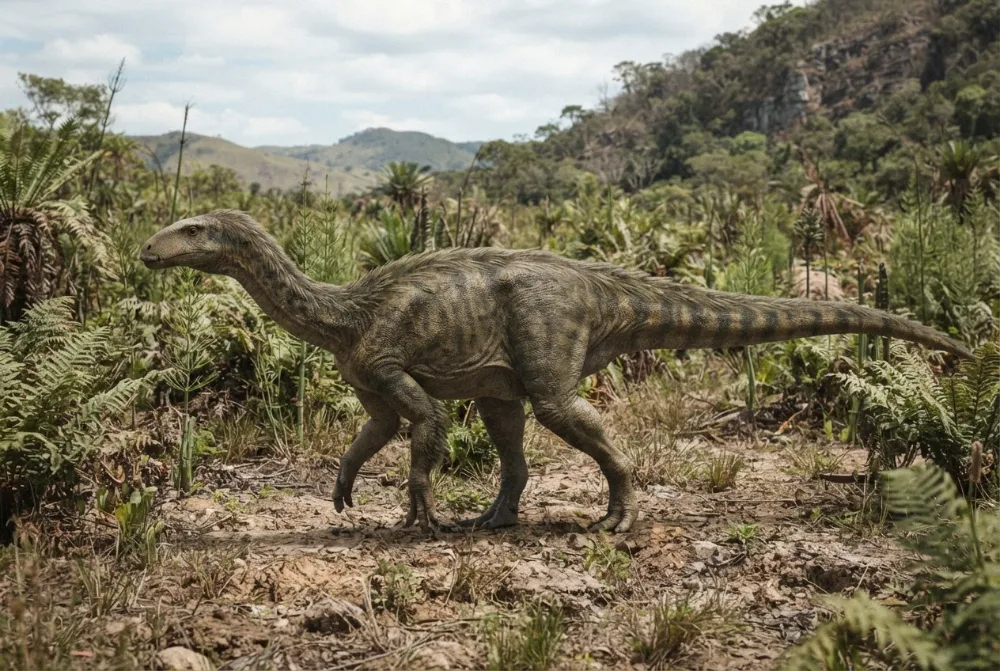
Guaibasaurus fossils have been found in a sleeping posture, with legs tucked under the body and arms bent to the side, similar to modern birds.2
This dinosaur lived about 225.42 million years ago, based on uranium-lead dating of the rocks where its fossils were found.2
Scientists are not sure if Guaibasaurus was an early theropod or an early sauropodomorph. Most studies place it among the sauropodomorphs.21
The name Guaibasaurus comes from the Rio Guaíba basin in Brazil, where the first fossil was discovered during a scientific project.21
Only one species of Guaibasaurus is known, called Guaibasaurus candelariensis. The species name honors the nearby city of Candelária.2
Nsɛm a wɔbisa bebree fa Guaibasaurus ho
?How big was Guaibasaurus?
Scientists give different estimates. Gregory S. Paul said it was about 2 metres long (6.6 ft) and weighed 10 kg (22 lbs), while Molina-Pérez and Larramendi said it was about 3 metres long (10 ft) and 35 kg (77 lbs).2
?What did Guaibasaurus eat?
It was a plant-eater, or herbivore.1
?When did Guaibasaurus live?
It lived during the Late Triassic Period, about 225.42 million years ago.2
?Why did Guaibasaurus sleep like a bird?
One fossil was found with its legs tucked under its body and arms bent to the side, just like resting birds. Scientists think it may have slept this way to keep warm.2
Ma dino ho animdefoɔ
- Nyansahu din
- Guaibasaurus
- Obi a ɔtoo din
- Bonaparte et al. 19993
- Kuo
- Kɔn tenten
- Abusua / kuo kɛseɛ
- Guaibasauridae3
- Nkyekyɛmu
- Sauropodomorpha3
- Abotan no mfeɛ
- mfeɛ ɔpepem 227 kɔsi 206 (Norian)3
- Abotan nhyehyɛeɛ
- Caturrita3
- Aman
- Brazil3
- Fɔsil nkyerɛwee
- 3 wɔ The Paleobiology Database mu3
- Nhunumu
- Guaibasaurus was named in 1999 by paleontologists José F. Bonaparte, Jorge Ferigolo, and Ana Maria Ribeiro. They described it based on a partial skeleton found in the Caturrita Formation of Brazil.213
- Wɔda so gye ho akyinnye
- Scientists still debate whether Guaibasaurus was a very early sauropodomorph or a primitive theropod. Its exact place on the dinosaur family tree is not settled.21
Baabi a nsɛm no firi
- Guaibasaurus | Natural History Museum (nhm.ac.uk)
- Guaibasaurus (en.wikipedia.org)
- Guaibasaurus in The Paleobiology Database (CC BY 4.0): mfeɛ, mmeaeɛ, abotan nhyehyɛeɛ, nkyekyɛmu.
Asɛm biara a ɛwɔ krataafa yi so wɔ nɔma a ɛkyerɛ baabi a ɛfiri. Sɛ yɛfom biribi a, kafra, yɛyɛ dino dɔfoɔ, yɛnyɛ nyansahu nsɛmma krataa. Ka kyerɛ yɛn wɔ [email protected] na yɛbɛsiesie.
 Ɔkɔm de Rex! Dino Wiki yɛ agya bi adwuma a ɔyɛɛ maa ne babarima a ɔdɔ dino. Ɛyɛ kwa, dawurubɔ biara nni mu, akyidifoɔ biara nni mu. Mpanimfoɔ bɛtumi ama Rex aduane kakra, na aboa ama Dino Wiki atena intanɛt so.Ma Rex aduane
 Brachiosaurus
 Diplodocus
 Brontosaurus
 Argentinosaurus
 Camarasaurus
 Morosaurus
 Nothosaurus
 Coelophysis
 Podokesaurus
 Simosaurus
 Eudimorphodon
 Herrerasaurus