 Woyɛ dino bɛn? Nsɛmmisa agoro
 Dino ko
 Dino mmirikatuo
 Dino agodie nketewa
 Stika nwoma
 Dino TOP nhyehyɛeɛ
 Ma me nwanwa!
Berɛ bɛn na ɛtenaa ase?

Na ɛyɛ ntɛm sɛn?


Nsɛm a ɛyɛ anigye
The name Gyposaurus means 'vulture lizard' because scientists once thought early long-necked dinosaurs were meat-eaters.1
The first Gyposaurus fossils were found in South Africa and named by Robert Broom in 1911.1
Some scientists think the Chinese species 'Gyposaurus sinensis' is actually a young Lufengosaurus, not a separate dinosaur.2
The fossils of 'Gyposaurus sinensis' were found in the Lufeng Formation in Yunnan, China, in the same area as Lufengosaurus.2
The bones of 'Gyposaurus sinensis' show that the animals were not fully grown when they died, with unfused vertebrae.2
Gyposaurus lived during the Early Jurassic, about 196 to 189 million years ago.1
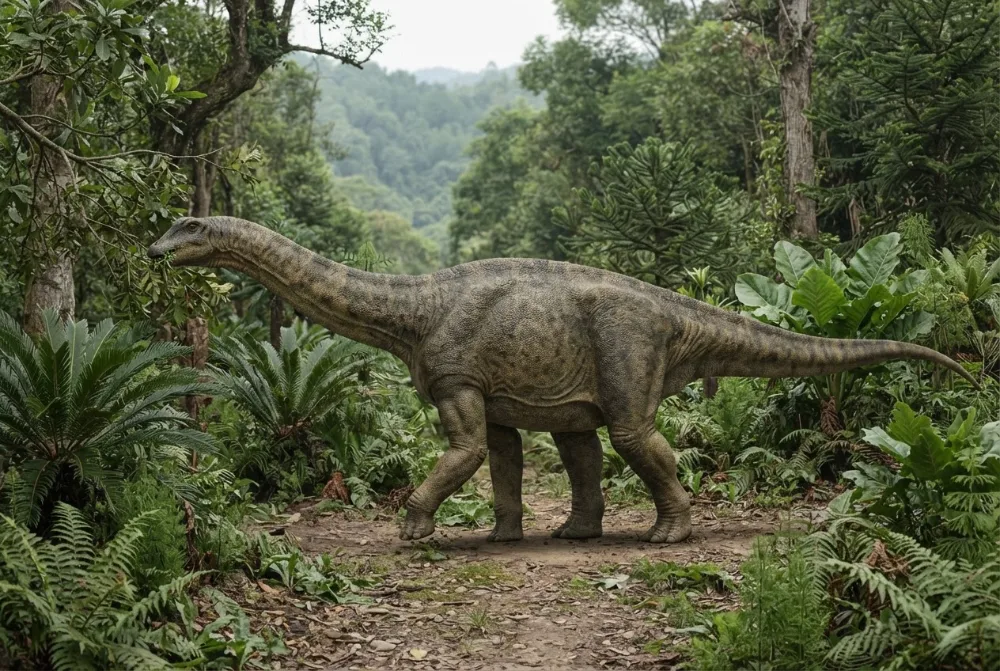
Ma dino ho animdefoɔ
- Nyansahu din
- Gyposaurus
- Obi a ɔtoo din
- Broom 19113
- Kuo
- Kɔn tenten
- Abusua / kuo kɛseɛ
- Anchisauridae3
- Nkyekyɛmu
- Sauropodomorpha3
- Abotan no mfeɛ
- mfeɛ ɔpepem 201 kɔsi 175 (Hettangian / Toarcian)3
- Abotan nhyehyɛeɛ
- Lufeng, Zhenzhuchong3
- Aman
- Kyaena3
- Fɔsil nkyerɛwee
- 9 wɔ The Paleobiology Database mu3
- Nhunumu
- Gyposaurus was named by Scottish doctor Robert Broom in 1911 from a partial skeleton found in South Africa. The Chinese species 'Gyposaurus sinensis' was named by Yang Zhongjian in 1941.1
- Wɔda so gye ho akyinnye
- Scientists still debate whether 'Gyposaurus sinensis' is a valid species or just a young Lufengosaurus.2
Baabi a nsɛm no firi
- Gyposaurus (en.wikipedia.org)
- Reassessment of ‘Gyposaurus’ sinensis Young, 1941 (Dinosauria: Sauropodomorpha) from the Early Jurassic Lufeng Basin, Yunnan Province, China | Zoological Journal of the Linnean Society | Oxford Academic (academic.oup.com)
- Gyposaurus in The Paleobiology Database (CC BY 4.0): mfeɛ, mmeaeɛ, abotan nhyehyɛeɛ, nkyekyɛmu.
Asɛm biara a ɛwɔ krataafa yi so wɔ nɔma a ɛkyerɛ baabi a ɛfiri. Sɛ yɛfom biribi a, kafra, yɛyɛ dino dɔfoɔ, yɛnyɛ nyansahu nsɛmma krataa. Ka kyerɛ yɛn wɔ [email protected] na yɛbɛsiesie.
 Ɔkɔm de Rex! Dino Wiki yɛ agya bi adwuma a ɔyɛɛ maa ne babarima a ɔdɔ dino. Ɛyɛ kwa, dawurubɔ biara nni mu, akyidifoɔ biara nni mu. Mpanimfoɔ bɛtumi ama Rex aduane kakra, na aboa ama Dino Wiki atena intanɛt so.Ma Rex aduane
 Brachiosaurus
 Diplodocus
 Brontosaurus
 Argentinosaurus
 Camarasaurus
 Morosaurus
 Dilophosaurus
 Stenopterygius
 Dorygnathus
 Scutellosaurus
 Sinosaurus
 Temnodontosaurus