 Woyɛ dino bɛn? Nsɛmmisa agoro
 Dino ko
 Dino mmirikatuo
 Dino agodie nketewa
 Stika nwoma
 Dino TOP nhyehyɛeɛ
 Ma me nwanwa!
Himeoolithus
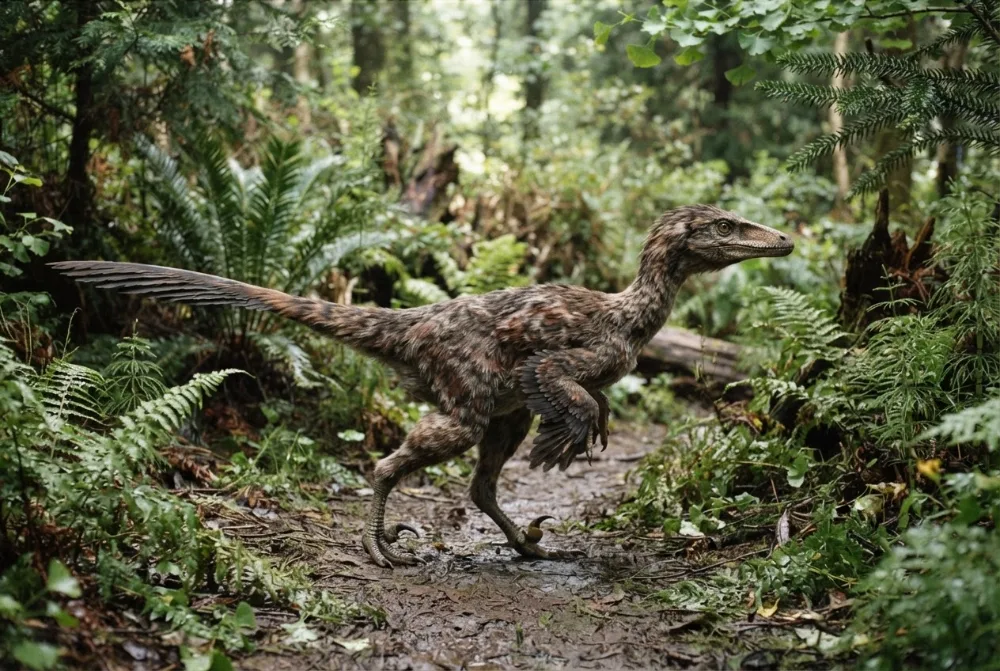
Himeoolithus was a tiny meat-eating dinosaur that lived in what is now Japan about 110 million years ago. It is known from its eggs, which are some of the smallest theropod eggs ever found, about the size of a quail egg. These eggs show that small dinosaurs lived alongside the giants!2
Berɛ bɛn na ɛtenaa ase?
Na ɛyɛ ntɛm sɛn?


Nsɛm a ɛyɛ anigye
Himeoolithus eggs are the smallest non-avian theropod eggs known, with an estimated mass of only 9.9 grams, about the size of a modern quail egg.1
The eggs are unusually elongated for their size, with a length-to-width ratio of 2.25, which is more typical of larger theropod eggs.1
The nest was found in place, not moved by water or wind, because most eggshell fragments were positioned concave-up, which happens when they break in place.2
Over 1,300 eggshell fragments from Himeoolithus were found at the Kamitaki Egg Quarry, along with other small theropod eggs.2
The high diversity of small theropod eggs at this site makes it one of the most diverse Early Cretaceous egg localities known.2
Atosɛm sɛefoɔ
Atosɛm: Some people think all dinosaurs were huge, but Himeoolithus shows that many were small.
Nokorɛ: Himeoolithus eggs are tiny, and the dinosaur that laid them was likely small, showing that dinosaurs came in many sizes.2
Ma dino ho animdefoɔ
- Nyansahu din
- Himeoolithus
- Obi a ɔtoo din
- Tanaka et al. 20203
- Kuo
- Dino a wɔwe nam
- Abusua / kuo kɛseɛ
- Theropoda3
- Nkyekyɛmu
- Theropoda3
- Abotan no mfeɛ
- mfeɛ ɔpepem 113 kɔsi 110 (Albian)3
- Abotan nhyehyɛeɛ
- Ohyamashimo3
- Aman
- Gyapan3
- Fɔsil nkyerɛwee
- 1 wɔ The Paleobiology Database mu3
- Nhunumu
- The eggs were first discovered in 2015 at the Kamitaki Egg Quarry in Japan, and the species was named by Tanaka and colleagues in 2020.23
- Wɔda so gye ho akyinnye
- Scientists are not sure exactly which theropod dinosaur laid the eggs, since no bones of the adult have been found yet.2
Baabi a nsɛm no firi
- Exceptionally small theropod eggs from the Lower Cretaceous Ohyamashimo Formation of Tamba, Hyogo Prefecture, Japan (sciencedirect.com)
- Tiny Japanese Dinosaur Eggs Help Unscramble Cretaceous Ecosystem | Research News - University of Tsukuba (tsukuba.ac.jp)
- Himeoolithus in The Paleobiology Database (CC BY 4.0): mfeɛ, mmeaeɛ, abotan nhyehyɛeɛ, nkyekyɛmu.
Asɛm biara a ɛwɔ krataafa yi so wɔ nɔma a ɛkyerɛ baabi a ɛfiri. Sɛ yɛfom biribi a, kafra, yɛyɛ dino dɔfoɔ, yɛnyɛ nyansahu nsɛmma krataa. Ka kyerɛ yɛn wɔ [email protected] na yɛbɛsiesie.
 Ɔkɔm de Rex! Dino Wiki yɛ agya bi adwuma a ɔyɛɛ maa ne babarima a ɔdɔ dino. Ɛyɛ kwa, dawurubɔ biara nni mu, akyidifoɔ biara nni mu. Mpanimfoɔ bɛtumi ama Rex aduane kakra, na aboa ama Dino Wiki atena intanɛt so.Ma Rex aduane
 Allosaurus
 Carnotaurus
 Dilophosaurus
 Giganotosaurus
 Compsognathus
 Paronychodon
 Stegosaurus
 Iguanodon
 Archaeopteryx
 Microraptor
 Deinonychus
 Baryonyx