 Woyɛ dino bɛn? Nsɛmmisa agoro
 Dino ko
 Dino mmirikatuo
 Dino agodie nketewa
 Stika nwoma
 Dino TOP nhyehyɛeɛ
 Ma me nwanwa!
Hypsilophodon
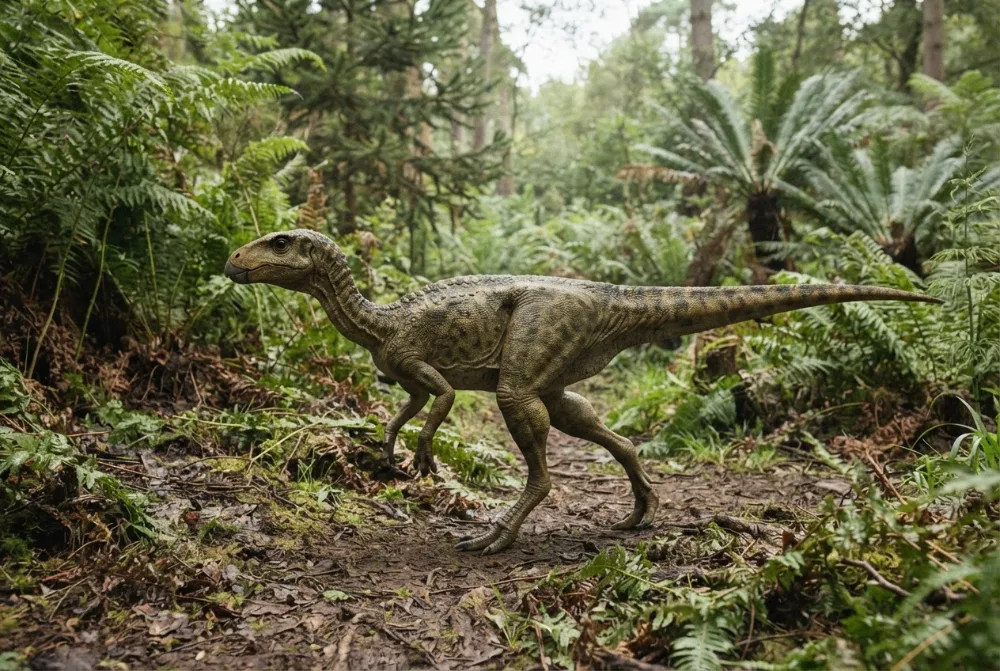
Hypsilophodon was a tiny, speedy plant-eater that sprinted through the forests of Early Cretaceous England. It had a sharp beak like a parrot and a long stiff tail to help it balance while running.12
Berɛ bɛn na ɛtenaa ase?
Na ne kɛseɛ yɛ sɛn?
Na ne tenten yɛ sɛn?
Na ne korɔn yɛ sɛn?
Na ne mu yɛ duru sɛn?
 ne tenten te sɛ fie agyinamoa 4 firi hwene kɔsi dua🍌ne tenten te sɛ kwadu 11 a wɔde abɔ toatoa so🍉ne mu duru te sɛ watamɛlɔn 4🏃anka ɔbɛtumi atu mmirika mita 100 wɔ sikɛn 9.2 mu (onipa a ɔyɛ ntɛm sen biara hia 9.6)
Hypsilophodon kɛseɛ yɛ sɛn sɛ wode toto WO ho a?
Akontaa nko ara wɔ wo browser mu. Yɛnkora biribiara so, na yɛmmfa biribiara nkɔ baabiara.
Na ɛyɛ ntɛm sɛn?


Nsɛm a ɛyɛ anigye
Hypsilophodon had five fingers on each hand, and one of them was opposable, like a thumb, so it could grasp branches and food.1
Its tail was stiffened by bony tendons, which helped it keep balance while running fast on two legs.1
Its teeth were self-sharpening: the upper and lower teeth rubbed together as it chewed, keeping them sharp.1
Hypsilophodon probably had cheeks, which helped it hold and chew food, just like modern plant-eaters.12
All the true Hypsilophodon fossils come from a single layer of rock called the Hypsilophodon Bed, on the Isle of Wight.1
Nsɛm a wɔbisa bebree fa Hypsilophodon ho
?How big was Hypsilophodon?
It was about 1.5 to 2 metres (5 to 6.5 feet) long and weighed around 20 kilograms (44 pounds).12
?What did Hypsilophodon eat?
It was a herbivore, eating low-growing plants like young shoots and roots. It used its sharp beak to clip vegetation and probably had cheeks to help chew.21
?Could Hypsilophodon climb trees?
No, scientists used to think it climbed trees, but we now know it lived on the ground and was a fast runner.21
?How fast could Hypsilophodon run?
It was built for running with long legs, a stiff tail for balance, and a light body, but no exact speed is known.21
?Did Hypsilophodon have feathers?
No, there is no evidence that Hypsilophodon had feathers. It was a small ornithischian dinosaur with scaly skin.1
?Where did Hypsilophodon live?
It lived in what is now England, specifically on the Isle of Wight, during the Early Cretaceous period about 126 million years ago.21
?Was Hypsilophodon bigger than a chicken?
Yes, it was about the size of a large turkey or a small deer, much bigger than a chicken.2
?Did Hypsilophodon live in groups?
Yes, several fossils were found together, so some experts think it lived in groups, like deer.2
Atosɛm sɛefoɔ
Atosɛm: Some people thought Hypsilophodon lived in trees, like a climbing dinosaur.
Nokorɛ: Scientists now know it lived on the ground and was built for running, not climbing.2
Ma dino ho animdefoɔ
- Nyansahu din
- Hypsilophodon
- Obi a ɔtoo din
- Huxley 18704
- Kuo
- Ahabandifoɔ a wɔwɔ anomaa ano
- Abusua / kuo kɛseɛ
- Hypsilophodontidae4
- Nkyekyɛmu
- Ornithischia > Ornithopoda4
- Abotan no mfeɛ
- mfeɛ ɔpepem 155 kɔsi 120 (Kimmeridgian / Aptian)4
- Abotan nhyehyɛeɛ
- Wessex, Vectis, Artoles4
- Aman
- Engiresi, Spania, Romania, Gyapan, Pɔtugal4
- Fɔsil nkyerɛwee
- 10 wɔ The Paleobiology Database mu4
- Nhunumu
- The first fossils were found in 1849 on the Isle of Wight, but they were thought to be from a young Iguanodon. In 1869, Thomas Henry Huxley realized it was a new dinosaur and named it Hypsilophodon foxii.1
- Wɔda so gye ho akyinnye
- Scientists are not sure exactly how Hypsilophodon is related to other plant-eating dinosaurs. Some think it belongs in Ornithopoda, but recent studies question that.1
Baabi a nsɛm no firi
- Hypsilophodon (en.wikipedia.org)
- Hypsilophodon | Natural History Museum (nhm.ac.uk)
- enchantedlearning.com (enchantedlearning.com)
- Hypsilophodon in The Paleobiology Database (CC BY 4.0): mfeɛ, mmeaeɛ, abotan nhyehyɛeɛ, nkyekyɛmu.
Asɛm biara a ɛwɔ krataafa yi so wɔ nɔma a ɛkyerɛ baabi a ɛfiri. Sɛ yɛfom biribi a, kafra, yɛyɛ dino dɔfoɔ, yɛnyɛ nyansahu nsɛmma krataa. Ka kyerɛ yɛn wɔ [email protected] na yɛbɛsiesie.
 Ɔkɔm de Rex! Dino Wiki yɛ agya bi adwuma a ɔyɛɛ maa ne babarima a ɔdɔ dino. Ɛyɛ kwa, dawurubɔ biara nni mu, akyidifoɔ biara nni mu. Mpanimfoɔ bɛtumi ama Rex aduane kakra, na aboa ama Dino Wiki atena intanɛt so.Ma Rex aduane
 Iguanodon
 Tenontosaurus
 Thescelosaurus
 Zalmoxes
 Camptosaurus
 Rhabdodon
 Stegosaurus
 Archaeopteryx
 Giganotosaurus
 Microraptor
 Deinonychus
 Baryonyx