 Woyɛ dino bɛn? Nsɛmmisa agoro
 Dino ko
 Dino mmirikatuo
 Dino agodie nketewa
 Stika nwoma
 Dino TOP nhyehyɛeɛ
 Ma me nwanwa!
Ikqaumishan
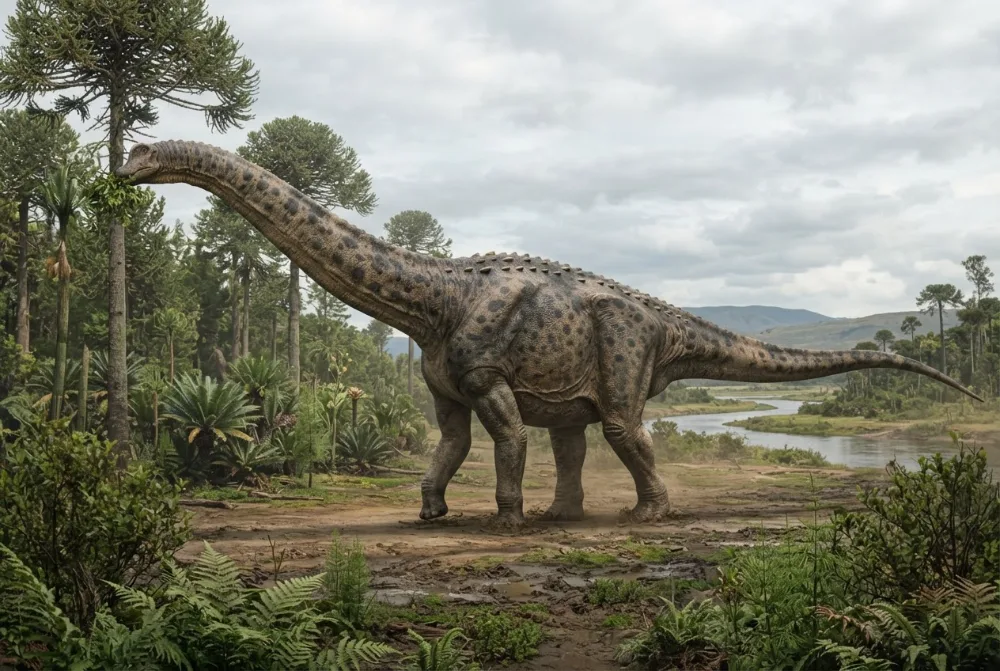
Ikqaumishan was a huge, long-necked plant-eater that stomped around what is now Pakistan and India near the very end of the dinosaur age. It belonged to a group called titanosaurs, which included some of the biggest land animals ever. It probably used its long neck to munch leaves high in trees.21
Berɛ bɛn na ɛtenaa ase?
Na ne kɛseɛ yɛ sɛn?
Na ne tenten yɛ sɛn?
 ne tenten te sɛ kaa 22 a wɔde agyina toatoa so🍌ne tenten te sɛ kwadu 560 a wɔde abɔ toatoa so🏃anka ɔbɛtumi atu mmirika mita 100 wɔ sikɛn 24 mu (onipa a ɔyɛ ntɛm sen biara hia 9.6)
Ikqaumishan kɛseɛ yɛ sɛn sɛ wode toto WO ho a?
Akontaa nko ara wɔ wo browser mu. Yɛnkora biribiara so, na yɛmmfa biribiara nkɔ baabiara.
Na ɛyɛ ntɛm sɛn?


Nsɛm a ɛyɛ anigye
Ikqaumishan is known from a partial upper arm bone called a humerus, which was found in Pakistan.2
It lived about 72 to 66 million years ago, during the Maastrichtian age, which is the very last part of the dinosaur era.2
Its upper arm bone had a special ridge that was straight and set inward, which is different from many other titanosaurs.1
The place where it was found was near the equator about 9 degrees south, so it lived in a warm, tropical area.1
Ikqaumishan is one of several new titanosaurs described from Pakistan in 2023, showing that this region had many giant plant-eaters.1
Its fossils were found in rocks that formed in a river environment, so it probably walked along ancient floodplains.2
Nsɛm a wɔbisa bebree fa Ikqaumishan ho
?What is Ikqaumishan?
Ikqaumishan is a genus of titanosaurian sauropod dinosaur from the Late Cretaceous. It was a huge, long-necked plant-eater.41
?How big was Ikqaumishan?
The exact size is not known, but it was a large titanosaur. The only known fossil is a partial upper arm bone, so scientists can only estimate its size.43
?When did Ikqaumishan live?
Ikqaumishan lived during the Maastrichtian age, about 72 to 66 million years ago, near the very end of the dinosaur age.41
?What did Ikqaumishan eat?
Ikqaumishan was a herbivore, meaning it ate plants. It probably used its long neck to munch leaves high in trees.41
?Where was Ikqaumishan found?
Ikqaumishan fossils were found in Pakistan and India. The main bone, a partial humerus, came from the Vitakri Formation in Balochistan, Pakistan.31
?Is Ikqaumishan a dinosaur?
Yes, Ikqaumishan is a dinosaur. It belongs to the group called titanosaurs, which were long-necked sauropod dinosaurs.41
?Why is it called Ikqaumishan?
The name honors former Prime Minister Imran Khan and journalist Imran Khan, and comes from Urdu/Saraiki words meaning 'nation' and 'respect'.3
Atosɛm sɛefoɔ
Atosɛm: Some people think all dinosaurs lived in North America or Africa, but Ikqaumishan shows that giant sauropods also lived in South Asia.
Nokorɛ: Ikqaumishan is a real dinosaur from Pakistan and India, proving that titanosaurs thrived in many parts of the ancient world.2
Ma dino ho animdefoɔ
- Nyansahu din
- Ikqaumishan
- Obi a ɔtoo din
- Malkani 20234
- Kuo
- Kɔn tenten
- Abusua / kuo kɛseɛ
- Gspsauridae4
- Nkyekyɛmu
- Sauropodomorpha > Sauropoda > Titanosauria > Macronaria4
- Abotan no mfeɛ
- mfeɛ ɔpepem 72 kɔsi 66 (Maastrichtian)4
- Abotan nhyehyɛeɛ
- Vitakri, Lameta4
- Aman
- Pakistan, India4
- Fɔsil nkyerɛwee
- 3 wɔ The Paleobiology Database mu4
- Nhunumu
- Ikqaumishan was named by paleontologist M. S. Malkani in 2023. The first fossil, a partial humerus, was found in the Sangiali locality in the Vitakri Formation, Pakistan.21
- Wɔda so gye ho akyinnye
- Scientists are still debating exactly how many different titanosaur species lived in Pakistan, because many are known from only a few bones.1
Baabi a nsɛm no firi
- A Glance on the Mineral Deposits and Stratigraphic Sequential Variations and Structures in Different Sections of Indus Basin (Pakistan): New Titanosaurian Sauropod Dinosaurs from the Latest Maastrichtian Vitakri Formation of Pakistan (scirp.org)
- PBDB Taxon (paleobiodb.org)
- Untitled Document (paleofile.com)
- Ikqaumishan in The Paleobiology Database (CC BY 4.0): mfeɛ, mmeaeɛ, abotan nhyehyɛeɛ, nkyekyɛmu.
Asɛm biara a ɛwɔ krataafa yi so wɔ nɔma a ɛkyerɛ baabi a ɛfiri. Sɛ yɛfom biribi a, kafra, yɛyɛ dino dɔfoɔ, yɛnyɛ nyansahu nsɛmma krataa. Ka kyerɛ yɛn wɔ [email protected] na yɛbɛsiesie.
 Ɔkɔm de Rex! Dino Wiki yɛ agya bi adwuma a ɔyɛɛ maa ne babarima a ɔdɔ dino. Ɛyɛ kwa, dawurubɔ biara nni mu, akyidifoɔ biara nni mu. Mpanimfoɔ bɛtumi ama Rex aduane kakra, na aboa ama Dino Wiki atena intanɛt so.Ma Rex aduane
 Brachiosaurus
 Diplodocus
 Brontosaurus
 Argentinosaurus
 Camarasaurus
 Morosaurus
 Tyrannosaurus
 Triceratops
 Velociraptor
 Spinosaurus
 Ankylosaurus
 Parasaurolophus