 Woyɛ dino bɛn? Nsɛmmisa agoro
 Dino ko
 Dino mmirikatuo
 Dino agodie nketewa
 Stika nwoma
 Dino TOP nhyehyɛeɛ
 Ma me nwanwa!
Isisaurus
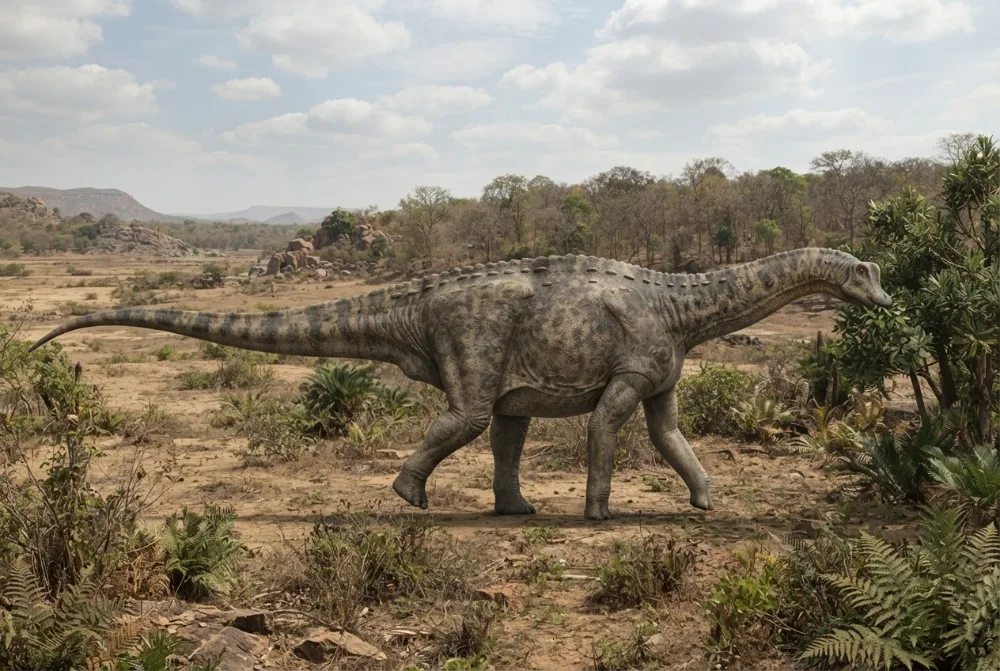
Isisaurus was a big, long-necked dinosaur that lived in what is now India and Pakistan. It had a short neck and long front legs, which made it look different from other long-necked dinosaurs. It munched on leaves from trees and was one of the most complete dinosaurs found in that part of the world.1
Berɛ bɛn na ɛtenaa ase?
Na ne kɛseɛ yɛ sɛn?
Na ne tenten yɛ sɛn?
Na ne korɔn yɛ sɛn?
Na ne mu yɛ duru sɛn?

 ne tenten te sɛ kaa 4 a wɔde agyina toatoa so🍌ne tenten te sɛ kwadu 100 a wɔde abɔ toatoa sone mu duru te sɛ kaa 10🍉ne mu duru te sɛ watamɛlɔn 3000🎒ne mu duru te sɛ sukuu klaas mũ 19 mu mmofra🐻❄️ne mu duru te sɛ polar bea 33🏢ne korɔn bɛtumi ahwɛ mfɛnsere mu wɔ abansoro 3 so🏃anka ɔbɛtumi atu mmirika mita 100 wɔ sikɛn 28 mu (onipa a ɔyɛ ntɛm sen biara hia 9.6)
Isisaurus kɛseɛ yɛ sɛn sɛ wode toto WO ho a?
Akontaa nko ara wɔ wo browser mu. Yɛnkora biribiara so, na yɛmmfa biribiara nkɔ baabiara.
Na ɛyɛ ntɛm sɛn?


Nsɛm a ɛyɛ anigye
Isisaurus had a short, upright neck and long front legs, which was very unusual for a sauropod.1
Its upper arm bone, the humerus, was 148 centimeters (about 4.9 feet) long.1
Scientists found fungus in coprolites (fossil poop) that they think came from Isisaurus. The fungus shows that it ate leaves from trees that were sick with disease.1
Isisaurus is known from many bones, including neck, back, and tail vertebrae, ribs, pelvis, shoulder bones, and a left front leg. No skull or foot bones have been found.1
It lived during the very end of the Cretaceous Period, about 70 to 66 million years ago, alongside meat-eating dinosaurs like Rajasaurus.14
The angle between the back of the skull and the neck joint in Isisaurus was 120 degrees, similar to the skulls of Diplodocus and Apatosaurus.1
Nsɛm a wɔbisa bebree fa Isisaurus ho
?How big was Isisaurus?
Isisaurus was a medium sized sauropod, with some estimates of its body length up to 18 metres (59 feet) long and weighing 15 metric tons (17 short tons).1
?What did Isisaurus eat?
Isisaurus was herbivorous, eating leaves from trees. Fungus found in its fossilized poop shows it ate leaves from several species of tree.13
?When did Isisaurus live?
Isisaurus lived during the Late Cretaceous period, about 70 to 66 million years ago.13
?Where was Isisaurus found?
Isisaurus fossils have been found in India and Pakistan, in the Lameta Formation of India and the Pab Formation of Pakistan.1
?Why is it called Isisaurus?
Isisaurus is named after the Indian Statistical Institute (ISI), because its fossils were studied there. The name combines 'ISI' with the Greek word 'saurus' meaning 'lizard'.13
?Was Isisaurus bigger than T. rex?
Isisaurus was about 18 metres (59 feet) long, which is longer than a T. rex.1
Ma dino ho animdefoɔ
- Nyansahu din
- Isisaurus
- Obi a ɔtoo din
- Wilson and Upchurch 20034
- Kuo
- Kɔn tenten
- Abusua / kuo kɛseɛ
- Saltasauroidea4
- Nkyekyɛmu
- Sauropodomorpha > Sauropoda > Titanosauria > Macronaria4
- Abotan no mfeɛ
- mfeɛ ɔpepem 72 kɔsi 66 (Maastrichtian)4
- Abotan nhyehyɛeɛ
- Lameta, Vitakri4
- Aman
- India, Pakistan4
- Fɔsil nkyerɛwee
- 7 wɔ The Paleobiology Database mu4
- Nhunumu
- The fossils were first named Titanosaurus colberti by Sohan Lal Jain and Saswati Bandyopadhyay in 1997. In 2003, Wilson and Upchurch gave them their own genus, Isisaurus, named after the Indian Statistical Institute.1
- Wɔda so gye ho akyinnye
- Scientists are not sure exactly where Isisaurus fits in the titanosaur family tree. Some studies place it close to Rapetosaurus, others near Saltasauridae, and some with Tapuiasaurus.1
Baabi a nsɛm no firi
- Isisaurus (en.wikipedia.org)
- Isissauro - Isisaurus colberti - Atlas Virtual da Pré-História (atlasvirtual.com.br)
- Isisaurus | Natural History Museum (nhm.ac.uk)
- Isisaurus in The Paleobiology Database (CC BY 4.0): mfeɛ, mmeaeɛ, abotan nhyehyɛeɛ, nkyekyɛmu.
Asɛm biara a ɛwɔ krataafa yi so wɔ nɔma a ɛkyerɛ baabi a ɛfiri. Sɛ yɛfom biribi a, kafra, yɛyɛ dino dɔfoɔ, yɛnyɛ nyansahu nsɛmma krataa. Ka kyerɛ yɛn wɔ [email protected] na yɛbɛsiesie.
 Ɔkɔm de Rex! Dino Wiki yɛ agya bi adwuma a ɔyɛɛ maa ne babarima a ɔdɔ dino. Ɛyɛ kwa, dawurubɔ biara nni mu, akyidifoɔ biara nni mu. Mpanimfoɔ bɛtumi ama Rex aduane kakra, na aboa ama Dino Wiki atena intanɛt so.Ma Rex aduane
 Brachiosaurus
 Diplodocus
 Brontosaurus
 Argentinosaurus
 Camarasaurus
 Morosaurus
 Tyrannosaurus
 Triceratops
 Velociraptor
 Spinosaurus
 Ankylosaurus
 Parasaurolophus