 Woyɛ dino bɛn? Nsɛmmisa agoro
 Dino ko
 Dino mmirikatuo
 Dino agodie nketewa
 Stika nwoma
 Dino TOP nhyehyɛeɛ
 Ma me nwanwa!
Kaiwhekea
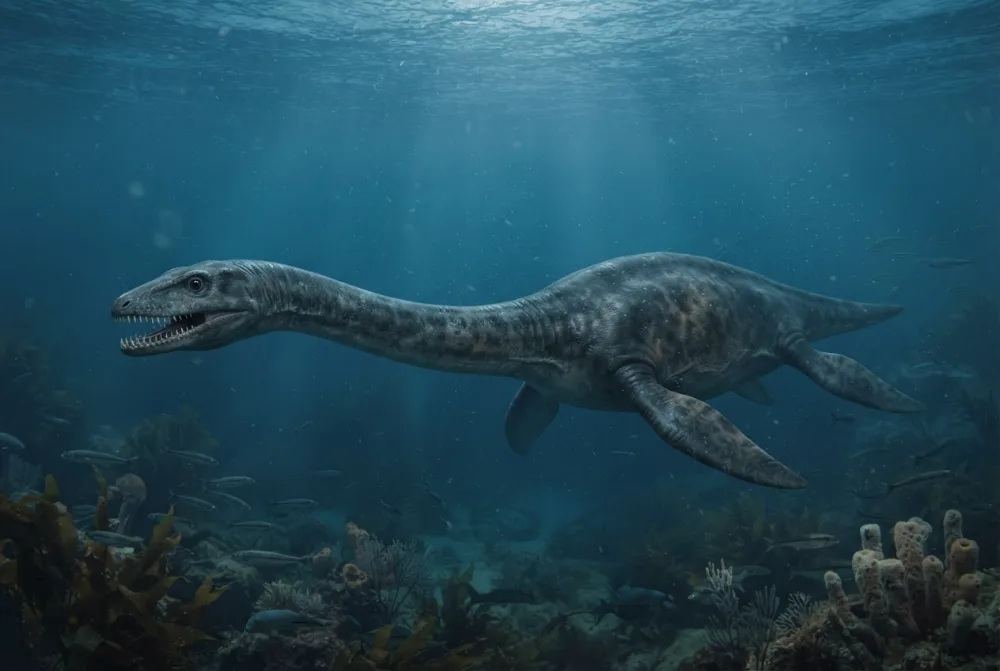
Kaiwhekea was a plesiosaur, a long-necked marine reptile that lived in the seas around New Zealand. It had a big head, large eyes and lots of small teeth for catching squid and other soft prey. This creature swam near the Antarctic polar circle during the time of the dinosaurs.1
Berɛ bɛn na ɛtenaa ase?
Na ne kɛseɛ yɛ sɛn?
Na ne tenten yɛ sɛn?
 ne tenten te sɛ nkraman 7 firi hwene kɔsi dua🍌ne tenten te sɛ kwadu 39 a wɔde abɔ toatoa so🏊anka ɔbɛtumi aguare nsuguarebea kɛseɛ (50 m) tenten wɔ sikɛn 6.9 mu
Kaiwhekea kɛseɛ yɛ sɛn sɛ wode toto WO ho a?
Akontaa nko ara wɔ wo browser mu. Yɛnkora biribiara so, na yɛmmfa biribiara nkɔ baabiara.
Na ɛyɛ ntɛm sɛn?


Nsɛm a ɛyɛ anigye
Kaiwhekea is one of the most complete fossil reptiles ever found in New Zealand, with its skull, jaws, vertebrae and ribs still connected almost as they were in life.1
Its name comes from Maori words meaning 'squid eater', because scientists think it fed on squid and other soft animals.1
Kaiwhekea had about 43 teeth in each upper jaw and 42 in each lower jaw, all small, slim and slightly curved.3
The fossil was found inside a large rock called a concretion, which was cracked and had to be dug out bit by bit over 30 days.1
When Kaiwhekea lived, the Otago region was close to the polar circle, with long summer days and long winter nights.1
Its large forward-facing eyes suggest it had good binocular vision, which might have helped it hunt in deep or dark water.1
Kaiwhekea is thought to have been a fast swimmer, based on the shape of its hind flippers.1
Nsɛm a wɔbisa bebree fa Kaiwhekea ho
Ma dino ho animdefoɔ
- Nyansahu din
- Kaiwhekea
- Obi a ɔtoo din
- Cruickshank and Fordyce 20026
- Kuo
- Plesiosɔɔ
- Abusua / kuo kɛseɛ
- Elasmosauridae6
- Nkyekyɛmu
- Plesiosauria > Elasmosauridae > Sauropterygia6
- Abotan no mfeɛ
- mfeɛ ɔpepem 84 kɔsi 66 (Campanian / Maastrichtian)6
- Abotan nhyehyɛeɛ
- Katiki6
- Aman
- New Zealand6
- Fɔsil nkyerɛwee
- 1 wɔ The Paleobiology Database mu6
- Nhunumu
- Kaiwhekea was named by Arthur Cruickshank and Ewan Fordyce in 2002, based on a single nearly complete skeleton found in the Katiki Formation near Shag Point, New Zealand.21
- Wɔda so gye ho akyinnye
- Scientists are not sure which family Kaiwhekea belongs to. Some say it is a cryptoclidid, others place it with elasmosaurids or other groups.21
Baabi a nsɛm no firi
- Kaiwhekea katiki, a Late Cretaceous plesiosaur from high southern latitudes (otago.ac.nz)
- PBDB Taxon (paleobiodb.org)
- A New Marine Reptile (Sauropterygia) from New Zealand: Further Evidence for A Late Cretaceous Austral Radiation of Cryptoclidid Plesiosaurs (onlinelibrary.wiley.com)
- Kaiwhekea (en.wikipedia.org)
- Most complete dinosaur-aged reptile from Aotearoa – Fossil Treasures of the Geology Museum (oercollective.caul.edu.au)
- Kaiwhekea in The Paleobiology Database (CC BY 4.0): mfeɛ, mmeaeɛ, abotan nhyehyɛeɛ, nkyekyɛmu.
Asɛm biara a ɛwɔ krataafa yi so wɔ nɔma a ɛkyerɛ baabi a ɛfiri. Sɛ yɛfom biribi a, kafra, yɛyɛ dino dɔfoɔ, yɛnyɛ nyansahu nsɛmma krataa. Ka kyerɛ yɛn wɔ [email protected] na yɛbɛsiesie.
 Ɔkɔm de Rex! Dino Wiki yɛ agya bi adwuma a ɔyɛɛ maa ne babarima a ɔdɔ dino. Ɛyɛ kwa, dawurubɔ biara nni mu, akyidifoɔ biara nni mu. Mpanimfoɔ bɛtumi ama Rex aduane kakra, na aboa ama Dino Wiki atena intanɛt so.Ma Rex aduane
 Elasmosaurus
 Pliosaurus
 Plesiosaurus
 Cimoliasaurus
 Colymbosaurus
 Trinacromerum
 Tyrannosaurus
 Triceratops
 Velociraptor
 Spinosaurus
 Ankylosaurus
 Parasaurolophus