 Woyɛ dino bɛn? Nsɛmmisa agoro
 Dino ko
 Dino mmirikatuo
 Dino agodie nketewa
 Stika nwoma
 Dino TOP nhyehyɛeɛ
 Ma me nwanwa!
Macrogryphosaurus
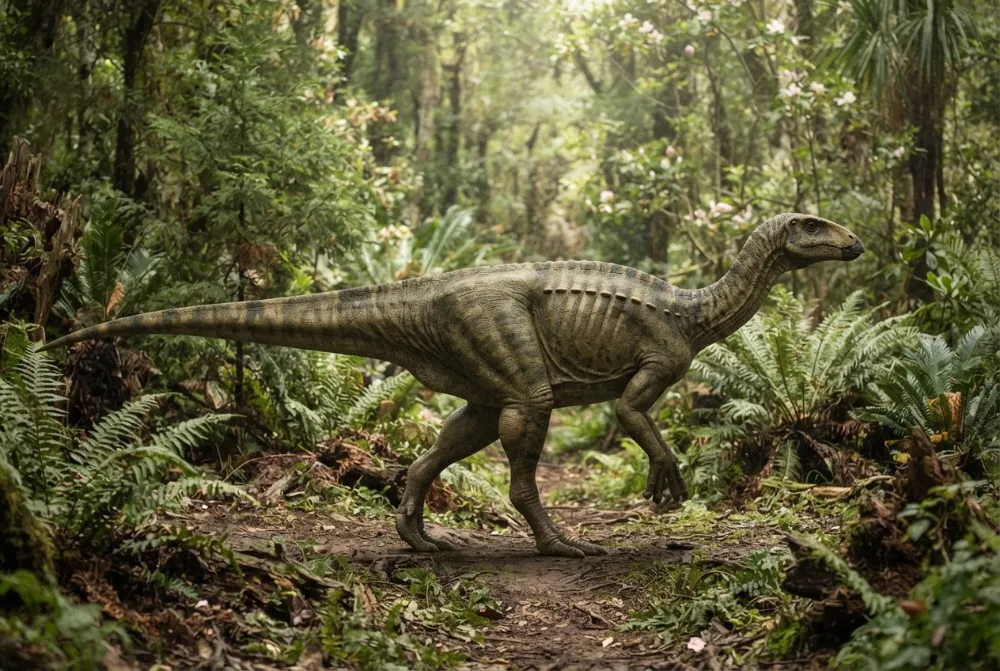
Macrogryphosaurus was a big, gentle plant-eater that wandered the forests of ancient Argentina. It had a long neck and tail, and bony plates along its ribs that might have helped it breathe or stayed stiff. This dinosaur is the largest known member of its group, the elasmarian ornithopods.1
Berɛ bɛn na ɛtenaa ase?
Na ne kɛseɛ yɛ sɛn?
Na ne tenten yɛ sɛn?
Na ne korɔn yɛ sɛn?
nsusuiɛ
Na ne mu yɛ duru sɛn?
 ne tenten te sɛ nkraman 6 firi hwene kɔsi dua🍌ne tenten te sɛ kwadu 33 a wɔde abɔ toatoa so🍉ne mu duru te sɛ watamɛlɔn 60🧸ne mu duru te sɛ nkɔkɔaa sukuu mmofra 16🎒ne mu duru te sɛ sukuu mmofra 9🏃anka ɔbɛtumi atu mmirika mita 100 wɔ sikɛn 8.8 mu (onipa a ɔyɛ ntɛm sen biara hia 9.6)
Macrogryphosaurus kɛseɛ yɛ sɛn sɛ wode toto WO ho a?
Akontaa nko ara wɔ wo browser mu. Yɛnkora biribiara so, na yɛmmfa biribiara nkɔ baabiara.
Na ɛyɛ ntɛm sɛn?


Nsɛm a ɛyɛ anigye
Macrogryphosaurus had bony plates along its ribs, called intercostal plates, which made its torso stiff and bird-like.1
It is the largest known elasmarian dinosaur, reaching about 6 metres (20 feet) long.1
Its name means 'big enigmatic lizard', because scientists were puzzled by its features.1
Macrogryphosaurus had a long neck and a tail similar to a coelurosaur, a group of theropod dinosaurs, which is unusual for an ornithopod.1
Fossils of Macrogryphosaurus were discovered by a young boy named Rafael Moyano in 1999 near Lake Mari Menuco in Argentina.1
Only one nearly complete skeleton of Macrogryphosaurus has been found, so scientists are still learning about it.1
Nsɛm a wɔbisa bebree fa Macrogryphosaurus ho
?How big was Macrogryphosaurus?
It was about 6 metres (20 feet) long, though one estimate says 5 metres (16 feet) and 300 kg (660 lb). It is the largest known elasmarian dinosaur.1
?What did Macrogryphosaurus eat?
It was a plant-eater, so it ate plants. The Paleobiology Database lists it as a ground-dwelling herbivore.3
?When did Macrogryphosaurus live?
It lived about 89 million years ago, during the Late Cretaceous Period, in what is now Argentina.1
?Why did Macrogryphosaurus have plates on its ribs?
Scientists are not sure. The plates, called intercostal plates, made its torso stiff and bird-like, but their exact purpose is still a mystery.1
Atosɛm sɛefoɔ
Atosɛm: Some people think Macrogryphosaurus was a slow, heavy dinosaur.
Nokorɛ: Actually, it was lightly built and graceful, with a slender body compared to many other big ornithopods.1
Ma dino ho animdefoɔ
- Nyansahu din
- Macrogryphosaurus
- Obi a ɔtoo din
- Calvo et al. 20073
- Kuo
- Ahabandifoɔ a wɔwɔ anomaa ano
- Abusua / kuo kɛseɛ
- Elasmaria3
- Nkyekyɛmu
- Ornithischia > Ornithopoda > Iguanodontia3
- Abotan no mfeɛ
- mfeɛ ɔpepem 90 kɔsi 86 (Coniacian)3
- Abotan nhyehyɛeɛ
- Sierra Barrosa3
- Aman
- Argentina3
- Fɔsil nkyerɛwee
- 1 wɔ The Paleobiology Database mu3
- Nhunumu
- Macrogryphosaurus was discovered in 1999 by a boy named Rafael Moyano near Lake Mari Menuco in Argentina. Scientists Jorge Calvo, Juan Porfiri, and Fernando Novas named it in 2007.1
- Wɔda so gye ho akyinnye
- Scientists are still debating how many species of Macrogryphosaurus existed, and whether some other ornithopod fossils belong to this genus.1
Baabi a nsɛm no firi
- Macrogryphosaurus (en.wikipedia.org)
- Macrogryphosaurus Calvo et al. 2007 - Encyclopedia of Life (eol.org)
- Macrogryphosaurus in The Paleobiology Database (CC BY 4.0): mfeɛ, mmeaeɛ, abotan nhyehyɛeɛ, nkyekyɛmu.
Asɛm biara a ɛwɔ krataafa yi so wɔ nɔma a ɛkyerɛ baabi a ɛfiri. Sɛ yɛfom biribi a, kafra, yɛyɛ dino dɔfoɔ, yɛnyɛ nyansahu nsɛmma krataa. Ka kyerɛ yɛn wɔ [email protected] na yɛbɛsiesie.
 Ɔkɔm de Rex! Dino Wiki yɛ agya bi adwuma a ɔyɛɛ maa ne babarima a ɔdɔ dino. Ɛyɛ kwa, dawurubɔ biara nni mu, akyidifoɔ biara nni mu. Mpanimfoɔ bɛtumi ama Rex aduane kakra, na aboa ama Dino Wiki atena intanɛt so.Ma Rex aduane
 Iguanodon
 Tenontosaurus
 Thescelosaurus
 Zalmoxes
 Camptosaurus
 Rhabdodon
 Tyrannosaurus
 Triceratops
 Velociraptor
 Spinosaurus
 Ankylosaurus
 Parasaurolophus