 Woyɛ dino bɛn? Nsɛmmisa agoro
 Dino ko
 Dino mmirikatuo
 Dino agodie nketewa
 Stika nwoma
 Dino TOP nhyehyɛeɛ
 Ma me nwanwa!
Mantellisaurus
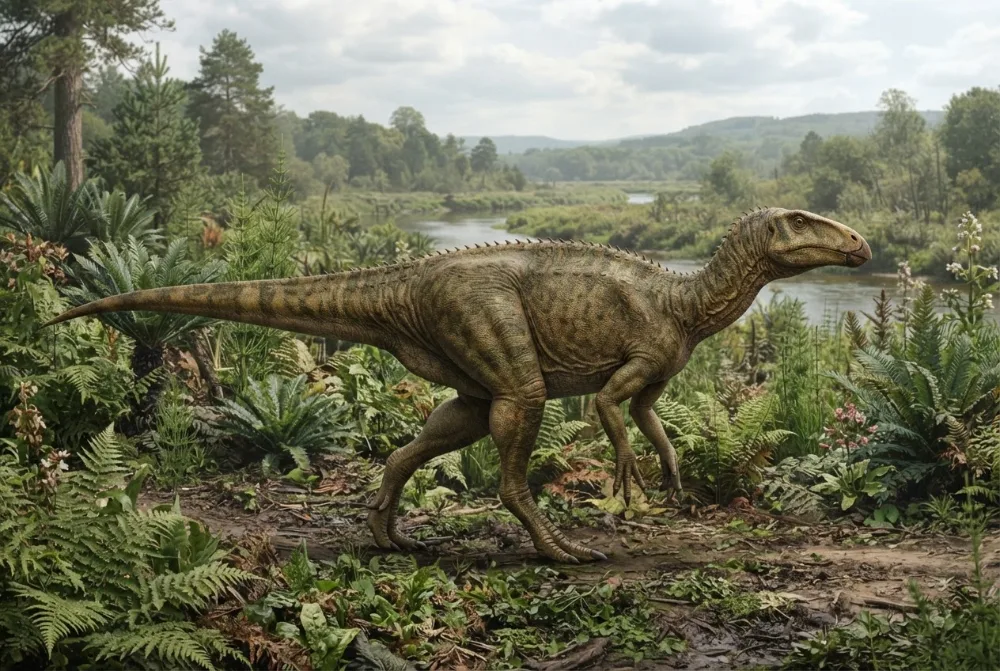
Mantellisaurus was a medium-sized, plant-eating dinosaur that lived in Europe during the Early Cretaceous. It had a light build and could walk on two legs or all fours. Its name honors Gideon Mantell, who discovered the first Iguanodon fossils.1
Berɛ bɛn na ɛtenaa ase?
Na ne kɛseɛ yɛ sɛn?
Na ne tenten yɛ sɛn?
Na ne korɔn yɛ sɛn?
nsusuiɛ
Na ne mu yɛ duru sɛn?
 ne tenten te sɛ nkraman 7 firi hwene kɔsi dua🍌ne tenten te sɛ kwadu 39 a wɔde abɔ toatoa so🍉ne mu duru te sɛ watamɛlɔn 150🧸ne mu duru te sɛ nkɔkɔaa sukuu mmofra 39🎒ne mu duru te sɛ sukuu mmofra 23🏃anka ɔbɛtumi atu mmirika mita 100 wɔ sikɛn 10 mu (onipa a ɔyɛ ntɛm sen biara hia 9.6)
Mantellisaurus kɛseɛ yɛ sɛn sɛ wode toto WO ho a?
Akontaa nko ara wɔ wo browser mu. Yɛnkora biribiara so, na yɛmmfa biribiara nkɔ baabiara.
Na ɛyɛ ntɛm sɛn?


Nsɛm a ɛyɛ anigye
Mantellisaurus was once thought to be a species of Iguanodon, but scientists gave it its own genus in 2007.1
Its forelimbs were only about half the length of its hindlimbs, so it probably walked on two legs most of the time.1
A nearly complete skeleton was found in a quarry in Nehden, Germany, in 1971, along with bones of Iguanodon and crocodiles.1
The first fossil of Mantellisaurus was discovered on the Isle of Wight, England, in 1914 and named Iguanodon atherfieldensis.1
Some scientists think the Belgian specimen IRSNB 1551 belongs to a separate genus called Dollodon, but others disagree.1
Mantellisaurus weighed about 750 kilograms (1,650 pounds), as heavy as a small car.1
Nsɛm a wɔbisa bebree fa Mantellisaurus ho
?How big was Mantellisaurus?
Mantellisaurus was about 7 metres (23 feet) long and weighed around 750 kilograms (1,650 pounds), as heavy as a small car.1
?What did Mantellisaurus eat?
Mantellisaurus was a plant-eating dinosaur. It ate plants like ferns and cycads.1
?Did Mantellisaurus walk on two legs or four?
It mostly walked on two legs because its forelimbs were only half the length of its hindlimbs. It could go on all fours when standing still or moving slowly.1
?Where did Mantellisaurus live?
It lived in Europe during the Early Cretaceous. Fossils have been found in Belgium, England, Spain and Germany.1
?Is Mantellisaurus a dinosaur?
Yes, it is a dinosaur. It is an iguanodontian dinosaur, a type of plant-eating ornithischian.1
?When did Mantellisaurus live?
It lived during the Barremian and early Aptian ages of the Early Cretaceous Period, about 125 to 120 million years ago.1
Atosɛm sɛefoɔ
Atosɛm: Mantellisaurus was a slow, clumsy quadruped like a giant iguana.
Nokorɛ: Mantellisaurus was lightly built and probably walked mostly on two legs, only going on all fours when standing still or moving slowly.1
Ma dino ho animdefoɔ
- Nyansahu din
- Mantellisaurus
- Obi a ɔtoo din
- Paul 20073
- Kuo
- Ahabandifoɔ a wɔwɔ anomaa ano
- Abusua / kuo kɛseɛ
- Iguanodontia3
- Nkyekyɛmu
- Ornithischia > Ornithopoda > Iguanodontia3
- Abotan no mfeɛ
- mfeɛ ɔpepem 143 kɔsi 120 (Berriasian / Aptian)3
- Abotan nhyehyɛeɛ
- Wessex, Arcillas de Morella, Vectis3
- Aman
- Engiresi, Spania, Gyaaman, Frɛnse, Bɛlgyium, Pɔtugal3
- Fɔsil nkyerɛwee
- 17 wɔ The Paleobiology Database mu3
- Wɔsan frɛ no
- Dollodon, Mantellodon (din dada no nso, yɛkan no sɛ aboa korɔ no ara)3
- Nhunumu
- The first fossil was found by Reginald Walter Hooley in 1914 on the Isle of Wight, England. He named it Iguanodon atherfieldensis in 1925. In 2007, Gregory Paul gave it its own genus, Mantellisaurus, honoring Gideon Mantell.1
- Wɔda so gye ho akyinnye
- Scientists still debate whether the Belgian specimen IRSNB 1551 belongs to Mantellisaurus or to a separate genus called Dollodon.1
Baabi a nsɛm no firi
- Mantellisaurus (en.wikipedia.org)
- Mantellisaurus, an Isle of Wight Iguanodontid - DinoWight (dinowight.org.uk)
- Mantellisaurus in The Paleobiology Database (CC BY 4.0): mfeɛ, mmeaeɛ, abotan nhyehyɛeɛ, nkyekyɛmu.
Asɛm biara a ɛwɔ krataafa yi so wɔ nɔma a ɛkyerɛ baabi a ɛfiri. Sɛ yɛfom biribi a, kafra, yɛyɛ dino dɔfoɔ, yɛnyɛ nyansahu nsɛmma krataa. Ka kyerɛ yɛn wɔ [email protected] na yɛbɛsiesie.
 Ɔkɔm de Rex! Dino Wiki yɛ agya bi adwuma a ɔyɛɛ maa ne babarima a ɔdɔ dino. Ɛyɛ kwa, dawurubɔ biara nni mu, akyidifoɔ biara nni mu. Mpanimfoɔ bɛtumi ama Rex aduane kakra, na aboa ama Dino Wiki atena intanɛt so.Ma Rex aduane
 Iguanodon
 Tenontosaurus
 Thescelosaurus
 Zalmoxes
 Camptosaurus
 Rhabdodon
 Stegosaurus
 Archaeopteryx
 Giganotosaurus
 Microraptor
 Deinonychus
 Baryonyx