 Woyɛ dino bɛn? Nsɛmmisa agoro
 Dino ko
 Dino mmirikatuo
 Dino agodie nketewa
 Stika nwoma
 Dino TOP nhyehyɛeɛ
 Ma me nwanwa!
Mikadocephalus
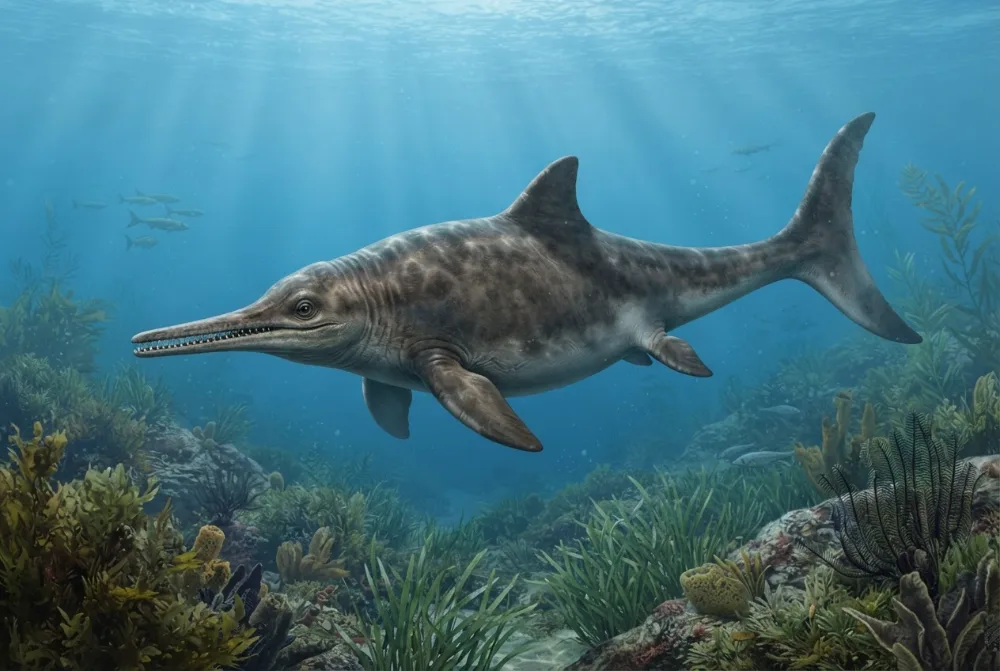
Mikadocephalus was a big, fish-shaped marine reptile that swam in warm seas during the Triassic Period. It was not a dinosaur, but a kind of ichthyosaur, with a long snout full of teeth for catching fish and squid.14
Berɛ bɛn na ɛtenaa ase?
Na ne kɛseɛ yɛ sɛn?
Na ne tenten yɛ sɛn?
 ne tenten te sɛ nkraman 8 firi hwene kɔsi dua🍌ne tenten te sɛ kwadu 44 a wɔde abɔ toatoa so🏊anka ɔbɛtumi aguare nsuguarebea kɛseɛ (50 m) tenten wɔ sikɛn 4.6 mu
Mikadocephalus kɛseɛ yɛ sɛn sɛ wode toto WO ho a?
Akontaa nko ara wɔ wo browser mu. Yɛnkora biribiara so, na yɛmmfa biribiara nkɔ baabiara.
Na ɛyɛ ntɛm sɛn?


Nsɛm a ɛyɛ anigye
Mikadocephalus is known from a skull that was so crushed and jumbled that it looked like a game of pick-up sticks, which is how it got its name.1
It lived about 247 to 237 million years ago, during the Middle Triassic, making it one of the earliest big ichthyosaurs.4
Its fossils were found in the Besano Formation, which was once a warm, shallow lagoon with poor oxygen at the bottom.1
Scientists think Mikadocephalus might actually be the same animal as another ichthyosaur called Besanosaurus, because they look very similar.1
The species name gracilirostris means 'slender snout', because its jaws were long and thin.1
Nsɛm a wɔbisa bebree fa Mikadocephalus ho
?How big was Mikadocephalus?
About 8 metres (26 feet) long, based on the largest known specimen of Besanosaurus, which scientists think is the same animal.2
?What did Mikadocephalus eat?
It ate small fish and squid, catching them with its long, slender snout and tiny pointed teeth.2
?Is Mikadocephalus a dinosaur?
No, it is not a dinosaur. It is a kind of ichthyosaur, a fish-shaped marine reptile that lived in the sea.1
?Why is it called Mikadocephalus?
Its name means 'Mikado head,' because its skull was so crushed and jumbled that it looked like a game of pick-up sticks.1
Atosɛm sɛefoɔ
Atosɛm: Some people think Mikadocephalus was a dinosaur because it lived long ago and had a long snout.
Nokorɛ: Mikadocephalus was an ichthyosaur, a marine reptile that lived in the sea. Ichthyosaurs are not dinosaurs.1
Ma dino ho animdefoɔ
- Nyansahu din
- Mikadocephalus
- Obi a ɔtoo din
- Maisch and Matzke 19974
- Kuo
- Iktiosɔɔ
- Abusua / kuo kɛseɛ
- Guanlingsauridae4
- Nkyekyɛmu
- Ichthyosauria > Ichthyosauromorpha4
- Abotan no mfeɛ
- mfeɛ ɔpepem 247 kɔsi 237 ()4
- Abotan nhyehyɛeɛ
- Monte San Giorgio bituminous shales, Tschermakfjellet4
- Aman
- Swizaland, Svalbard4
- Fɔsil nkyerɛwee
- 2 wɔ The Paleobiology Database mu4
- Nhunumu
- The skull was found in Switzerland, in the Besano Formation, and was named by Michael Maisch and Andreas Matzke in 1997.1
- Wɔda so gye ho akyinnye
- Scientists still debate whether Mikadocephalus is its own species or the same as Besanosaurus, since the skull is so crushed.1
Baabi a nsɛm no firi
- Besanosaurus (en.wikipedia.org)
- Besanosaurus (Wikipedia) (Wikipedia)
- Cranial anatomy of Besanosaurus leptorhynchus Dal Sasso & Pinna, 1996 (Reptilia: Ichthyosauria) from the Middle Triassic Besano Formation of Monte San Giorgio, Italy/Switzerland: taxonomic and palaeobiological implications [PeerJ] (peerj.com)
- Mikadocephalus in The Paleobiology Database (CC BY 4.0): mfeɛ, mmeaeɛ, abotan nhyehyɛeɛ, nkyekyɛmu.
Asɛm biara a ɛwɔ krataafa yi so wɔ nɔma a ɛkyerɛ baabi a ɛfiri. Sɛ yɛfom biribi a, kafra, yɛyɛ dino dɔfoɔ, yɛnyɛ nyansahu nsɛmma krataa. Ka kyerɛ yɛn wɔ [email protected] na yɛbɛsiesie.
 Ɔkɔm de Rex! Dino Wiki yɛ agya bi adwuma a ɔyɛɛ maa ne babarima a ɔdɔ dino. Ɛyɛ kwa, dawurubɔ biara nni mu, akyidifoɔ biara nni mu. Mpanimfoɔ bɛtumi ama Rex aduane kakra, na aboa ama Dino Wiki atena intanɛt so.Ma Rex aduane
 Ichthyosaurus
 Platypterygius
 Stenopterygius
 Khudiakovia
 Ophthalmosaurus
 Chonespondylus
 Placodus
 Lariosaurus
 Cyamodus
 Cymatosaurus
 Proneusticosaurus
 Neusticosaurus