 Woyɛ dino bɛn? Nsɛmmisa agoro
 Dino ko
 Dino mmirikatuo
 Dino agodie nketewa
 Stika nwoma
 Dino TOP nhyehyɛeɛ
 Ma me nwanwa!
Berɛ bɛn na ɛtenaa ase?

Na ne kɛseɛ yɛ sɛn?
Na ne tenten yɛ sɛn?
Na ne korɔn yɛ sɛn?
nsusuiɛ
Na ne mu yɛ duru sɛn?
 ne tenten te sɛ nkraman 4 firi hwene kɔsi dua🍌ne tenten te sɛ kwadu 22 a wɔde abɔ toatoa so🍉ne mu duru te sɛ watamɛlɔn 60🧸ne mu duru te sɛ nkɔkɔaa sukuu mmofra 16🎒ne mu duru te sɛ sukuu mmofra 9🏃anka ɔbɛtumi atu mmirika mita 100 wɔ sikɛn 9.7 mu (onipa a ɔyɛ ntɛm sen biara hia 9.6)
Ngwevu kɛseɛ yɛ sɛn sɛ wode toto WO ho a?
Akontaa nko ara wɔ wo browser mu. Yɛnkora biribiara so, na yɛmmfa biribiara nkɔ baabiara.
Na ɛyɛ ntɛm sɛn?


Nsɛm a ɛyɛ anigye
Ngwevu was named in 2019 from a fossil that was once thought to be a Massospondylus. Scientists realized it was a new dinosaur because its skull was wider and shorter than Massospondylus.1
The fossil of Ngwevu is a nearly complete skull and partial skeleton. It was nicknamed 'grey skull' by scientists before it got its official name.1
Ngwevu lived about 201 to 193 million years ago, during the Early Jurassic period.2
Bone growth rings show that the Ngwevu fossil was at least 10 years old when it died and was nearly full grown.1
Ngwevu had a wide skull that was wider than it was tall. This is different from many other early sauropodomorphs, which had narrower skulls.1
Its wide snout may have helped Ngwevu eat a different mix of plants than its relative Massospondylus, so the two dinosaurs could live in the same area without competing too much.1
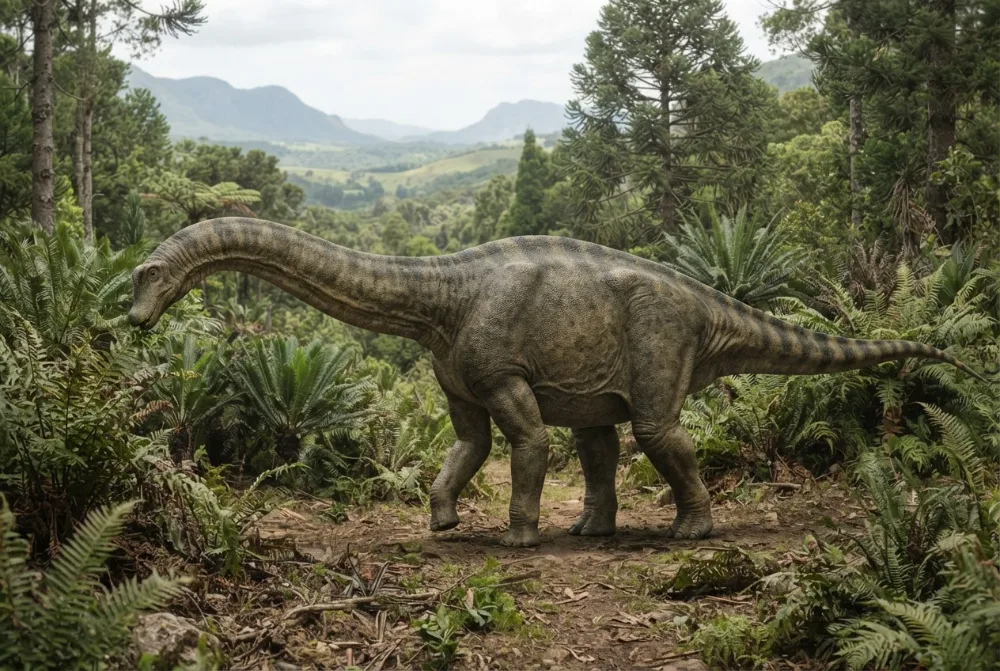
Nsɛm a wɔbisa bebree fa Ngwevu ho
?How big was Ngwevu?
Ngwevu was a small dinosaur. The fossil was nearly full grown and may have been about 3 metres long as an adult, making it a medium sized sauropodomorph of its time.5
?When did Ngwevu live?
Ngwevu lived during the Early Jurassic period, about 201 to 193 million years ago. The fossil was found in rocks from that time in South Africa.56
?What did Ngwevu eat?
Ngwevu ate plants. Its wide snout and strong jaw helped it eat tough plants, and it may have had a more generalist diet than its relative Massospondylus.6
Ma dino ho animdefoɔ
- Nyansahu din
- Ngwevu
- Obi a ɔtoo din
- Chapelle et al. 20197
- Kuo
- Kɔn tenten
- Abusua / kuo kɛseɛ
- Massospondylidae7
- Nkyekyɛmu
- Sauropodomorpha7
- Abotan no mfeɛ
- mfeɛ ɔpepem 201 kɔsi 193 (Hettangian / Sinemurian)7
- Abotan nhyehyɛeɛ
- Elliot7
- Aman
- Afrika Anaafoɔ7
- Fɔsil nkyerɛwee
- 1 wɔ The Paleobiology Database mu7
- Nhunumu
- Ngwevu was named in 2019 by Kimberley Chapelle and colleagues. The fossil had been sitting in a museum for years, labeled as Massospondylus, until scientists took a closer look and realized it was a new species.1
- Wɔda so gye ho akyinnye
- Scientists are not sure if Ngwevu is a separate species or just a very unusual Massospondylus. The differences in skull shape might also be due to sex or age, but the researchers think it is a real new dinosaur.1
Baabi a nsɛm no firi
- Ngwevu intloko : a new early sauropodomorph dinosaur from the Lower Jurassic Elliot Formation of South Africa and comments on cranial ontogeny in Massospondylus carinatus (pmc.ncbi.nlm.nih.gov)
- PBDB Taxon (paleobiodb.org)
- New dinosaur found hiding in plain sight in South African museum | Dinosaurs | The Guardian (theguardian.com)
- 2019-08 - Wits University PhD student discovers new species of early dinosaur - Wits University (wits.ac.za)
- Fossil reveals smallest sauropodomorph dinosaur from the Jurassic | Natural History Museum (nhm.ac.uk)
- Ngwevu (Wikipedia) (Wikipedia)
- Ngwevu in The Paleobiology Database (CC BY 4.0): mfeɛ, mmeaeɛ, abotan nhyehyɛeɛ, nkyekyɛmu.
Asɛm biara a ɛwɔ krataafa yi so wɔ nɔma a ɛkyerɛ baabi a ɛfiri. Sɛ yɛfom biribi a, kafra, yɛyɛ dino dɔfoɔ, yɛnyɛ nyansahu nsɛmma krataa. Ka kyerɛ yɛn wɔ [email protected] na yɛbɛsiesie.
 Ɔkɔm de Rex! Dino Wiki yɛ agya bi adwuma a ɔyɛɛ maa ne babarima a ɔdɔ dino. Ɛyɛ kwa, dawurubɔ biara nni mu, akyidifoɔ biara nni mu. Mpanimfoɔ bɛtumi ama Rex aduane kakra, na aboa ama Dino Wiki atena intanɛt so.Ma Rex aduane
 Brachiosaurus
 Diplodocus
 Brontosaurus
 Argentinosaurus
 Camarasaurus
 Morosaurus
 Dilophosaurus
 Stenopterygius
 Dorygnathus
 Scutellosaurus
 Sinosaurus
 Temnodontosaurus