 Woyɛ dino bɛn? Nsɛmmisa agoro
 Dino ko
 Dino mmirikatuo
 Dino agodie nketewa
 Stika nwoma
 Dino TOP nhyehyɛeɛ
 Ma me nwanwa!
Obelignathus
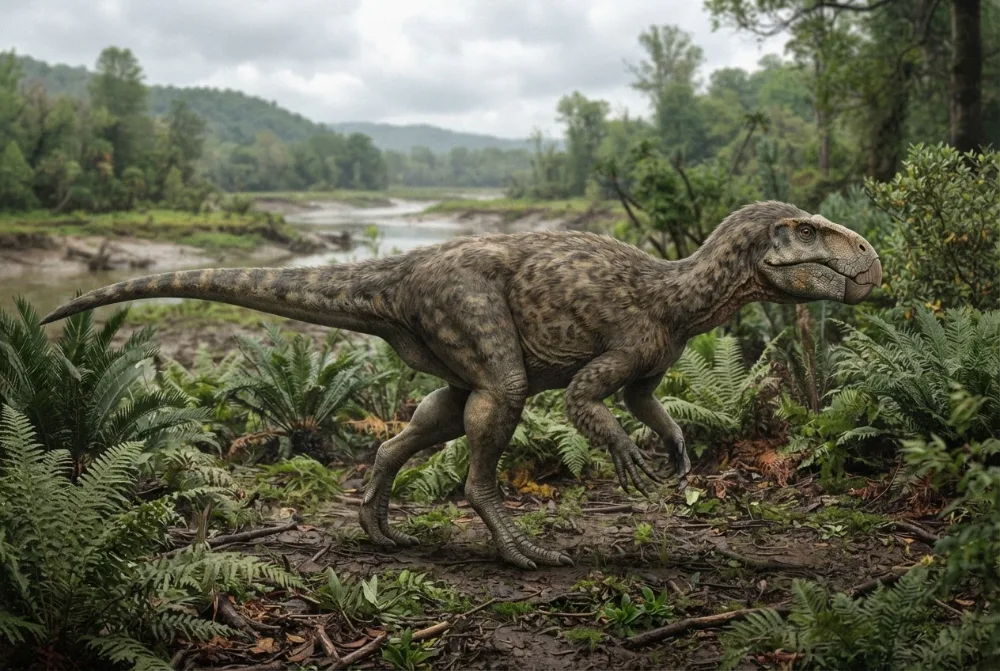
Obelignathus was a medium-sized plant-eating dinosaur that lived in what is now southern France. It had a very thick and strong lower jaw, which helped it chew tough plants. Its name comes from a cartoon character known for being super strong!21
Berɛ bɛn na ɛtenaa ase?
Na ne kɛseɛ yɛ sɛn?
Na ne tenten yɛ sɛn?
Na ne korɔn yɛ sɛn?
nsusuiɛ
 ne tenten te sɛ nkraman 3 firi hwene kɔsi dua🍌ne tenten te sɛ kwadu 17 a wɔde abɔ toatoa so🏃anka ɔbɛtumi atu mmirika mita 100 wɔ sikɛn 7.8 mu (onipa a ɔyɛ ntɛm sen biara hia 9.6)
Obelignathus kɛseɛ yɛ sɛn sɛ wode toto WO ho a?
Akontaa nko ara wɔ wo browser mu. Yɛnkora biribiara so, na yɛmmfa biribiara nkɔ baabiara.
Na ɛyɛ ntɛm sɛn?


Nsɛm a ɛyɛ anigye
Obelignathus is known from only a single jaw bone, a right dentary, found in 1990.2
Its jaw is about three times longer than it is high, which is shorter and thicker than in its relatives.1
Obelignathus lived between about 83 and 66 million years ago, during the Late Cretaceous period.3
This dinosaur was originally thought to be a species of Rhabdodon, but scientists later gave it its own genus in 2025.21
Obelignathus belonged to a group called rhabdodontomorphs, which were plant-eating dinosaurs that lived on islands in Europe.1
The name Obelignathus combines 'Obelix' (a strong cartoon character) and the Greek word for 'jaw'.1
Nsɛm a wɔbisa bebree fa Obelignathus ho
?What did Obelignathus eat?
Obelignathus was a plant-eating dinosaur. Its strong jaw helped it chew tough plants.5
?How big was Obelignathus?
Obelignathus was a medium-sized dinosaur. Its jaw bone is about 130 to 140 mm long, so it was probably a few metres long.1
?When did Obelignathus live?
Obelignathus lived between about 83 and 66 million years ago, during the Late Cretaceous period.25
?Is Obelignathus a dinosaur?
No, Obelignathus is not a dinosaur. It is a prehistoric reptile from the group called rhabdodontomorphs.2
Ma dino ho animdefoɔ
- Nyansahu din
- Obelignathus
- Obi a ɔtoo din
- Czepiński and Madzia 20255
- Kuo
- Ahabandifoɔ a wɔwɔ anomaa ano
- Abusua / kuo kɛseɛ
- Rhabdodontomorpha5
- Nkyekyɛmu
- Ornithischia > Ornithopoda > Iguanodontia5
- Abotan no mfeɛ
- mfeɛ ɔpepem 84 kɔsi 66 (Campanian / Maastrichtian)5
- Abotan nhyehyɛeɛ
- Grès à Reptiles5
- Aman
- Frɛnse5
- Fɔsil nkyerɛwee
- 2 wɔ The Paleobiology Database mu5
- Nhunumu
- The jaw bone was found in 1990 near Montouliers, France. It was first named Rhabdodon septimanicus by Éric Buffetaut and Jean Le Loeuff in 1991. In 2025, Czepiński and Madzia renamed it Obelignathus.21
- Wɔda so gye ho akyinnye
- Scientists are not sure exactly where Obelignathus fits in the dinosaur family tree, because only its jaw bone has been found.1
Baabi a nsɛm no firi
- Exploring the diversity and disparity of rhabdodontomorph ornithopods from the Late Cretaceous European archipelago | Scientific Reports (nature.com)
- Obelignathus (en.wikipedia.org)
- PBDB Taxon (paleobiodb.org)
- Obelignathus septimanicus | Dinosaur Database by DinoAnimals.com (dinoanimals.com)
- Obelignathus in The Paleobiology Database (CC BY 4.0): mfeɛ, mmeaeɛ, abotan nhyehyɛeɛ, nkyekyɛmu.
Asɛm biara a ɛwɔ krataafa yi so wɔ nɔma a ɛkyerɛ baabi a ɛfiri. Sɛ yɛfom biribi a, kafra, yɛyɛ dino dɔfoɔ, yɛnyɛ nyansahu nsɛmma krataa. Ka kyerɛ yɛn wɔ [email protected] na yɛbɛsiesie.
 Ɔkɔm de Rex! Dino Wiki yɛ agya bi adwuma a ɔyɛɛ maa ne babarima a ɔdɔ dino. Ɛyɛ kwa, dawurubɔ biara nni mu, akyidifoɔ biara nni mu. Mpanimfoɔ bɛtumi ama Rex aduane kakra, na aboa ama Dino Wiki atena intanɛt so.Ma Rex aduane
 Iguanodon
 Tenontosaurus
 Thescelosaurus
 Zalmoxes
 Camptosaurus
 Rhabdodon
 Tyrannosaurus
 Triceratops
 Velociraptor
 Spinosaurus
 Ankylosaurus
 Parasaurolophus