 Woyɛ dino bɛn? Nsɛmmisa agoro
 Dino ko
 Dino mmirikatuo
 Dino agodie nketewa
 Stika nwoma
 Dino TOP nhyehyɛeɛ
 Ma me nwanwa!
Berɛ bɛn na ɛtenaa ase?

Na ne kɛseɛ yɛ sɛn?
Na ne tenten yɛ sɛn?
Na ne korɔn yɛ sɛn?
nsusuiɛ
Na ne mu yɛ duru sɛn?
 ne tenten te sɛ nkraman 2.5 firi hwene kɔsi dua🍌ne tenten te sɛ kwadu 14 a wɔde abɔ toatoa so
 ne mu duru te sɛ fie agyinamoa 12🍉ne mu duru te sɛ watamɛlɔn 10🧸ne mu duru te sɛ nkɔkɔaa sukuu mmofra 2.5🎒ne mu duru te sɛ sukuu mmofra 1.5🏃anka ɔbɛtumi atu mmirika mita 100 wɔ sikɛn 8 mu (onipa a ɔyɛ ntɛm sen biara hia 9.6)
Orodromeus kɛseɛ yɛ sɛn sɛ wode toto WO ho a?
Akontaa nko ara wɔ wo browser mu. Yɛnkora biribiara so, na yɛmmfa biribiara nkɔ baabiara.
Na ɛyɛ ntɛm sɛn?


Nsɛm a ɛyɛ anigye
Orodromeus was discovered at a site called Egg Mountain, which was a nesting colony of the much larger dinosaur Maiasaura.1
The first fossils were found by Robert Makela, and the dinosaur was named after him: Orodromeus makelai.1
Some eggs once thought to belong to Orodromeus are now believed to be from a troodontid dinosaur, like Stenonychosaurus.1
Orodromeus embryos had well-developed bones and teeth, suggesting the babies could walk and feed themselves soon after hatching.1
This dinosaur may have dug burrows, like its relative Oryctodromeus, because its bones have been found in places where they would not normally be scattered.1
Orodromeus lived alongside predators like Daspletosaurus and the horned dinosaur Einiosaurus.1
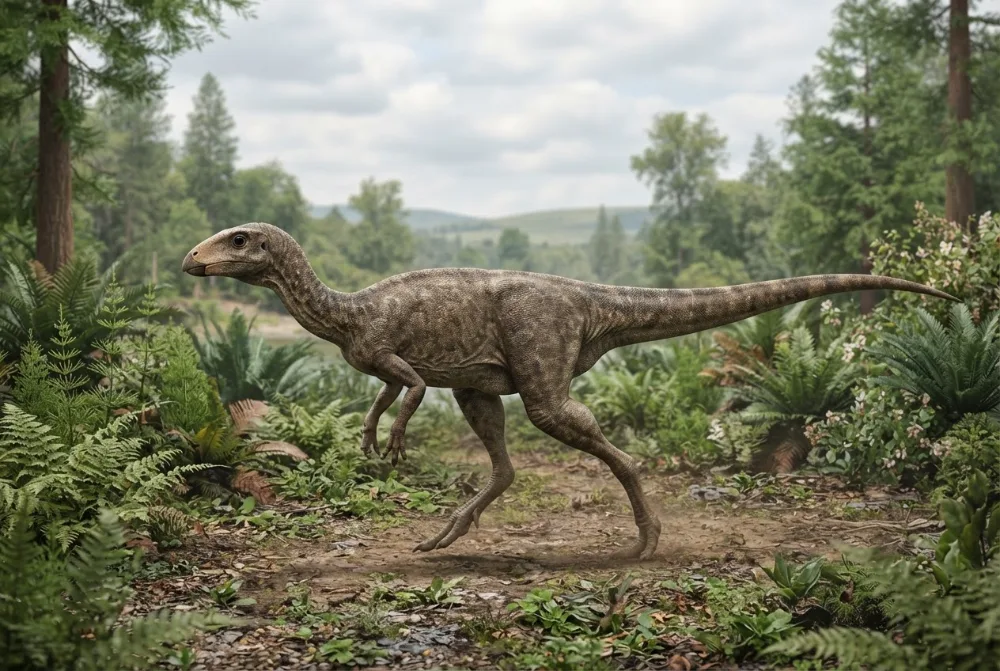
Nsɛm a wɔbisa bebree fa Orodromeus ho
?How big was Orodromeus?
About 2.5 metres (8.2 feet) long. That is roughly the size of a large dog.12
?What did Orodromeus eat?
It was a plant-eater. It used its horny beak and grinding cheek teeth to eat tough plant material, and it probably fed on plants no higher than 1 metre (3.3 feet) off the ground.12
?When did Orodromeus live?
It lived during the Late Cretaceous Period, about 75 million years ago, in what is now Montana, USA.12
?How fast could Orodromeus run?
Nobody knows for sure, but its name means 'mountain runner' and it was built for running on two legs. It was probably very quick.12
?Did Orodromeus dig burrows?
Maybe. Scientists think it may have dug burrows like its relative Oryctodromeus, because its bones are sometimes found packed together in ways that suggest burrowing.1
Ma dino ho animdefoɔ
- Nyansahu din
- Orodromeus
- Obi a ɔtoo din
- Horner and Weishampel 19883
- Kuo
- Ahabandifoɔ a wɔwɔ anomaa ano
- Abusua / kuo kɛseɛ
- Thescelosauridae3
- Nkyekyɛmu
- Ornithischia3
- Abotan no mfeɛ
- mfeɛ ɔpepem 84 kɔsi 66 (Campanian / Maastrichtian)3
- Abotan nhyehyɛeɛ
- Two Medicine, Hell Creek, Judith River3
- Aman
- Amerika3
- Fɔsil nkyerɛwee
- 9 wɔ The Paleobiology Database mu3
- Nhunumu
- Orodromeus was named by Jack Horner and David Weishampel in 1988. The first fossils were found by Robert Makela in Teton County, Montana, during an excavation of the Egg Mountain site.1
- Wɔda so gye ho akyinnye
- Scientists are not sure if Orodromeus really dug burrows, because the evidence is not yet strong.1
Baabi a nsɛm no firi
- Orodromeus (en.wikipedia.org)
- Orodromeus (nhm.ac.uk)
- Orodromeus in The Paleobiology Database (CC BY 4.0): mfeɛ, mmeaeɛ, abotan nhyehyɛeɛ, nkyekyɛmu.
Asɛm biara a ɛwɔ krataafa yi so wɔ nɔma a ɛkyerɛ baabi a ɛfiri. Sɛ yɛfom biribi a, kafra, yɛyɛ dino dɔfoɔ, yɛnyɛ nyansahu nsɛmma krataa. Ka kyerɛ yɛn wɔ [email protected] na yɛbɛsiesie.
 Ɔkɔm de Rex! Dino Wiki yɛ agya bi adwuma a ɔyɛɛ maa ne babarima a ɔdɔ dino. Ɛyɛ kwa, dawurubɔ biara nni mu, akyidifoɔ biara nni mu. Mpanimfoɔ bɛtumi ama Rex aduane kakra, na aboa ama Dino Wiki atena intanɛt so.Ma Rex aduane
 Iguanodon
 Tenontosaurus
 Thescelosaurus
 Zalmoxes
 Camptosaurus
 Rhabdodon
 Tyrannosaurus
 Triceratops
 Velociraptor
 Spinosaurus
 Ankylosaurus
 Parasaurolophus