 Woyɛ dino bɛn? Nsɛmmisa agoro
 Dino ko
 Dino mmirikatuo
 Dino agodie nketewa
 Stika nwoma
 Dino TOP nhyehyɛeɛ
 Ma me nwanwa!
Berɛ bɛn na ɛtenaa ase?

Na ne kɛseɛ yɛ sɛn?
Na ne tenten yɛ sɛn?
Na ne korɔn yɛ sɛn?
nsusuiɛ
Na ne mu yɛ duru sɛn?
 ne tenten te sɛ nkraman 5 firi hwene kɔsi dua🍌ne tenten te sɛ kwadu 28 a wɔde abɔ toatoa so🍉ne mu duru te sɛ watamɛlɔn 100🧸ne mu duru te sɛ nkɔkɔaa sukuu mmofra 26🎒ne mu duru te sɛ sukuu mmofra 16🏃anka ɔbɛtumi atu mmirika mita 100 wɔ sikɛn 9.5 mu (onipa a ɔyɛ ntɛm sen biara hia 9.6)
Owenodon kɛseɛ yɛ sɛn sɛ wode toto WO ho a?
Akontaa nko ara wɔ wo browser mu. Yɛnkora biribiara so, na yɛmmfa biribiara nkɔ baabiara.
Na ɛyɛ ntɛm sɛn?


Nsɛm a ɛyɛ anigye
Owenodon is known mostly from a partial lower jaw with ten teeth, found in a limestone block.1
It was first named Iguanodon hoggii by Richard Owen in 1874, honoring naturalist A.J. Hogg who collected the fossil.1
The jaw was damaged while stored in a museum collection, breaking one tooth crown and part of the bone.1
Owenodon lived in a warm, Mediterranean-like climate with lakes, lagoons, and salty marshes.1
Scientists think Owenodon was an intermediate ornithopod, between Camptosaurus and Iguanodon in evolution.1
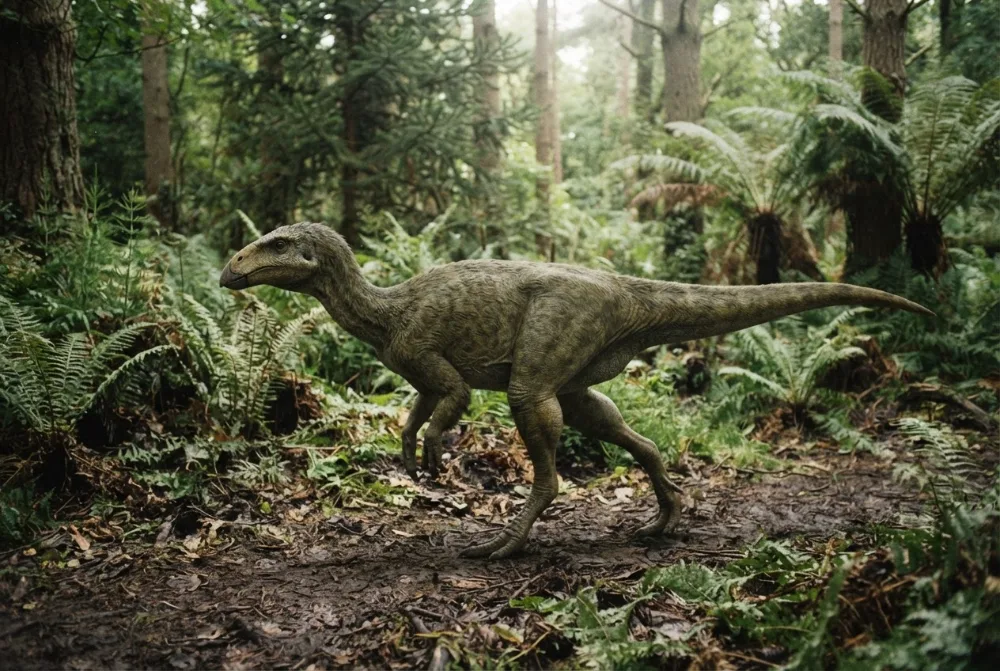
Nsɛm a wɔbisa bebree fa Owenodon ho
?How big was Owenodon?
Scientists do not know for sure, because only a partial lower jaw has been found. It was probably a small ornithopod, but no exact size is known.1
?When did Owenodon live?
Owenodon lived during the Early Cretaceous, about 140 million years ago, in the Berriasian stage.1
?Where was Owenodon found?
The only definite Owenodon fossil was found in Dorset, United Kingdom, in the Lulworth Formation. Some teeth from Romania and Spain may also belong to it.1
Ma dino ho animdefoɔ
- Nyansahu din
- Owenodon
- Obi a ɔtoo din
- Galton 20093
- Kuo
- Ahabandifoɔ a wɔwɔ anomaa ano
- Abusua / kuo kɛseɛ
- Dryomorpha3
- Nkyekyɛmu
- Ornithischia > Ornithopoda > Iguanodontia3
- Abotan no mfeɛ
- mfeɛ ɔpepem 149 kɔsi 137 (Tithonian / Berriasian)3
- Abotan nhyehyɛeɛ
- Lower Bauxite, Lulworth3
- Aman
- Romania, Engiresi3
- Fɔsil nkyerɛwee
- 6 wɔ The Paleobiology Database mu3
- Nhunumu
- The fossil was discovered by A.J. Hogg in the Purbeck Limestone of Dorset, England, and described by Richard Owen in 1874 as Iguanodon hoggii. It was given its own genus Owenodon by Peter Galton in 2009.1
- Wɔda so gye ho akyinnye
- Scientists are not sure exactly where Owenodon fits in the ornithopod family tree, because the fossils are so few and incomplete.1
Baabi a nsɛm no firi
- Owenodon (en.wikipedia.org)
- Owenodon hoggii | Dinosaur Database by DinoAnimals.com (dinoanimals.com)
- Owenodon in The Paleobiology Database (CC BY 4.0): mfeɛ, mmeaeɛ, abotan nhyehyɛeɛ, nkyekyɛmu.
Asɛm biara a ɛwɔ krataafa yi so wɔ nɔma a ɛkyerɛ baabi a ɛfiri. Sɛ yɛfom biribi a, kafra, yɛyɛ dino dɔfoɔ, yɛnyɛ nyansahu nsɛmma krataa. Ka kyerɛ yɛn wɔ [email protected] na yɛbɛsiesie.
 Ɔkɔm de Rex! Dino Wiki yɛ agya bi adwuma a ɔyɛɛ maa ne babarima a ɔdɔ dino. Ɛyɛ kwa, dawurubɔ biara nni mu, akyidifoɔ biara nni mu. Mpanimfoɔ bɛtumi ama Rex aduane kakra, na aboa ama Dino Wiki atena intanɛt so.Ma Rex aduane
 Iguanodon
 Tenontosaurus
 Thescelosaurus
 Zalmoxes
 Camptosaurus
 Rhabdodon
 Stegosaurus
 Archaeopteryx
 Giganotosaurus
 Microraptor
 Deinonychus
 Baryonyx