 Woyɛ dino bɛn? Nsɛmmisa agoro
 Dino ko
 Dino mmirikatuo
 Dino agodie nketewa
 Stika nwoma
 Dino TOP nhyehyɛeɛ
 Ma me nwanwa!
Palmula
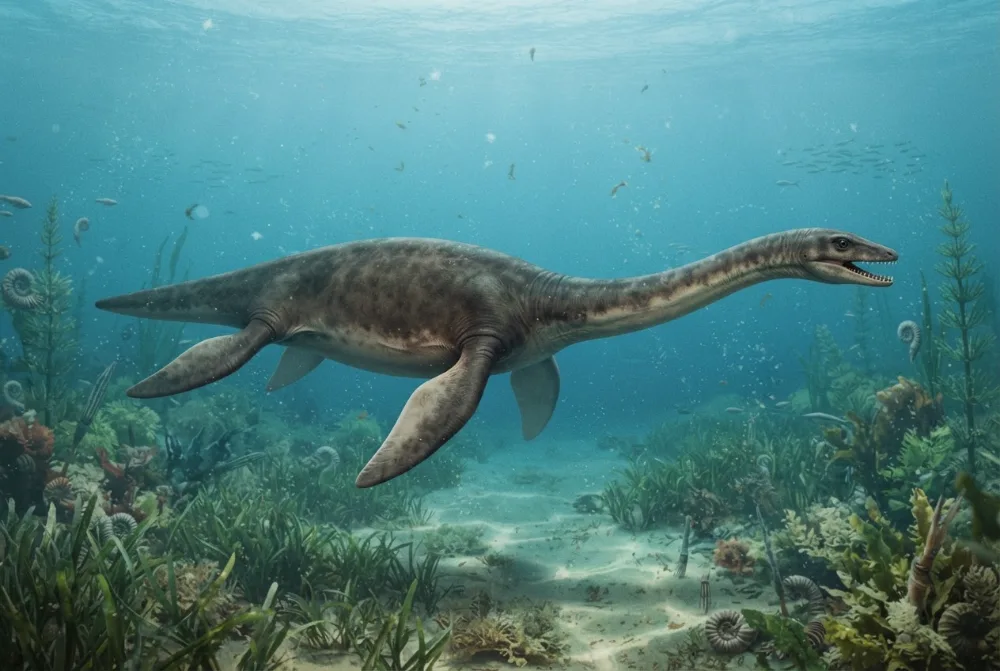
Palmula was a small, fast-swimming marine reptile that lived in the shallow seas of North America about 90 million years ago. It had four flippers shaped like oars and a short neck, making it a speedy hunter of fish and squid.12
Berɛ bɛn na ɛtenaa ase?
Na ɛyɛ ntɛm sɛn?


Nsɛm a ɛyɛ anigye
Palmula was a polycotylid plesiosaur, a group of short-necked plesiosaurs that were fast swimmers.1
Its name means 'blade of an oar' because its flipper bones were shaped like square paddles.1
The bones in its flippers were nearly square, unlike other plesiosaurs which had short, wide flipper bones.1
Only one fossil of Palmula has been found, including parts of the skull, backbone, and a complete right flipper.1
Palmula was originally named Palmula, but that name was already used for a different animal, so scientists later changed it to Palmulasaurus.2
Ma dino ho animdefoɔ
- Nyansahu din
- Palmula
- Obi a ɔtoo din
- Albright et al. 20072
- Kuo
- Plesiosɔɔ
- Abusua / kuo kɛseɛ
- Polycotylidae2
- Nkyekyɛmu
- Plesiosauria > Sauropterygia2
- Abotan no mfeɛ
- mfeɛ ɔpepem 94 kɔsi 90 (Turonian)2
- Fɔsil nkyerɛwee
- 1 wɔ The Paleobiology Database mu2
- Nhunumu
- Palmula was named in 2007 by L. Barry Albright III, David D. Gillette, and Alan L. Titus based on a fossil found in the Tropic Shale of southern Utah.21
- Wɔda so gye ho akyinnye
- Scientists are not sure exactly how big Palmula grew, because only one partial skeleton has been found.1
Baabi a nsɛm no firi
- doc.rero.ch (doc.rero.ch)
- Palmula in The Paleobiology Database (CC BY 4.0): mfeɛ, mmeaeɛ, abotan nhyehyɛeɛ, nkyekyɛmu.
Asɛm biara a ɛwɔ krataafa yi so wɔ nɔma a ɛkyerɛ baabi a ɛfiri. Sɛ yɛfom biribi a, kafra, yɛyɛ dino dɔfoɔ, yɛnyɛ nyansahu nsɛmma krataa. Ka kyerɛ yɛn wɔ [email protected] na yɛbɛsiesie.
 Ɔkɔm de Rex! Dino Wiki yɛ agya bi adwuma a ɔyɛɛ maa ne babarima a ɔdɔ dino. Ɛyɛ kwa, dawurubɔ biara nni mu, akyidifoɔ biara nni mu. Mpanimfoɔ bɛtumi ama Rex aduane kakra, na aboa ama Dino Wiki atena intanɛt so.Ma Rex aduane
 Elasmosaurus
 Pliosaurus
 Plesiosaurus
 Cimoliasaurus
 Colymbosaurus
 Trinacromerum
 Tyrannosaurus
 Triceratops
 Velociraptor
 Spinosaurus
 Ankylosaurus
 Parasaurolophus