 Woyɛ dino bɛn? Nsɛmmisa agoro
 Dino ko
 Dino mmirikatuo
 Dino agodie nketewa
 Stika nwoma
 Dino TOP nhyehyɛeɛ
 Ma me nwanwa!
Parvicursor
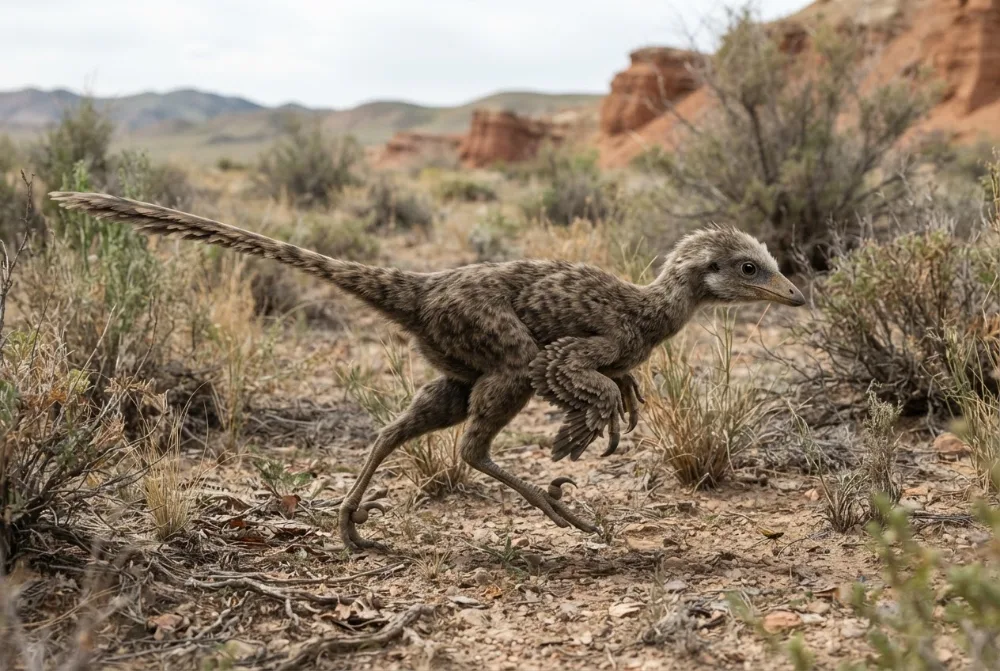
Parvicursor was a tiny, speedy dinosaur that lived in the Late Cretaceous of Mongolia. It ran on long, slender legs and probably chased after small insects. It was one of the smallest adult dinosaurs ever found, about the size of a chicken.1
Berɛ bɛn na ɛtenaa ase?
Na ne kɛseɛ yɛ sɛn?
Na ne tenten yɛ sɛn?
Na ne mu yɛ duru sɛn?
Parvicursor kɛseɛ yɛ sɛn sɛ wode toto WO ho a?
Akontaa nko ara wɔ wo browser mu. Yɛnkora biribiara so, na yɛmmfa biribiara nkɔ baabiara.
Na ɛyɛ ntɛm sɛn?


Nsɛm a ɛyɛ anigye
Parvicursor had a single large claw on each hand, which it may have used to tear open termite mounds or dig for food.1
Its name means 'small runner', and it was built for speed with long, slender legs.1
Scientists think Parvicursor was a juvenile, not a full-grown adult, because its bones show it was still growing.1
It lived about 72 million years ago, during the Late Cretaceous period.1
Some scientists think that Linhenykus and Ceratonykus might actually be the same animal as Parvicursor.1
Nsɛm a wɔbisa bebree fa Parvicursor ho
?How big was Parvicursor?
It was about 39 centimetres long from snout to tail tip and weighed about 162 grams, about the size of a chicken.1
?What did Parvicursor eat?
It probably ate small insects and may have used its single large claw to tear open termite mounds or dig for food.1
?Was Parvicursor a dinosaur?
Yes, it was a very small alvarezsaurid theropod dinosaur that lived during the Late Cretaceous period.1
?How fast could Parvicursor run?
Nobody knows its exact speed, but its name means 'small runner' and it had long, slender legs built for fast running.1
Atosɛm sɛefoɔ
Atosɛm: People often think Parvicursor was a bird because it was tiny and feathered, but it was a dinosaur.
Nokorɛ: Parvicursor was a theropod dinosaur, not a bird, even though it had feathers and was small.1
Ma dino ho animdefoɔ
- Nyansahu din
- Parvicursor
- Obi a ɔtoo din
- Karhu and Rautian 19963
- Kuo
- Dino nwonwa a wɔwɔ ntakra
- Abusua / kuo kɛseɛ
- Alvarezsauridae3
- Nkyekyɛmu
- Theropoda > Alvarezsauridae3
- Abotan no mfeɛ
- mfeɛ ɔpepem 84 kɔsi 72 (Campanian)3
- Abotan nhyehyɛeɛ
- Baruungoyot3
- Aman
- Mongolia3
- Fɔsil nkyerɛwee
- 1 wɔ The Paleobiology Database mu3
- Nhunumu
- The first fossil, a partial skeleton with vertebrae, pelvis, and a hind leg, was found in 1992 and described in 1996 by Karhu and Rautian.1
- Wɔda so gye ho akyinnye
- Scientists still debate whether some other tiny alvarezsaurids, like Linhenykus and Ceratonykus, are really the same species as Parvicursor.1
Baabi a nsɛm no firi
- Parvicursor (en.wikipedia.org)
- PBDB Taxon (paleobiodb.org)
- Parvicursor in The Paleobiology Database (CC BY 4.0): mfeɛ, mmeaeɛ, abotan nhyehyɛeɛ, nkyekyɛmu.
Asɛm biara a ɛwɔ krataafa yi so wɔ nɔma a ɛkyerɛ baabi a ɛfiri. Sɛ yɛfom biribi a, kafra, yɛyɛ dino dɔfoɔ, yɛnyɛ nyansahu nsɛmma krataa. Ka kyerɛ yɛn wɔ [email protected] na yɛbɛsiesie.
 Ɔkɔm de Rex! Dino Wiki yɛ agya bi adwuma a ɔyɛɛ maa ne babarima a ɔdɔ dino. Ɛyɛ kwa, dawurubɔ biara nni mu, akyidifoɔ biara nni mu. Mpanimfoɔ bɛtumi ama Rex aduane kakra, na aboa ama Dino Wiki atena intanɛt so.Ma Rex aduane
 Therizinosaurus
 Oviraptor
 Chirostenotes
 Citipes
 Leptorhynchos
 Avimimus
 Tyrannosaurus
 Triceratops
 Velociraptor
 Spinosaurus
 Ankylosaurus
 Parasaurolophus