 Woyɛ dino bɛn? Nsɛmmisa agoro
 Dino ko
 Dino mmirikatuo
 Dino agodie nketewa
 Stika nwoma
 Dino TOP nhyehyɛeɛ
 Ma me nwanwa!
Plateosauravus
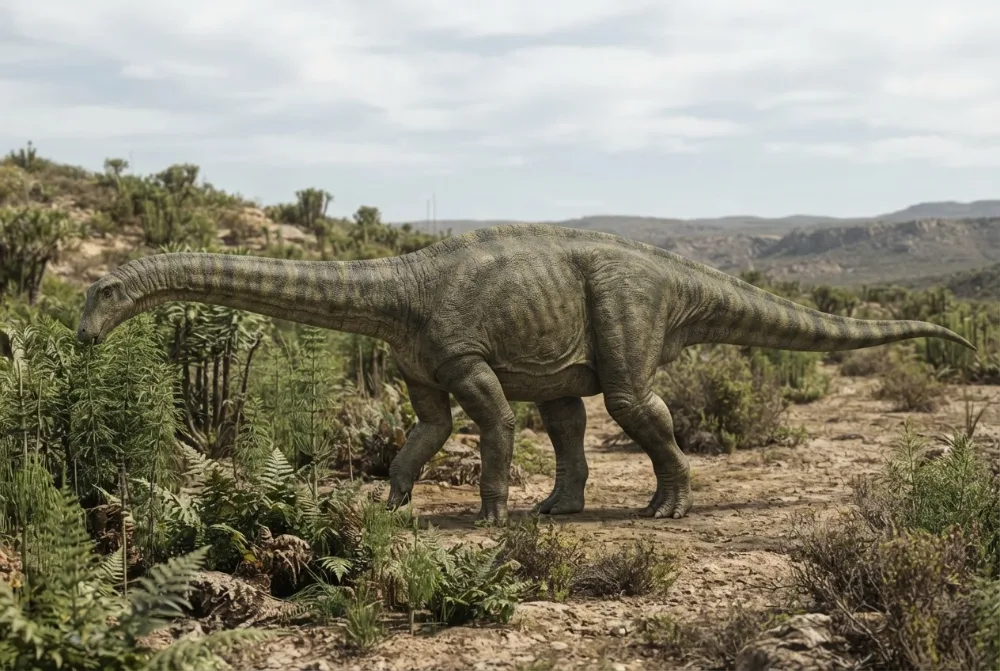
Plateosauravus was an early long-necked plant eater that lived in South Africa during the Late Triassic. It walked on two legs but could probably drop to all fours to feed. It is one of the oldest known members of the group that later gave rise to the giant sauropods.16
Berɛ bɛn na ɛtenaa ase?
Na ne kɛseɛ yɛ sɛn?
Na ne tenten yɛ sɛn?
Na ne korɔn yɛ sɛn?
nsusuiɛ
Na ne mu yɛ duru sɛn?
 ne tenten te sɛ nkraman 8 firi hwene kɔsi dua🍌ne tenten te sɛ kwadu 46 a wɔde abɔ toatoa so🍉ne mu duru te sɛ watamɛlɔn 280🧸ne mu duru te sɛ nkɔkɔaa sukuu mmofra 74🎒ne mu duru te sɛ sukuu mmofra 44🐻❄️ne mu duru te sɛ polar bea 3🏃anka ɔbɛtumi atu mmirika mita 100 wɔ sikɛn 13 mu (onipa a ɔyɛ ntɛm sen biara hia 9.6)
Plateosauravus kɛseɛ yɛ sɛn sɛ wode toto WO ho a?
Akontaa nko ara wɔ wo browser mu. Yɛnkora biribiara so, na yɛmmfa biribiara nkɔ baabiara.
Na ɛyɛ ntɛm sɛn?


Nsɛm a ɛyɛ anigye
Plateosauravus was named in 1932 by Friedrich von Huene, who realized it was different from Plateosaurus.16
Its name means 'grandfather of Plateosaurus', because it lived earlier and was more primitive.1
More than a dozen partial skeletons have been found in Kruger National Park since 1995, including some from young animals.1
Scientists used to call it Euskelosaurus, but that name is now considered doubtful because the original fossils are too incomplete.1
It lived between about 227 and 201 million years ago, during the Norian and Rhaetian ages.2
The first fossil was found by T.L. Cullingworth, and the species name cullingworthi honors him.1
Nsɛm a wɔbisa bebree fa Plateosauravus ho
?How big was Plateosauravus?
It was moderately large, with a femur (thigh bone) at least 545 mm (about 0.55 metres) long. That suggests it was about the size of a large cow, though no complete skeleton has been found to give an exact length.4
?What did Plateosauravus eat?
It was a plant eater. As an early long-necked sauropodomorph, it ate ferns and other plants that grew in the Late Triassic.5
Atosɛm sɛefoɔ
Atosɛm: Plateosauravus is the same as Euskelosaurus.
Nokorɛ: Many scientists once thought so, but Euskelosaurus is now considered a nomen dubium (a doubtful name) because its fossils are too poor. Plateosauravus is used instead.1
Ma dino ho animdefoɔ
- Nyansahu din
- Plateosauravus
- Obi a ɔtoo din
- Huene 19326
- Kuo
- Kɔn tenten
- Abusua / kuo kɛseɛ
- Plateosauridae6
- Nkyekyɛmu
- Sauropodomorpha6
- Abotan no mfeɛ
- mfeɛ ɔpepem 227 kɔsi 201 (Norian / Rhaetian)6
- Abotan nhyehyɛeɛ
- Elliot6
- Aman
- Afrika Anaafoɔ6
- Fɔsil nkyerɛwee
- 2 wɔ The Paleobiology Database mu6
- Nhunumu
- Sidney Haughton first named it Plateosaurus cullingworthi in 1924 from a partial skeleton found in South Africa. In 1932, Friedrich von Huene gave it its own genus, Plateosauravus.1
- Wɔda so gye ho akyinnye
- Scientists are not sure exactly where Plateosauravus fits among the early sauropodomorphs, and some think it might be a nomen dubium.12
Baabi a nsɛm no firi
- Plateosauravus (en.wikipedia.org)
- PBDB Taxon (paleobiodb.org)
- Plateosauravus cullingworthi | Dinosaur Database by DinoAnimals.com (dinoanimals.com)
- A definite prosauropod dinosaur from the Lower Elliot Formation (Norian: Upper Triassic) of South Africa (exa.ai)
- Plateosauravus (en.wikipedia.org)
- Plateosauravus in The Paleobiology Database (CC BY 4.0): mfeɛ, mmeaeɛ, abotan nhyehyɛeɛ, nkyekyɛmu.
Asɛm biara a ɛwɔ krataafa yi so wɔ nɔma a ɛkyerɛ baabi a ɛfiri. Sɛ yɛfom biribi a, kafra, yɛyɛ dino dɔfoɔ, yɛnyɛ nyansahu nsɛmma krataa. Ka kyerɛ yɛn wɔ [email protected] na yɛbɛsiesie.
 Ɔkɔm de Rex! Dino Wiki yɛ agya bi adwuma a ɔyɛɛ maa ne babarima a ɔdɔ dino. Ɛyɛ kwa, dawurubɔ biara nni mu, akyidifoɔ biara nni mu. Mpanimfoɔ bɛtumi ama Rex aduane kakra, na aboa ama Dino Wiki atena intanɛt so.Ma Rex aduane
 Brachiosaurus
 Diplodocus
 Brontosaurus
 Argentinosaurus
 Camarasaurus
 Morosaurus
 Nothosaurus
 Coelophysis
 Podokesaurus
 Simosaurus
 Eudimorphodon
 Herrerasaurus