 Woyɛ dino bɛn? Nsɛmmisa agoro
 Dino ko
 Dino mmirikatuo
 Dino agodie nketewa
 Stika nwoma
 Dino TOP nhyehyɛeɛ
 Ma me nwanwa!
Proa
Proa was a plant-eating dinosaur that lived about 112 million years ago in what is now Spain. It had a pointed beak and walked on two legs, but could probably also drop to all fours. It was a relative of the bigger duck-billed dinosaurs.12
Berɛ bɛn na ɛtenaa ase?
Na ne kɛseɛ yɛ sɛn?
Na ne tenten yɛ sɛn?
Na ne korɔn yɛ sɛn?
Na ne mu yɛ duru sɛn?
 ne tenten te sɛ nkraman 6 firi hwene kɔsi dua🍌ne tenten te sɛ kwadu 36 a wɔde abɔ toatoa so🍉ne mu duru te sɛ watamɛlɔn 200🧸ne mu duru te sɛ nkɔkɔaa sukuu mmofra 53🎒ne mu duru te sɛ sukuu mmofra 31🐻❄️ne mu duru te sɛ polar bea 2🏃anka ɔbɛtumi atu mmirika mita 100 wɔ sikɛn 10 mu (onipa a ɔyɛ ntɛm sen biara hia 9.6)
Proa kɛseɛ yɛ sɛn sɛ wode toto WO ho a?
Akontaa nko ara wɔ wo browser mu. Yɛnkora biribiara so, na yɛmmfa biribiara nkɔ baabiara.
Na ɛyɛ ntɛm sɛn?


Nsɛm a ɛyɛ anigye
Proa's beak bone had a pointed tip with side prongs that stuck out, which is unique among its relatives.1
It lived during the Early Cretaceous, about 112 million years ago, which was a time when many new dinosaur groups were appearing.1
Proa is known from at least three partial skeletons and several skull pieces, so scientists have a good idea of what it looked like.1
It was a basal iguanodont, meaning it was an early relative of the bigger iguanodons and duck-billed dinosaurs.3
Proa helps fill a gap in the fossil record of European iguanodonts, which was missing for millions of years.3
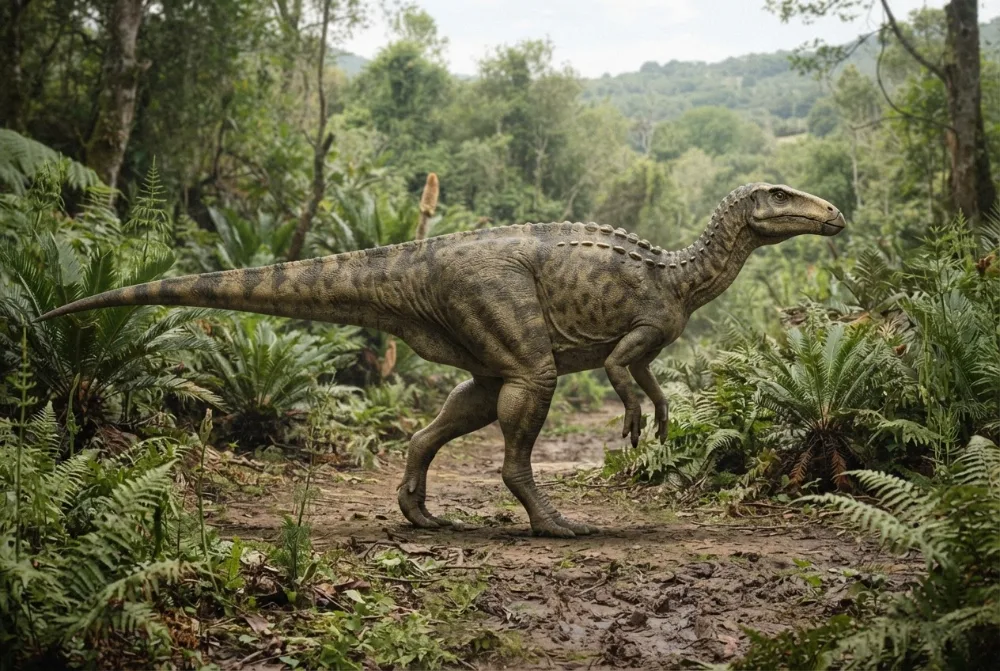
Ma dino ho animdefoɔ
- Nyansahu din
- Proa
- Obi a ɔtoo din
- McDonald et al. 20124
- Kuo
- Ahabandifoɔ a wɔwɔ anomaa ano
- Abusua / kuo kɛseɛ
- Hadrosauriformes4
- Nkyekyɛmu
- Ornithischia > Ornithopoda > Iguanodontia4
- Abotan no mfeɛ
- mfeɛ ɔpepem 113 kɔsi 110 (Albian)4
- Abotan nhyehyɛeɛ
- Escucha4
- Aman
- Spania4
- Fɔsil nkyerɛwee
- 1 wɔ The Paleobiology Database mu4
- Nhunumu
- Proa was named by Andrew T. McDonald and colleagues in 2012, based on fossils from coal mines near Val de Ariño in Spain.1
- Wɔda so gye ho akyinnye
- Scientists are still debating exactly where Proa sits on the dinosaur family tree, with some placing it close to Iguanodon and others with Asian relatives.1
Baabi a nsɛm no firi
- Proa valdearinnoensis (en.wikipedia.org)
- PBDB Taxon (paleobiodb.org)
- An unusual new basal iguanodont (Dinosauria: Ornithopoda) from the Lower Cretaceous of Teruel, Spain | Zootaxa (mapress.com)
- Proa in The Paleobiology Database (CC BY 4.0): mfeɛ, mmeaeɛ, abotan nhyehyɛeɛ, nkyekyɛmu.
Asɛm biara a ɛwɔ krataafa yi so wɔ nɔma a ɛkyerɛ baabi a ɛfiri. Sɛ yɛfom biribi a, kafra, yɛyɛ dino dɔfoɔ, yɛnyɛ nyansahu nsɛmma krataa. Ka kyerɛ yɛn wɔ [email protected] na yɛbɛsiesie.
 Ɔkɔm de Rex! Dino Wiki yɛ agya bi adwuma a ɔyɛɛ maa ne babarima a ɔdɔ dino. Ɛyɛ kwa, dawurubɔ biara nni mu, akyidifoɔ biara nni mu. Mpanimfoɔ bɛtumi ama Rex aduane kakra, na aboa ama Dino Wiki atena intanɛt so.Ma Rex aduane
 Iguanodon
 Tenontosaurus
 Thescelosaurus
 Zalmoxes
 Camptosaurus
 Rhabdodon
 Stegosaurus
 Archaeopteryx
 Giganotosaurus
 Microraptor
 Deinonychus
 Baryonyx