 Woyɛ dino bɛn? Nsɛmmisa agoro
 Dino ko
 Dino mmirikatuo
 Dino agodie nketewa
 Stika nwoma
 Dino TOP nhyehyɛeɛ
 Ma me nwanwa!
Punatitan
Punatitan was a huge, long-necked plant-eater that lived in what is now Argentina. It stomped through the forests of the Late Cretaceous, munching on leaves with its tiny head. This dinosaur was about as long as a bus and shared its home with lots of other titanosaurs.12
Berɛ bɛn na ɛtenaa ase?
Na ne kɛseɛ yɛ sɛn?
Na ne tenten yɛ sɛn?
Na ne korɔn yɛ sɛn?
nsusuiɛ
 ne tenten te sɛ kaa 3 a wɔde agyina toatoa so🍌ne tenten te sɛ kwadu 78 a wɔde abɔ toatoa so🏃anka ɔbɛtumi atu mmirika mita 100 wɔ sikɛn 21 mu (onipa a ɔyɛ ntɛm sen biara hia 9.6)
Punatitan kɛseɛ yɛ sɛn sɛ wode toto WO ho a?
Akontaa nko ara wɔ wo browser mu. Yɛnkora biribiara so, na yɛmmfa biribiara nkɔ baabiara.
Na ɛyɛ ntɛm sɛn?


Nsɛm a ɛyɛ anigye
Punatitan's name comes from the 'puna', the high, oxygen-poor air of the Andes where its fossils were found.1
The species name 'coughlini' honors geologist Tim Coughlin, who first reported dinosaur fossils in the area.1
Punatitan is known from a partial skeleton including neck bones, back bones, a hip bone, and 13 tail bones that were still connected.1
At the same site where Punatitan was found, scientists discovered one of the largest dinosaur nesting grounds ever, with eggs in three layers spread over 3 kilometres.2
Punatitan belonged to a group of titanosaurs called Aeolosaurini, which includes relatives from both Argentina and Brazil.1
This dinosaur lived about 83 to 66 million years ago, during the Campanian and Maastrichtian ages of the Late Cretaceous.3
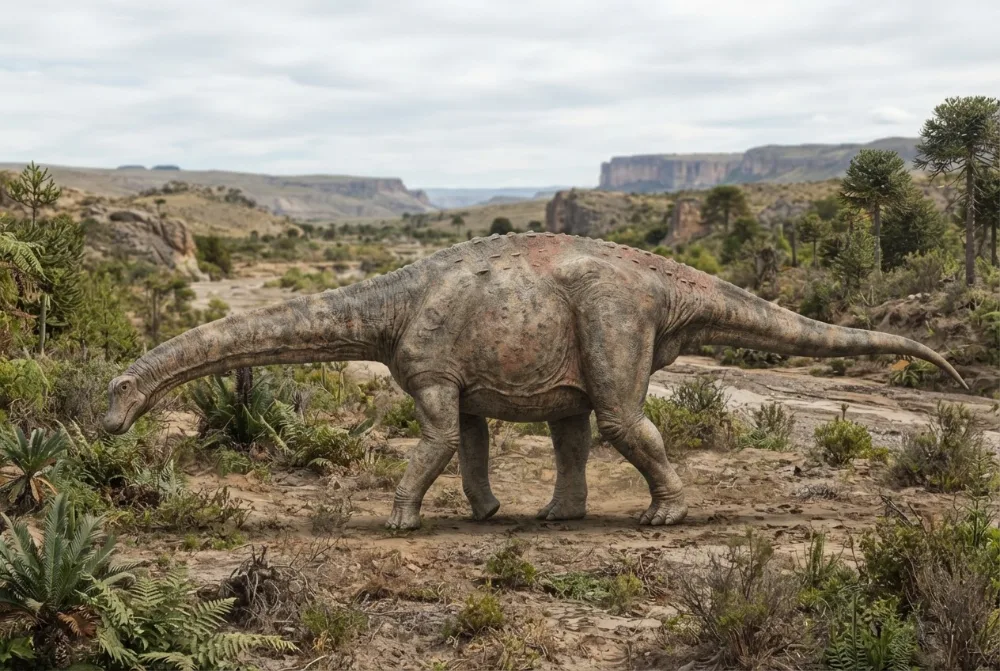
Ma dino ho animdefoɔ
- Nyansahu din
- Punatitan
- Obi a ɔtoo din
- Hechenleitner et al. 20203
- Kuo
- Kɔn tenten
- Abusua / kuo kɛseɛ
- Rinconsauria3
- Nkyekyɛmu
- Sauropodomorpha > Sauropoda > Titanosauria > Macronaria3
- Abotan no mfeɛ
- mfeɛ ɔpepem 84 kɔsi 66 (Campanian / Maastrichtian)3
- Abotan nhyehyɛeɛ
- Ciénaga del Río Huaco3
- Aman
- Argentina3
- Fɔsil nkyerɛwee
- 1 wɔ The Paleobiology Database mu3
- Nhunumu
- Punatitan was named in 2020 by Hechenleitner and colleagues, based on a partial skeleton found in the Ciénaga del Río Huaco Formation of Argentina.13
- Wɔda so gye ho akyinnye
- Scientists are not sure exactly how Punatitan is related to other titanosaurs, because different studies place it in different branches of the family tree.1
Baabi a nsɛm no firi
- Punatitan (en.wikipedia.org)
- Two Late Cretaceous sauropods reveal titanosaurian dispersal across South America - PMC (pmc.ncbi.nlm.nih.gov)
- Punatitan in The Paleobiology Database (CC BY 4.0): mfeɛ, mmeaeɛ, abotan nhyehyɛeɛ, nkyekyɛmu.
Asɛm biara a ɛwɔ krataafa yi so wɔ nɔma a ɛkyerɛ baabi a ɛfiri. Sɛ yɛfom biribi a, kafra, yɛyɛ dino dɔfoɔ, yɛnyɛ nyansahu nsɛmma krataa. Ka kyerɛ yɛn wɔ [email protected] na yɛbɛsiesie.
 Ɔkɔm de Rex! Dino Wiki yɛ agya bi adwuma a ɔyɛɛ maa ne babarima a ɔdɔ dino. Ɛyɛ kwa, dawurubɔ biara nni mu, akyidifoɔ biara nni mu. Mpanimfoɔ bɛtumi ama Rex aduane kakra, na aboa ama Dino Wiki atena intanɛt so.Ma Rex aduane
 Brachiosaurus
 Diplodocus
 Brontosaurus
 Argentinosaurus
 Camarasaurus
 Morosaurus
 Tyrannosaurus
 Triceratops
 Velociraptor
 Spinosaurus
 Ankylosaurus
 Parasaurolophus